Ex-Afghan Special Forces personnel fighting in Ukraine, says Russian Foreign Ministry

The Russian Foreign Ministry has reportedly revealed that some of the former Afghan Special Forces servicemen are fighting alongside Ukrainian nationalists. In mid-March, a reliable source reportedly told RIA Novosti that the United States was preparing to send former Afghan army soldiers to Ukraine. "By the way, a representative of Kyrgyzstan said at a recent […]

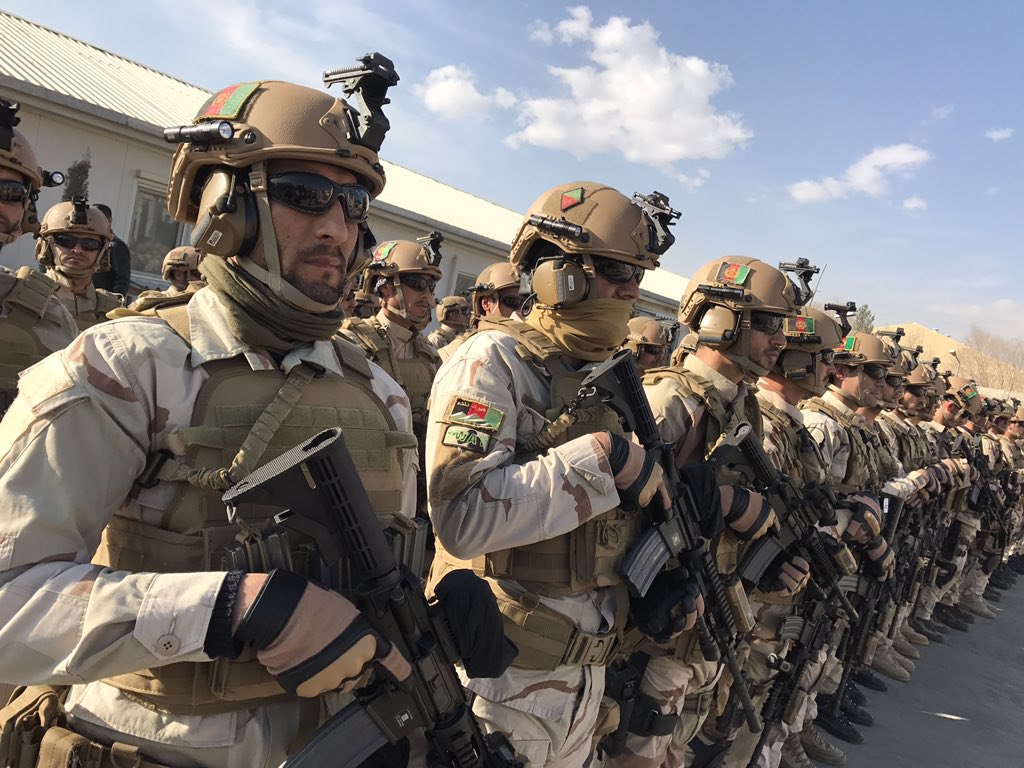
The Russian Foreign Ministry has reportedly revealed that some of the former Afghan Special Forces servicemen are fighting alongside Ukrainian nationalists.

In mid-March, a reliable source reportedly told RIA Novosti that the United States was preparing to send former Afghan army soldiers to Ukraine.

"By the way, a representative of Kyrgyzstan said at a recent Afghanistan conference in Tashkent that approximately 110,000 former Afghan Special Forces servicemen had fled the country and were awaiting entry into the United States.  But apparently, no one is going to give them any permission, which is the absolutely rude manner of the Americans,” Zamir Kabulov, the Special Representative of the Russian President  for Afghanistan also Director of the MFA Second Asian Department, told RIA Novosti in an interview on August 16.  

According to him, some of the former Afghan Special Forces personnel have joined the Islamic State (IS) terror group in Iraq and Syria.  “It is very predictable; in my opinion, we have already said that this is a repeat of the Iraq scenario, which resulted in the IS emergence.  And the other part of these former special forces apparently were promised money as mercenaries because they need to make a living, so they join the Ukrainian Nazis.  But this does not depend on the Taliban in any way,” Kabulov noted.  

Recall, Kabulov told RIA Novosti that Russia would not like to see about a hundred planes and helicopters, flown by U.S.-trained Afghan pilots to Tajikistan and Uzbekistan in mid-August last year as they fled the Taliban, get into Ukraine.

“It is important for us that about a hundred of those helicopters and planes, on which Afghan military last August escaped to Uzbekistan and Tajikistan, would not get into Ukraine,” Kabulov said, noting that about 60 helicopters and planes were flown to Tajikistan and about 40-50 helicopters and planes were flown to Uzbekistan,” Russian diplomat noted.    

Kabulov did not explain what caused these fears and why this aviation could end up in Ukraine.
Join us on social media!

Article translations:

Related Article

Оби зулол
Tenisi
Оби зулол

Most Read

Коммерсбонк Точикистон

Recent Articles

RZD announces the restoration of passenger services between Moscow and Dushanbe

Direct rail services between the capitals of Russia and Tajikistan were suspended in March 2020 due to the COVID-19 pandemic.

#AP30/Stories. “Selam! Heller nichek?” How Tatars live today in Sughd province

On the 30th anniversary of "Asia-Plus," we continue to publish reports that remain relevant even after years. This story was told in 2021, and since then, little has changed in the life of the Tatar community in Tajikistan.

15,000 cameras, drones, and robots: how technology monitors pilgrims in Mecca and Medina

During Hajj 2026, Mecca and Medina were under unprecedented digital control.

Another child in Dushanbe removed from family and sent to boarding school

The Ministry of Internal Affairs reports that the parents did not pay adequate attention to the child.

Emomali Rahmon instructs to address issues in seed production following criticism of the industry

Issues have been noted with certification, seed quality, and the material and technical base of the industry.

Water, climate, and a $130 billion deficit: seven key outcomes of the Water Conference in Dushanbe

At the forum, countries and international organizations discussed new mechanisms for cooperation, investments, and technologies that are essential for addressing the global water crisis.

Eskhata Bank introduces a new generation children’s wallet

"Eshkata Bank" has created a full-fledged digital platform that helps children aged 7 to 16 learn how to manage money.