The European Union (EU) has launched the new project “Sustainable Energy Connectivity in Central Asia” (SECCA) at a roundtable dedicated to the EU–Central Asia Connectivity Conference “Global Gateway”.
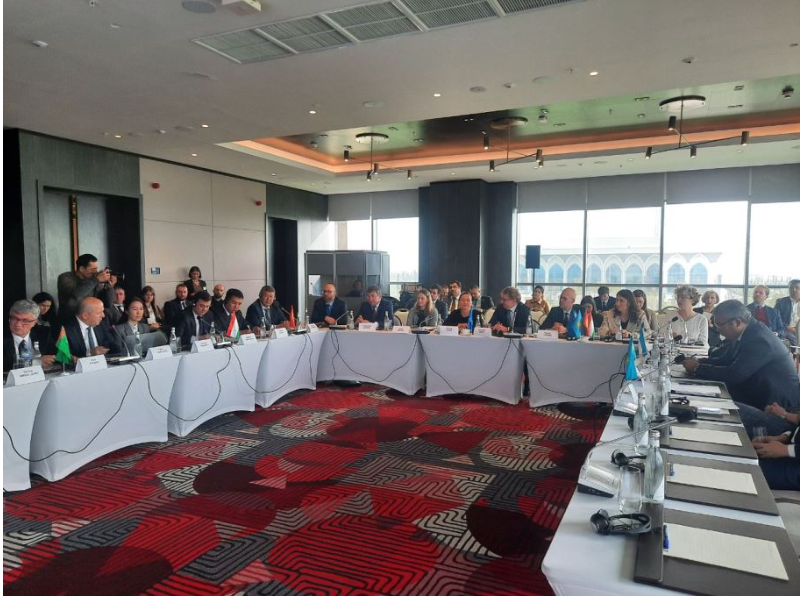
The event that took place in Samarkand on November 17 brought together national energy authorities and experts from Central Asia’s nations and representatives of the EU.
The SECCA project, with a total budget of EUR 6.8 million, reportedly aims to promote a more sustainable energy balance in CA in accordance with EU best practices.
The EU Delegation to Uzbekistan says the project, in particular, seeks to strengthen national policies of transition to a sustainable energy system, and increase investment, capacity and awareness in renewable energy and energy efficiency in the region. Recent developments reportedly indicate positive signs of possible sustainable energy connectivity in Central Asia. It is expected that as a result of economic growth and population growth in the region, the demand for electricity will increase. To meet this demand, significant investments, market reforms and capacity development will be required.
This project is guided by the European Green Deal and new EU Strategy for Central Asia. The latter, in particular, commits to building upon the region’s potential in solar, wind and hydroelectric energy in order to contribute to strengthening the region's energy resilience, helping to meet its climate objectives, and creating jobs and business opportunities.
Currently, the region’s significant sustainable energy potential is reportedly underutilized due to multiple institutional, financial, technical and social barriers.
The SECCA project will serve as a catalyst in addressing these barriers and boosting the renewable energy production and improvement of energy efficiency in the region.”
Moreover, the SECCA project will mainstream gender by supporting gender inclusive policies and legislation both for energy efficiency and renewable energy and promoting the role of women in the sector.
During the roundtable, the project experts presented the objectives of SECCA, the planned activities and the expected results. The participants discussed the current status and challenges in the sustainable energy sector and cooperation between the EU and Central Asia.
The EU-funded project “Sustainable Energy Connectivity in Central Asia (SECCA)” (2022-2026) aims to promote a sustainable energy mix in the Central Asia region in line with EU best practices. The project activities include capacity development for energy efficiency (EE) and renewable energy (RE) deployment, awareness raising on EE and RE, and improving investment climate for EE and RE projects. Through this project, the EU will further assist in the effective tackling of climate change issues. The SECCA will complement the EU’s 15 regional initiatives in environment, biodiversity, climate change, disaster risk reduction, water, and sustainable energy, as well as 20 EU bilateral cooperation projects with Central Asian countries.