Some media outlets reported yesterday that according to pro-reform outlet Entekhab, Iran’s Attorney General Mohammad Jafar Montazeri said Thursday that Iran’s parliament and judiciary are reviewing the country’s mandatory hijab law.
CNN says the laws around the head covering sparked a nationwide protest movement after the death of 22-year-old Mahsa Amini, who died in police custody after being apprehended by the morality police allegedly for not wearing her hijab properly.
Her death on September 16 reportedly touched a nerve in the Islamic Republic, with prominent public figures coming out in support of the movement, including top Iranian actor Taraneh Alidoosti.
The country has been gripped by a wave of mass protests that were first ignited by Amini’s death and have since coalesced around a range of grievances with the regime.
On the hijab law, Montazeri was reportedly cited by state-affiliated media ISNA as saying, “We know you feel anguished when you witness [women] without a hijab in cities, do you think the officials are silent about it? As someone who is in the field of this issue, I say that both the parliament and the judiciary are working, for example, just yesterday we had a meeting with the cultural commission of the parliament, and you will see the results within the next week or two.”
The New York Times reports that Iran’s state-run television channel, the Arabic-language Al Alam, said that the prosecutor-general’s comments had been taken out of context, and other state channels said the government was not backing down from the mandatory hijab law.
The hijab headscarf became obligatory for all women in Iran in April 1983, four years after the Islamic Revolution that overthrew the monarchy. Since then, all women have been legally obliged to wear hijab in public, even non-Muslims and foreigners visiting Iran. It remains a highly sensitive issue in a country where conservatives insist it should be compulsory, while reformists want to leave it up to individual choice.
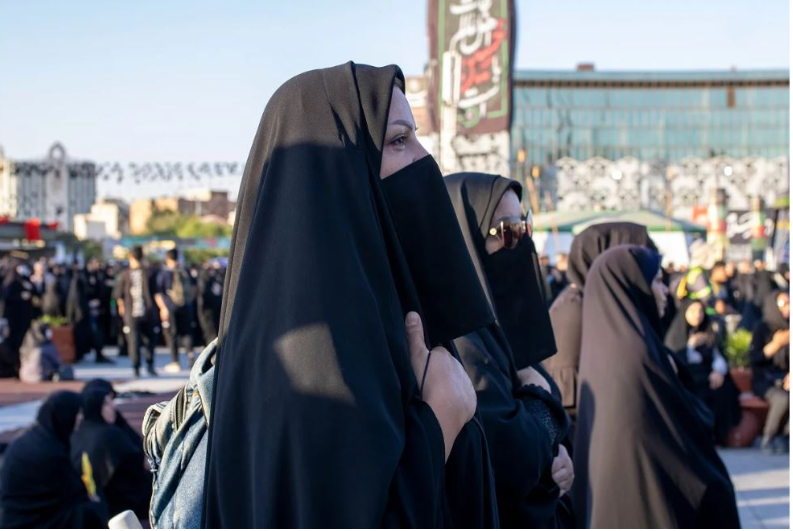
Hijab is considered a red line for Iran’s theocratic rulers. Women who break the strict dress code risk being harassed and arrested by Iran’s morality police. Based on the dress code, women are required to fully cover their hair in public and wear long, loose-fitting clothes.
Over the years, the Islamic government has introduced even more legal measures and social restrictions to enforce mandatory hijab laws. Criminal punishment for those violating the law was introduced in the 1990s and ranged from imprisonment to fines.
However, there was a different shift in policing the way women in Tehran dressed, starting in January 2018. According to this new decree, women who did not observe the Islamic dress code no longer faced fines or imprisonment but rather had to attend Islam educational classes. “Women will no longer be taken to detention centers, nor will judicial cases be filed against them,” said local media reports citing Tehran police chief, General Hossein Rahimi.
During the last few decades, Iranian women’s groups have fought to change the mandatory hijab law, theconversation.com said on October 7, 2022.