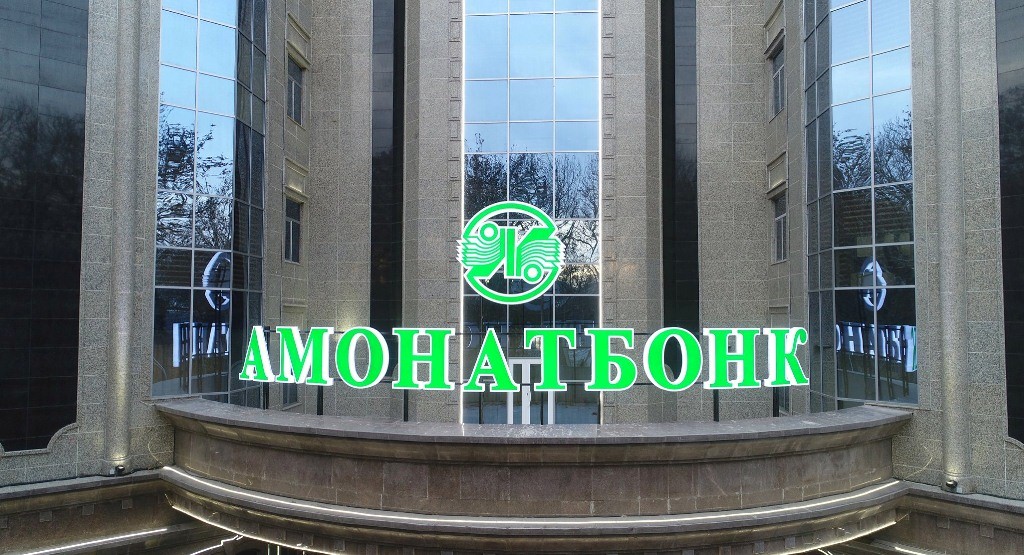
The Tajik government has decided to reorganize Amonatbonk (Tajikistan’s savings bank) into a state unitary enterprise (SUE) and rename it “The Savings Bank of the Republic of Tajikistan”.
Such a decision was taken at a government session that took place on February 28, according to the Tajik president’s official website.
It was also decided to set up the Board of Supervisors of the new SUE and implement principles of corporate governance in it.
The government explains the need for such innovations by “ensuring control and transparency of the financial and economic activities” of the enterprise.
A unitary is a government-owned corporation in Tajikistan and some other post-Soviet nations. Unitary enterprises are business entities that have no ownership rights to the assets that they use in their operations. This form is possible only for state and municipal enterprises, which respectively operate state or municipal property. The owners of the property of a unitary enterprise have no responsibility for its operation and vice versa.
Some of the largest state unitary enterprises in Tajikistan now include Khojagii Manziliyu Kommunali (KMK — housing and communal services), Tajik Railways (Tajikistan national railways company), Pochtai Tojik (Tajik Post), Khurokvori (food industry).
According to the National Bank of Tajikistan, Amonatbonk is currently owned by the state
In late 2021, international financial institutions suggested that the government of Tajikistan establish a joint-stock company on the basis of Amonatbonk with the subsequent transfer of a controlling stake in private hands. Amonatbonk top manager Sirojiddin Ikromi told reporters in Dushanbe on February 7 last year that restructuring with subsequent privatization of Amonatbonk depends on the will of the government.
Amonatbonk is the only state-owned bank. Established in 1925, it is one of the oldest banks in Tajikistan and one of the largest based upon various criteria – including the number of branches and the number of served clients. The institution is unique in its orientation towards implementing social, pension and other state programs. Amonatbonk has 5 regional centers, 69 branches and more than 500 agencies. This gives the institution a presence in the most remote mountainous parts of the country.