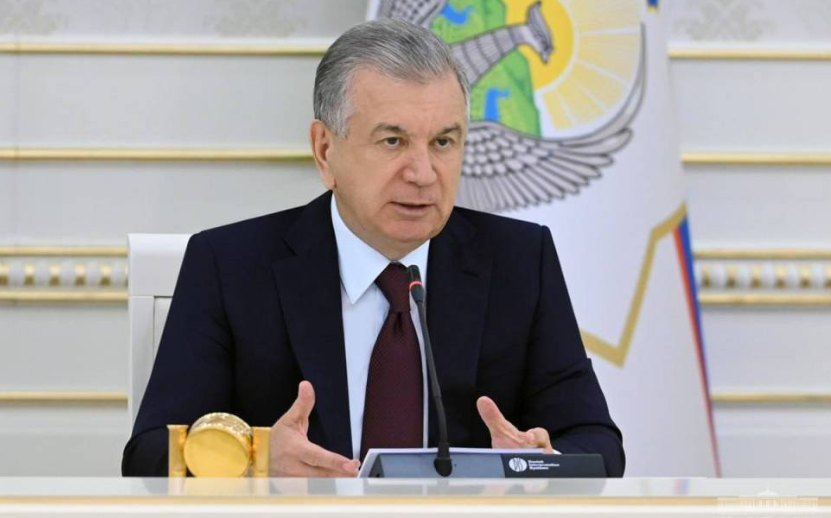
On Tuesday, April 11, Uzbek President Shavkat Mirziyoyev chaired a videoconference on measures to improve the effectiveness of work carried out in youth policy.
According to Turkic World, there are more than 19 million young people under the age of 30 in Uzbekistan. They reportedly make up 55 percent of the population. Now every year 600,000 young people enter the labor market, and in the next 10 years, this number will reach 1 million.
Therefore, special attention is paid to ensuring quality education, training, and employment of young people. A vertical management system was created to organize these works at the mahalla level. Youth leaders, from among selfless and enterprising young people, have reportedly been appointed in 9.5 thousand mahallas. Through this system, more than 100 opportunities have been created for young people, and targeted support has been established.
There are still many pressing issues that need to be addressed. Today there are officially 722,000 unemployed young people in the country.
A study of 9 million young people aged 14 to 30 years was carried out to organize more accurate and targeted work with youth.
At the meeting, the main attention was reportedly paid to the problems of unemployed youth, as well as young people employed in the informal sector or those who have gone to work abroad.
Fergana notes that speaking at the meeting, the head of state said Uzbekistan nationals aged 14 to 30 had been divided into three categories: successful [category] — the average [group]; and the critical situation — based on their social status, abilities and interests.
The first category reportedly includes 4.4 million people who study well, have started their own business, work in an official sector, are qualified and competent, and are socially active.
The second category includes 4.6 million young people, who were unable to find a job officially, but work in “grey” sector and are economically active.
The “critical situation” category reportedly includes 396,000 people who need care and attention from the government. 116,000 of them are people with disabilities, 30,000 others have chronic diseases, 32,000 people are on prophylactic treatment, 16,000 are under probation supervision, and 9,000 young people skip classes regularly.
Mirziyoyev reportedly put forward several new initiatives. Thus, each of ministers, deputy ministers, governors, heads of sectors, rectors and commanders of the National Guard and military units will be obligated to take care of 50 young people in need.
They will support their wards in vocational training and employments, according to Fergana.
Besides, ministries, agencies and local authorities should focus on working with 4.6 million young people belonging to the average category. Most of them are in need of employment.