President Emomali Rahmon has signed a decree on setting a special foreign employee quota for the Construction of Line D (a gas pipeline from Turkmenistan through Tajik territory to China) or this year.
A dependency ratio ceiling, or quota, is the maximum ratio of foreign employees to the total workforce that a company in a given sector can employ.
Under this document, relevant ministries and agencies are instructed to set a special foreign worker quota for the implementation of the project aimed at constructing Line D of the Turkmenistan-China gas pipeline for this year.
The number of foreign employees participating in this project must be 2,739, including 2,705 citizens of China.
The technical staff should be 70 percent and the administrative staff should 30 percent of the quota.
The decree says the quotas are set in accordance with a government-to-government agreement between Tajikistan and China on cooperation on construction and operation of this gas pipeline
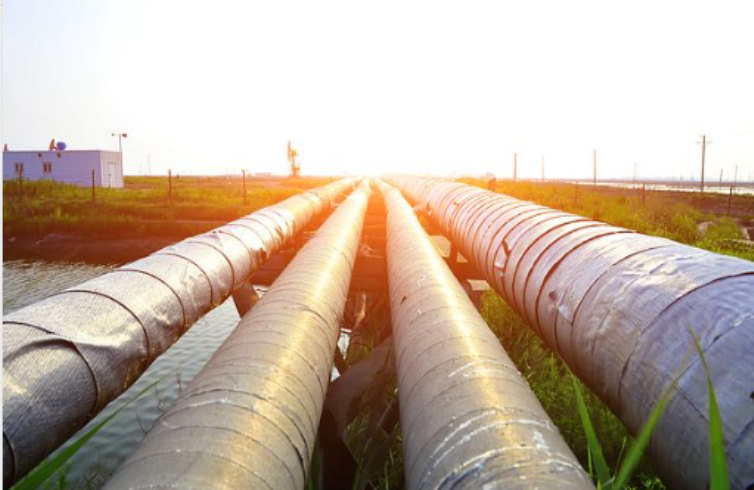
Tajikistan will be a transit country for Turkmen natural gas to China. The Central Asia–China gas pipeline (known also as Turkmenistan–China gas pipeline) is a natural gas pipeline from Central Asia to China’s northeast Xinjiang-Uyghur Autonomous Region (XUAR).
The initial proposal for Central Asia–China gas pipeline was presented as the Kazakhstan–China gas pipeline, which was to follow along the Kazakhstan-China oil pipeline. In June 2003, during Chinese president’s visit to Kazakhstan, agreements to expedite the appraisal of the project were signed. At the same time China continued negotiations with other Central Asian countries.
On April 3, 2006, China and Turkmenistan signed a framework agreement on the pipeline construction and long-term gas supply. In June 2007, during Turkmen president’s visit to China, an accord to speed up implementation of the Turkmen-Chinese gas pipeline project was signed. On April 30, 2007, China and Uzbekistan signed an agreement on the construction and exploitation of the pipeline's Uzbekistan section. In July 2007, it was formally announced that Turkmenistan will join original Kazakhstan-China pipeline project.
A total length of Line D (a gas pipeline from Turkmenistan to China through Tajik territory) is 966 kilometers. The gas pipeline will run through territories of Turkmenistan, Uzbekistan (205 km), Tajikistan (391 km), Kyrgyzstan (215 km) and China (155 km).
A government-to-government agreement between Tajikistan and China on construction of Line D through the territory of Tajikistan was signed in 2013. In March 2014, Chinese oil giant, China National Petroleum Corporation (CNPC), signed an agreement with Tojiktransgaz (Tajik state-controlled natural gas distributor).
Under this agreement, the parties have set up a joint venture, Trans-Tajik Gas Pipeline Company Ltd, with parties’ equity participation of US$300 million for construction and operation of this gas pipeline.
This gas pipeline is expected to annually supply 25 billion – 30 billion cubic meters of natural gas from Turkmenistan to China. The implementation of this project will allow attracting more than US$3 billion in Tajikistan’s economy.