Media reports say there’s been an unexpected change for the upcoming Shanghai Cooperation Organization (SCO) summit, which India is hosting on July 4. It will now be a virtual gathering, instead of in-person.
Indian media outlets report that the decision not to hold the SCO Summit in person but in the virtual format was not taken due to any reasons connected to the schedules of leaders of SCO member nations.
Hindustan Times reported on May 30 that people familiar with the matter say the decision was the outcome of consultations over the past few days.
The external affairs ministry reportedly announced on May 30 that the 22nd summit of the SCO council of heads of state will be held in the “virtual format” and chaired by Prime Minister Narendra Modi. The ministry didn’t give any reasons for the decision.
MINT says the theme of the upcoming summit is “Towards a SECURE SCO." SECURE is an acronym that stands for security, economy and trade, connectivity, unity, respect for sovereignty and territorial integrity, and environment.
Meanwhile, Eurasianet reported on June 7 that there is plenty of speculation that Vladimir Putin’s fear of foreign travel is the main reason for moving the meeting online. Putin has reportedly been reluctant to leave Russia since he was indicted for war crimes by the International Criminal Court in The Hague.
Recall, The International Criminal Court (ICC) on March 17 issued an arrest warrant for Russian President Vladimir Putin for alleged war crimes involving accusations that Russia has forcibly taken Ukrainian children.
It is to be noted that the move to an online format is not unprecedented. SCO leaders met virtually during the COVID pandemic. But last year’s SCO conclave in Samarkand was an in-person affair.
The eight-member bloc's defense and foreign ministers attended in-person meetings in India earlier this year.
The Shanghai Cooperation Organization (SCO) is a Eurasian political, economic, international security and defense organization. It is the world's largest regional organization in terms of geographic scope and population, covering approximately 60% of the area of Eurasia, 40% of the world population. Its combined GDP is around 20% of global GDP.
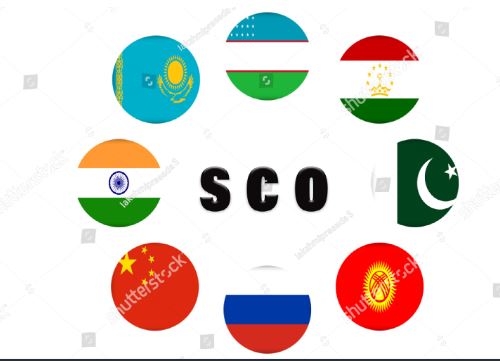
The SCO currently has eight full members — China, Kyrgyzstan, Pakistan, Russia, Tajikistan, India, Kazakhstan and Uzbekistan.
Iran (September 17, 2021) and Belarus (September 16, 2022) are acceding members.
Besides, Afghanistan, Belarus, Iran and Mongolia are four observer states.
SCO’s dialogue partners include Armenia, Azerbaijan, Cambodia, Egypt, Nepal, Qatar, Saudi Arabia, Sri Lanka and Turkiye.
Bahrain, Kuwait, Maldives, Myanmar and the United Arab Emirates (UAE) are upcoming dialogue partners.
ACEAN, CIS, Turkmenistan and the United Nations are guest attendances.