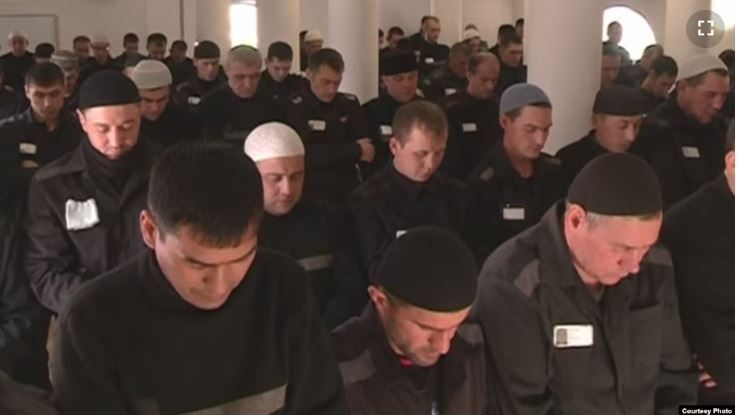
Radio Liberty reported on June 13 that two letters obtained by it from inmates at the penal colony in the Russian city of Samara show that inmates from Central Asia are being forced to work at the penal colony-based plant to support Russia's ongoing war against Ukraine.
One of the letters was reportedly written by Zafar Yakubov, an ethnic Tajik born in Uzbekistan who for many years lived in Russia’s Republic of Tatarstan before he was convicted in April 2018 of being a member of the Hizb ut-Tahrir Islamic group, which is banned in Russia. The second letter is anonymous but also mentions Yakubov.
RFE/RL notes that Yakubov, who is recognized by the Memorial human rights group as a political prisoner, says in his letter that the guards at the penitentiary force inmates from Central Asia to work at the plant inside the penal colony in programs on producing military equipment for the Russian armed forces involved in the war in Ukraine.
"Last year, the colony's administration sent dozens of citizens of Central Asian countries…to the special military operation (the term officially used in Russia for the war in Ukraine). After the administration was unable to continue that, it started forcing citizens of Uzbekistan to support the special military operation by making them produce the state defense program's outputs. Those who refuse to work are being placed in inhumane conditions," Yakubov’s letter says, adding that such inmates are usually placed in punitive solitary confinement.
The second letter says Yakubov was placed in solitary confinement several times when the terms for his wife's visit to the penitentiary were set.
Yakubov's wife, Alsu Nasybullina, reportedly confirmed to RFE/RL that she has been unable to see her husband for a long time as he was placed in solitary confinement for what she called "ungrounded reasons" ahead of each visit.
In his letter, Yakubov asks Russian prosecutors to "investigate the cases of illegal use of the citizens of Uzbekistan in works related to the war in Ukraine and humiliation of their dignity by Russian officials, and to hold them responsible," adding that "officials of Central Asian nations must be informed about the situation."