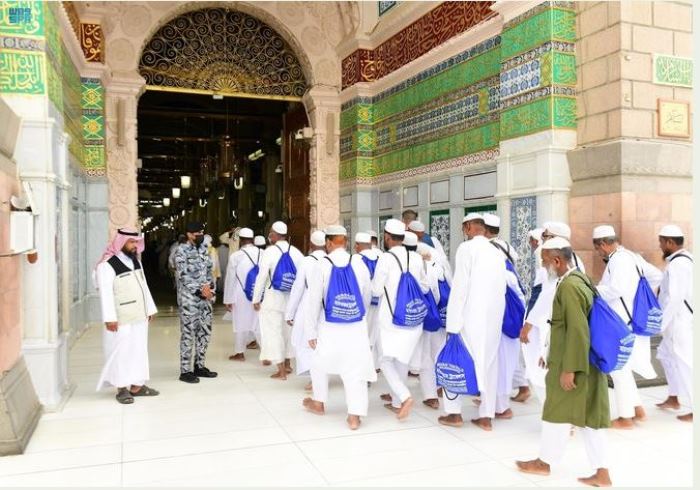
Security authorities in Saudi Arabia have arrested over 17,000 people up until Friday for attempting to perform the annual Hajj pilgrimage without a permit, the Saudi Press Agency (SPA) reported on July 1.
The Director of Public Security also Head of the Hajj Security Committee, Lieutenant-General Mohammed Al-Bassami, was cited as saying that a total of 17,615 people were arrested, including 9,509 violators of residency, work and border security regulations, and organizers of 105 fake Hajj campaigns in various regions of the Kingdom. They have reportedly all been referred to the Public Prosecution.
According to SPA, Al-Bassami added 202,695 people who did not have a Hajj permit were sent back from the Makkah entry points and 128,999 vehicles that are not licensed to enter Makkah and the holy sites were also returned.
He reportedly said 33 people who transported pilgrims who did not hold Hajj permits were arrested and referred to the seasonal administrative committees under the General Directorate of Passports at the entrances to Makkah to implement the regulations against them.
The Hajj Security Committee head also said that the Hajj security forces implemented the security and organizational plans with high efficiency and professionalism, SPA said.
This year, Hajj began on June 26 and ended on July 1.
Hajj is one of the five pillars of Islam and is a pilgrimage every adult Muslim must make at least once in their lifetime if they have the means.
Each year, Saudi Arabia welcomes millions of Muslims from abroad traveling on Umrah and Hajj. Hajj, one of the five pillars of Islam, is a pilgrimage to Mecca which adult Muslims must make at least one in their lifetime, provided they are physically and financially able. The Hajj is a demonstration of the solidarity of the Muslim people, and their submission to God. The pilgrimage occurs from the 8th to 12th day of Dhu al-Hijjah, the 12th and last month of the Islamic calendar. Because the Islamic calendar is a lunar calendar, eleven days shorter than the Gregorian calendar, the Gregorian date of the Hajj changes from year to year.
This year, Saudi Arabia has reportedly allotted a quota of 7,000 pilgrims to Tajikistan. An appropriate agreement on this subject was singed in Arabia Saudi in January this year.