Russian technology companies are producing a vast array of new tools to help the Kremlin harness the internet and tighten control over internal dissent, says an investigative report released by The New York Times on July 3.
The report notes that as the war in Ukraine unfolded last year, Russia’s best digital spies turned to new tools to fight an enemy on another front: those inside its own borders who opposed the war. To aid an internal crackdown, Russian authorities had amassed an arsenal of technologies to track the online lives of citizens. After it invaded Ukraine, its demand reportedly grew for more surveillance tools.
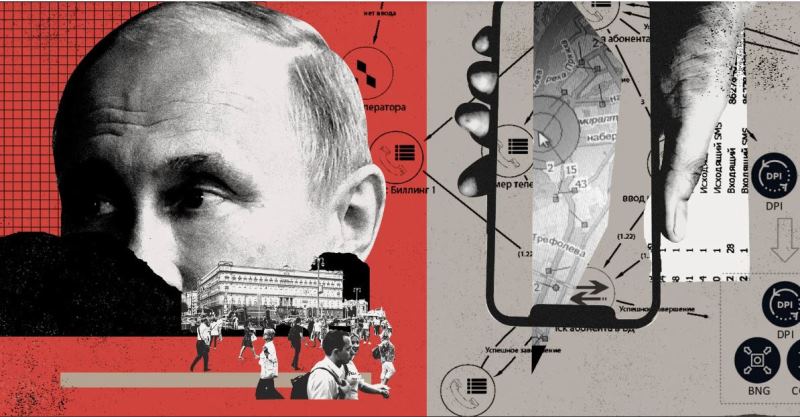
The tools offer ways to track certain kinds of activity on encrypted apps like WhatsApp and Signal, monitor the locations of phones, identify anonymous social media users and break into people’s accounts, according to documents from Russian surveillance providers obtained by The New York Times, as well as security experts, digital activists and a person involved with the country’s digital surveillance operations.
One program outlined in the materials can identify when people make voice calls or send files on encrypted chat apps such as Telegram, Signal and WhatsApp. The software cannot intercept specific messages, but can determine whether someone is using multiple phones, map their relationship network by tracking communications with others, and triangulate what phones have been in certain locations on a given day. Another product can collect passwords entered on unencrypted websites.
Over the past two decades, Russian leaders struggled to control the internet. To remedy that, they ordered up systems to eavesdrop on phone calls and unencrypted text messages. Then they demanded that providers of internet services store records of all internet traffic.
The development of these new systems to monitor internet traffic is enabling the Kremlin to close gaps, helping Russia catch up to China and Iran in terms of keeping tabs on the thoughts and actions of its population. The new technologies reportedly give Russia’s security services a granular view of the internet.
Some of the encrypted app tools and other surveillance technologies have begun spreading beyond Russia. Marketing documents reportedly show efforts to sell the products in Eastern Europe and Central Asia, as well as Africa, the Middle East and South America.
Representatives of Telegram and the Signal Foundation, the developer of the encrypted communications app, acknowledged there was no way to thwart the new spyware. It is possible, however, to use features on either Telegram or Signal to send messages through various servers, thus making it much more difficult to determine the origin and destination of the data.
The Times’ investigation is based on a document leak revealing details about technology companies, including MFI Soft, Vas Experts, Protel and Citadel Group, a conglomerate that was subjected to US sanctions in February.