Islamic State terror group confirms death of its leader, names successor

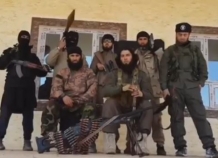
Media reports said yesterday that the Islamic State (IS) terror group has confirmed the death of its leader Abu Hussein al-Husseini al-Quraishi and named Abu Hafs al-Hashimi al-Quraishi as his replacement.  The group's spokesperson reportedly said that in an undated recording published on its Telegram channel. It appeared to be the militant group's first official […]

Media reports said yesterday that the Islamic State (IS) terror group has confirmed the death of its leader Abu Hussein al-Husseini al-Quraishi and named Abu Hafs al-Hashimi al-Quraishi as his replacement.  The group's spokesperson reportedly said that in an undated recording published on its Telegram channel.

It appeared to be the militant group's first official announcement on his fate since Turkiye's President Tayyip Erdogan said in April that Turkish intelligence forces had killed him in Syria.

“The suspected leader of Daesh, codename Abu Hussein al-Qurashi, has been neutralized in an operation carried out… by the MIT [National Intelligence Organization] in Syria,” Erdogan said at the time, using the Arabic acronym for the IS terror group.

Turkiye’s Anadolu Agency (AA) said at the time that the MIT conducted a four-hour operation during which it located the ISIL leader.

Al Jazeera reports that the group said on Thursday that its leader had been killed in “direct clashes” with the Hayat Tahrir al-Sham (HTS) group in Idlib province in rebel-held northwestern Syria.

The group’s spokesman reportedly claimed on Thursday that Hayat Tahrir al-Sham, which controls parts of Idlib province, had killed the group’s chief and handed his body to Turkiye. 

The IS terror group accuses the HTS group – which has not claimed any operation targeting the IS leader – of working in Ankara’s interests.

The United States and other Western governments have blacklisted HTS as a “terrorist” group.

The Voice of America (VOA) says Islamic State gave no details about the new leader.

The movement reached its peak in 2014.  The organization ruled a third of Iraq and Syria and its then head, Abu Bakr al-Baghdadi, declared the territory it controlled a caliphate.  It was defeated in Iraq in 2017 and in Syria two years later, but sleeper cells still carry out attacks in both countries.
 

Join us on social media!

Article translations:

Related Article

Оби зулол
Tenisi
Оби зулол

Most Read

Коммерсбонк Точикистон

Recent Articles

RZD announces the restoration of passenger services between Moscow and Dushanbe

Direct rail services between the capitals of Russia and Tajikistan were suspended in March 2020 due to the COVID-19 pandemic.

#AP30/Stories. “Selam! Heller nichek?” How Tatars live today in Sughd province

On the 30th anniversary of "Asia-Plus," we continue to publish reports that remain relevant even after years. This story was told in 2021, and since then, little has changed in the life of the Tatar community in Tajikistan.

15,000 cameras, drones, and robots: how technology monitors pilgrims in Mecca and Medina

During Hajj 2026, Mecca and Medina were under unprecedented digital control.

Another child in Dushanbe removed from family and sent to boarding school

The Ministry of Internal Affairs reports that the parents did not pay adequate attention to the child.

Emomali Rahmon instructs to address issues in seed production following criticism of the industry

Issues have been noted with certification, seed quality, and the material and technical base of the industry.

Water, climate, and a $130 billion deficit: seven key outcomes of the Water Conference in Dushanbe

At the forum, countries and international organizations discussed new mechanisms for cooperation, investments, and technologies that are essential for addressing the global water crisis.

Eskhata Bank introduces a new generation children’s wallet

"Eshkata Bank" has created a full-fledged digital platform that helps children aged 7 to 16 learn how to manage money.