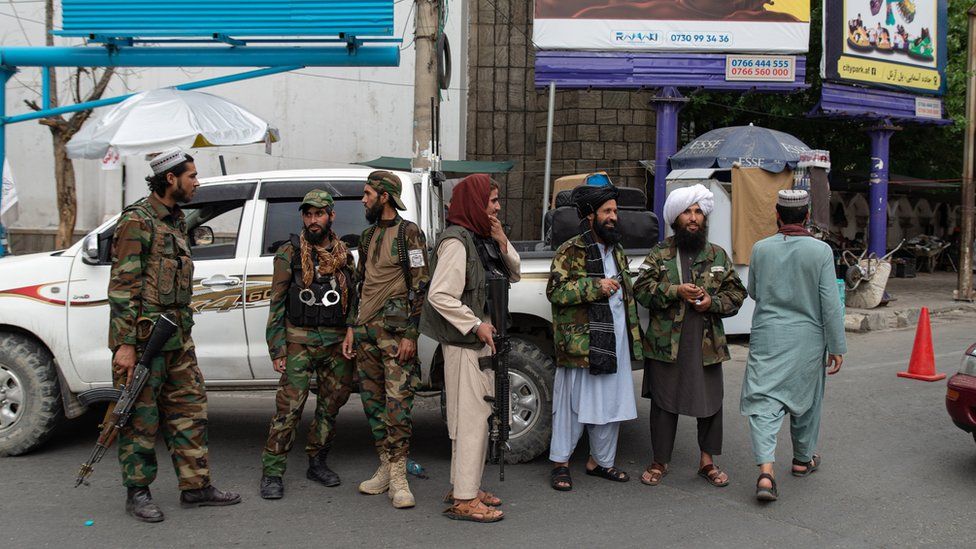
It has been two years since the Taliban came to power in Afghanistan, but no country has officially recognized their rule. A short retelling of the BBC material on whether it is worth recognizing the power of the Taliban?
Even interaction with the Taliban Government remains ambiguous. Some say that talking to them will help change the situation, others are sure that the Taliban will never change, so there is no point in talking.
And while the world is deciding how to behave with the new rulers of Afghanistan, women's rights, including their beauty salons, have become the forefront in political battles.
"The Taliban are putting pressure on women because they want to force the international community to recognize their rule," says the owner of a beauty salon – one of the residents of Afghanistan, who went underground two weeks ago after the government ordered the closure of all women's beauty salons. This is the last of probably an infinite number of decrees restricting the lives and freedoms of Afghan women and girls.
"If the Taliban are accepted as a government, they can lift restrictions on us or impose even more," she says with uncertainty and concern.
The Taliban are trying to convince that issues such as women's rights do not concern the whole world.
The supreme leader of the Taliban movement, Haibatullah Akhundzada, is confident that "the current government should have been recognized long ago. We have made progress in some areas, and we will also deal with this issue."
Signs of dissatisfaction, even among high-ranking leaders of the Taliban movement, with the most extreme edicts, which were introduced by the aging ultraconservative supreme leader, still inspire faint hope.
"If we do not involve Afghans who want to participate in the most possible reasonable way, we will give freedom of action to those who want to keep most of the population, in fact, in custody," said a Western diplomat who participated in recent meetings with middle-level Taliban representatives.
According to some reports, the recluse Akhundzada recently met with the Prime Minister of Qatar Mohammed bin Abdulrahman Al Thani – the first meeting of the supreme leader with a foreign official. Diplomats privy to the essence of the meeting confirmed the existence of significant gaps, especially regarding education and women's rights, but also added that it is possible to find a way forward, albeit slowly.