Mayor of Astana Zhenis Kasymbek said that "vandals", who stole fruits and broke counters at the Tajik farmers' fair will be brought to justice.
"Some Kazakhstanis broke awnings, counters, decorations at the fair. There were also facts of violation of public order. This is an indicator of low culture, devaluation of other people's labor. Because of the actions of some people, a shadow has fallen on all residents of Astana," Zhenis Kasymbek said.
He instructed the police to identify people who committed vandalism and violations of public order in order to bring them to justice, Kursiv.media reports.
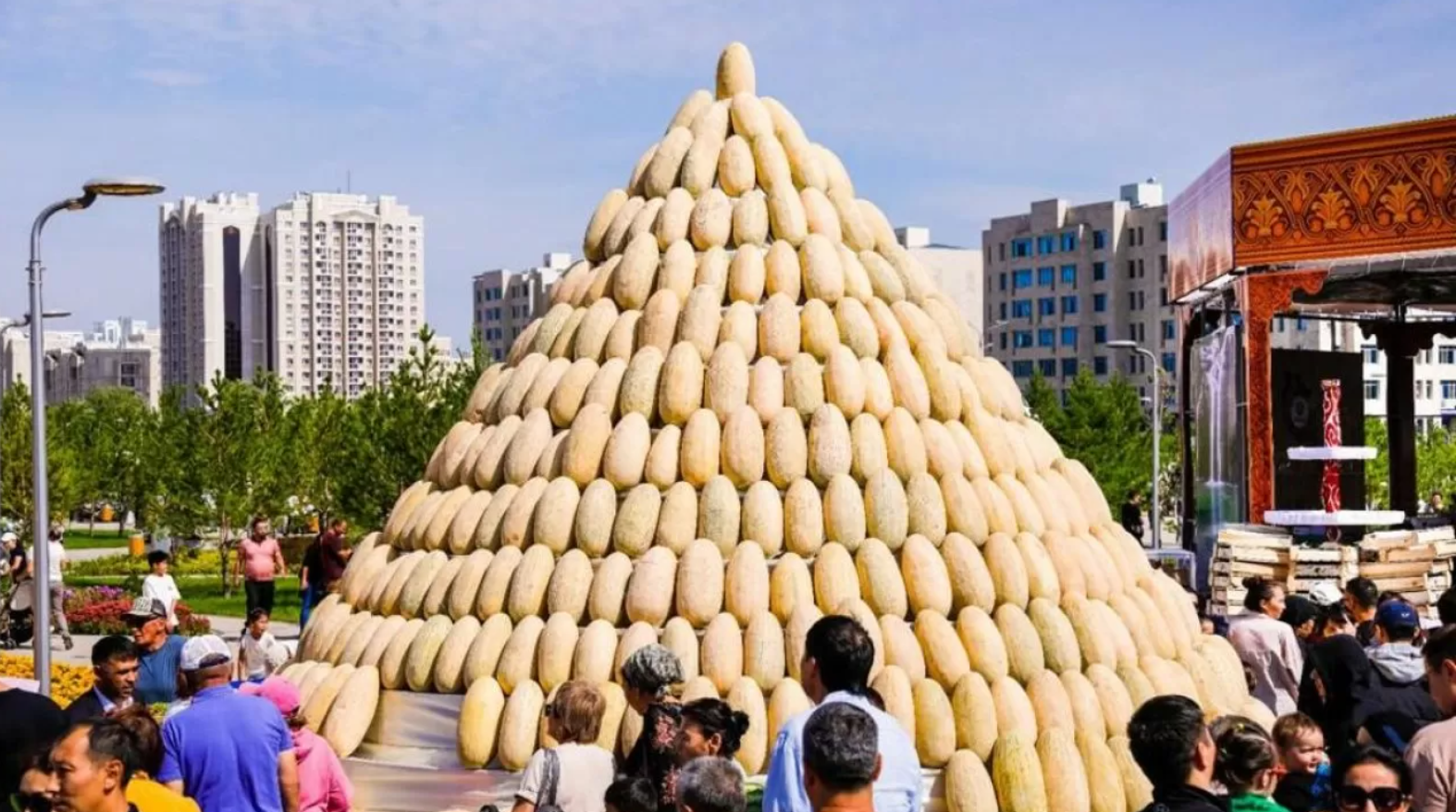
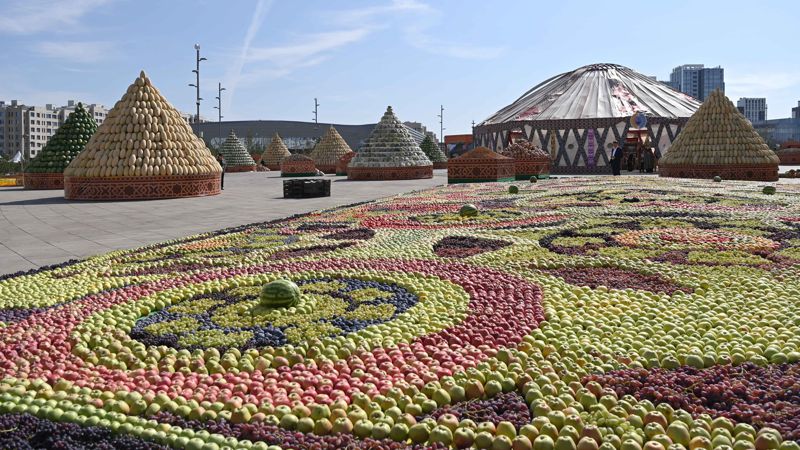
Farmers from Sughd region organized a fair of agricultural products for the visit of the President of Tajikistan Emomali Rahmon to Astana. They set up pyramids with fruits. After the end of the visit, farmers began to distribute goods for free. This led to the fact that people began to climb the pyramids and grab products.
Maksat Zhanabayev, Deputy Head of the Astana Investment and Entrepreneurship Development Department, said that the Tajik side insisted on the free distribution of fruit, fearing that it could go bad due to the heat.
"The product is really very interesting. Watermelons from Tajikistan are not imported to us, because it is very expensive to carry, so it was interesting for people to try sweet watermelon and melon from Tajikistan. It's really delicious, I've tried it myself. I think that people wanted to taste Tajik products," Maksat Zhanabayev believes.
Zhanabayev noted that the event went well. In two days, Tajik farmers sold 1,000 tons of products. Some of them were sold, and some of them, "which hung on Christmas trees, pyramids, they gave away for free."
"People who climbed (the pyramids. – editor's note), were the farmers themselves, who put up the pyramid, they distributed it so that our residents would not climb this pyramid. It was for security purposes," Zhanabayev explained.
Recall that the fair of agricultural and industrial products from Tajikistan was also visited by Emomali Rahmon and Kasym-Jomart Tokayev on August 26. They viewed traditional Tajik costumes, carpets, fabrics, decorative ceramics, musical instruments.