A recent survey conducted among residents of Central Asian countries has led to interesting conclusions: most respondents in Tajikistan expect economic progress in the republic in the coming years, but doubt the improvement of personal well-being.
About 72% of respondents in Tajikistan expect an "unambiguously good" economic situation in the republic both in the short term (within a year) and in the medium term (after 5 years).
This is evidenced by the results of a survey conducted in August of this year on the initiative of Freedom Finance Global among the population in Central Asian countries.
At the same time, 71.2% of respondents believe that a good economic situation in the country will come in 1 year, and 71.5% – in 5 years.
The authors of the study emphasize that the expectations of young people in Tajikistan "came out a little more optimistic" than in other countries of the region.
"There are also the most optimists among Tajik speakers, and Russian-speaking residents were slightly more optimistic than Uzbek speakers. Although the share of native speakers of the state language in the country of the survey is 92%," they emphasize.
It is noteworthy that regarding their personal financial situation, the Tajiks were not so optimistic: only 37% expect an improvement in their living situation during the year.
Only about a quarter of respondents in Tajikistan noted a strong increase in consumer prices both over the last month (July) and over the past 12 months.
Only 9.0% of respondents expect the inflation rate to accelerate in the coming month (August), and 12.0% expect it to accelerate during the year.
About a third of respondents refrained from answering about their inflation expectations.
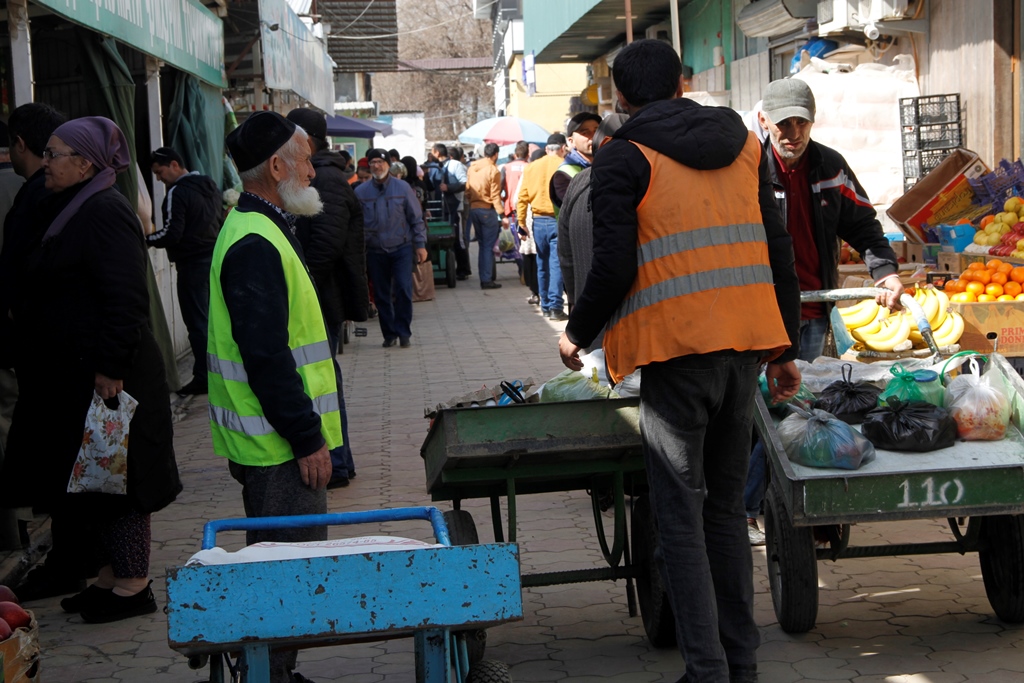
The majority of respondents are concerned about the issue of increasing food prices.
"Only food turned out to be in the top 10, and vegetables and fruits became the leaders, the price increase for which was noticed by 44% of residents. People are also concerned about the prices of vegetable oil, meat and poultry," the publication notes on the results of the study.
In general, here, too, the residents of Tajikistan turned out to be more optimistic than their neighbors.
Only 27.5% of respondents in Tajikistan expect the national currency to weaken against the dollar during the year. In Uzbekistan, this figure was 69.5%, in Kyrgyzstan – 29.0%, in Kazakhstan – 52.0%.
However, the authors of the study note "a fairly high level of those who find it difficult to answer – almost 41.0% in Tajikistan.
"The relatively stable dollar exchange rate in Tajikistan (17.5% of the dollar's growth over five years) and Kyrgyzstan (+22%) is projected in low expectations of a weakening of the national currency. In Kazakhstan (+33%), slightly more than half of people expect a weakening within a year, and in Uzbekistan (+37%) – as much as 69.5%," the authors of the study emphasize.
They note the high level of those who find it difficult to give an answer in those countries where the dollar exchange rate is more stable. The share of such people in Kyrgyzstan and Tajikistan turned out to be 39%, while in the other two countries it was half as much.
The authors of the study note that respondents who answered the survey in national languages, young people and rural population were more likely to be more optimistic.
Regarding inflation and inflation expectations, the following is noted: expectations of high price growth in Kazakhstan and Uzbekistan significantly influence the opinion of citizens, whereas in Kyrgyzstan and Tajikistan, historically low inflation shows a more optimistic attitude of citizens.
"At the same time, the dollar exchange rate, apparently, also has an impact on this, given the correlation with inflation. A more stable exchange rate of the national currencies of Kyrgyzstan and Tajikistan is projected into lower devaluation expectations. A large number of residents of these two countries are indifferent to the dollar exchange rate and inflation, given the high proportion of those who found it difficult to answer the questions of expectation.
That is, exchange rate perturbations and inflation may affect this in a smaller amount. Moreover, the reason is definitely not the high proportion of the rural population in these countries, since urban residents are equally not interested in these indicators," the study concludes.