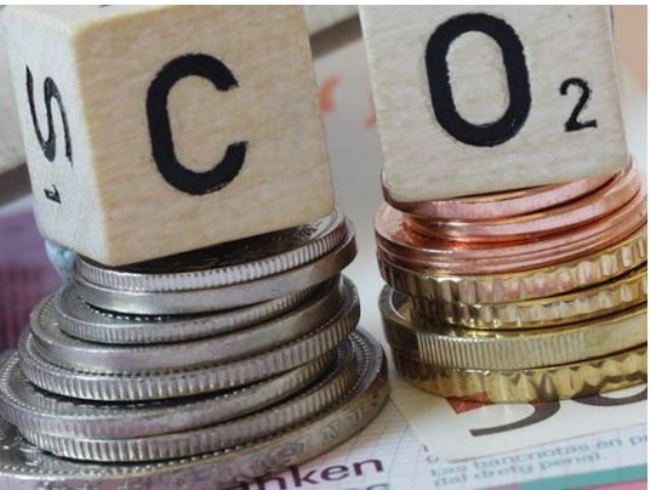
Experts discuss the transition of Central Asia’s nations to low-carbon trade

The readiness of Central Asian countries for low-carbon trade was discussed on September 12 by leading experts and business community representatives in an online training organized by the International Trade Center and its institutional partner in Central Asia – QazTrade. QazTrade reports that webinar participants got acquainted with the European Union Agreement on Border Carbon […]

Asia-Plus

The readiness of Central Asian countries for low-carbon trade was discussed on September 12 by leading experts and business community representatives in an online training organized by the International Trade Center and its institutional partner in Central Asia – QazTrade.

QazTrade reports that webinar participants got acquainted with the European Union Agreement on Border Carbon Adjustment Mechanism (BCAM) and also discussed related events in other jurisdictions. Experts reportedly conducted an analysis of the potential impact of BCAM on trade from Central Asia and presented trade and investment policy tools that can be used by the region’s countries to comply with BCAM requirements and prepare for the transition to low-carbon trade. 

In May 2023, the European Union published the final text of the Border Carbon Adjustment Mechanism (BCAM) regulation, which has significant regulatory implications for the trade sector.  The new mechanism will officially come into force on October 1, 2023, with a two-year transitional period until December 31, 2025. 

This regulation reportedly requires importers to obtain BCAM certificates from January 1, 2026, which is likely to result in additional costs.  BCAM covers a range of key products, including cement, fertilizers, iron and steel, aluminum, hydrogen, and electricity.

QazTrade notes that according to experts, the regulation aims to reduce greenhouse gas emissions and promote low-carbon technologies in production.

The Ready4Trade Central Asia project is financed by the European Union and implemented by the International Trade Center.   
Join us on social media!

Article translations:

Related Article

Оби зулол
Оби зулол

Most Read

Recent Articles

The only GPW veteran in Dushanbe allocated more than 80,000 somoni

The mayor's office of Dushanbe allocated him 25,000 somoni.

GITEX AI Kazakhstan 2026: how Almaty became the main AI hub of Central Asia

More than 300 companies and startups, over 200 speakers and 100 investors from 50 countries — the region is entering the global stage.

A trade and economic park to be built at the border junction of Tajikistan, Kyrgyzstan, and Uzbekistan

President of the Kyrgyz Republic Sadyr Japarov familiarized himself with the project.

A project to protect soil from degradation to be developed in Central Asia

The initiative is of great significance for the mountainous countries of the region, including Tajikistan.

Mudslide, death, and destroyed homes: hundreds of families in Tajikistan left homeless

A correspondent from "Asia-Plus" visited Kulob and spoke with the families of those who died and were affected by the disaster.

Spring 2026 bright event: new issue of VIPzone now on sale

This issue is about people and ideas that change everything: from business and investments to fashion, food, and urban environment.

Godfrey Sullivan: “Tajikistan is a promising market for Visa to develop digital payments”

The Vice President of Visa explained why Tajikistan is becoming a promising market for digital payments and how artificial intelligence is influencing the future of finance.

Seven students in Dushanbe were threatened with expulsion for arriving at universities in personal cars

The materials for each case have been sent to the Ministry of Education and Science for appropriate actions.

India’s blockchain push and lessons for the global south

The Indian Government has started pushing aggressively its agenda...

India’s blockchain push and lessons for the global south

The Indian Government has started pushing aggressively its agenda...