Afghanistan’s media reports say that following the completion of the work of the first phase of the Qosh Tepa Canal, work on its second phase began on October 11.
TOLOnews reports that senior officials of the Islamic Emirate who went to Balkh province to participate in the opening ceremony of the second phase of the Qosh Tepa Canal, said that Afghanistan will reach self-sufficiency in growing its own grains.
“The Islamic Emirate intends to pay serious attention to agriculture and managing water, as we witness its good example in taking steps in the building of the Qosh Tepa Canal,” Mullah Abdul Ghani Baradar, the deputy prime minister for economic affairs, was quoted as saying.
Speaking at the opening ceremony, officials of the Islamic Emirate reportedly asked regional countries, especially Uzbekistan to not be worried about the construction of Qosh Tepa Canal.
They said that the Islamic Emirate is ready to address the concerns of the countries of the region through diplomatic channels.
At the same time, the Islamic Emirate security officials pledged the security of the Qosh Tepa Canal project, saying that they will not allow anyone to create obstacles to this project.
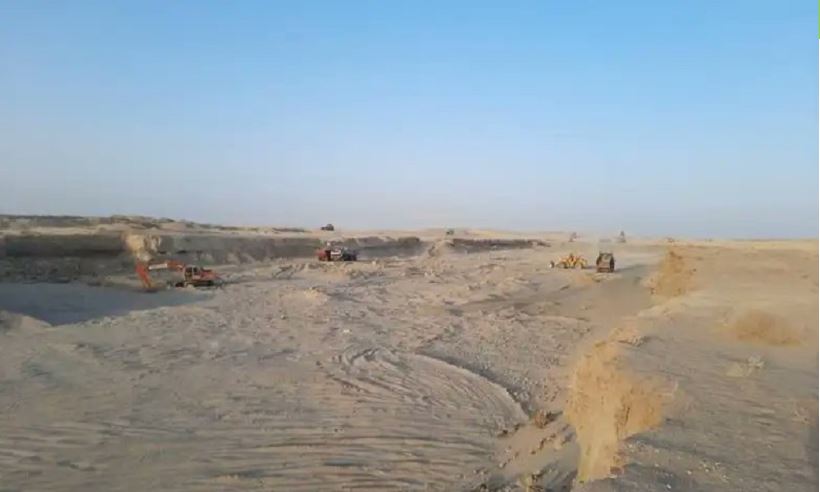
Recall, the self-proclaimed Islamic Emirate of Afghanistan set in motion an ambitious plan for the Qosh Tepa irrigation canal, a potential lifeline for drought-ridden Afghanistan in March last year. However, its construction casts a looming shadow over Central Asian downstream nations of Uzbekistan and Turkmenistan, exacerbating water scarcity threats.
The Qosh Tepa Canal’s reach spans an impressive 285 kilometers, boasting a width of 100 meters and a depth of 8 meters.
Interestingly, the Qosh Tepa Canal project had been in the works for several years before the Taliban ascended to power. The groundwork and feasibility studies were reportedly initiated during Afghanistan’s former government, supported by USAID. However, it was under the Taliban’s direction that the project gained tangible momentum.
Experts note that assessing the quality of the canal’s construction raises serious doubts. The construction methods employed appear remarkably rudimentary, with a mere “digging” approach devoid of proper reinforcement or lining for the canal’s bottom and banks. Such an approach poses a grave risk, as significant water losses may occur due to seepage into the dry, sandy soil. The resulting loss of water in canals exacerbates the already pressing issues of salinization and waterlogging in irrigated lands, amplifying the risks of water loss to an alarming extent.
The issue of canal construction holds significant transboundary implications, particularly for Central Asian countries. Qosh Tepa canal’s construction casts a profound shadow of influence over the neighboring states of Central Asia, unleashing substantial repercussions. Diverse assessments suggest that in the span of 5-6 years, upon the canal’s completion and operation, Turkmenistan and Uzbekistan will face a notable decline in their average water intake capacity along the middle and lower reaches of the transboundary river — dropping from 80% to 65%.