Drug business is increasingly becoming a network marketing, says CSTO official

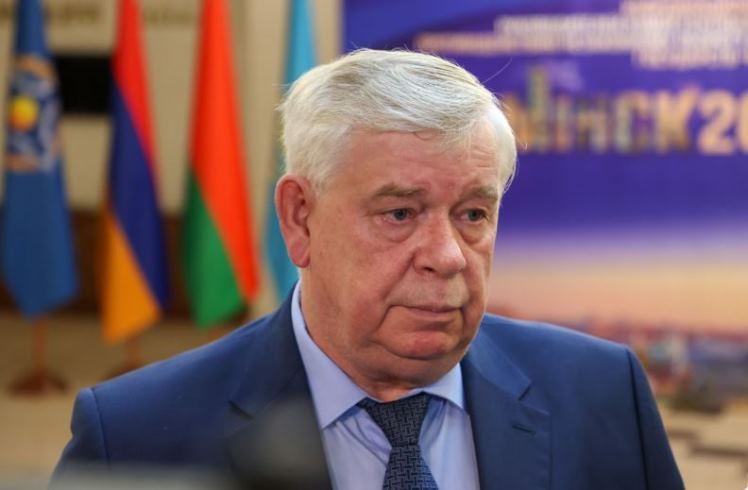
Speaking at the 25th meeting of the Collective Security Treaty Organization (CSTO) Coordinating Council of Heads of the Competent Authorities Combating Illicit Drug Trafficking in Minsk, the CSTO Deputy Secretary-General Valery Semerikov noted on October 24 that the drug business is increasingly acquiring the features of network marketing.   According to the CSTO Secretariat, the meeting […]

Speaking at the 25th meeting of the Collective Security Treaty Organization (CSTO) Coordinating Council of Heads of the Competent Authorities Combating Illicit Drug Trafficking in Minsk, the CSTO Deputy Secretary-General Valery Semerikov noted on October 24 that the drug business is increasingly acquiring the features of network marketing.  

According to the CSTO Secretariat, the meeting was attended by interior ministry’s delegations from Armenia, Belarus, Kazakhstan, Kyrgyzstan, Russia and Tajikistan as well as the CSTO Secretariat.

The meeting participants reportedly summed up the intermediate results of cooperation, exchanged the necessary information, and developed new practical recommendations in the interests of cooperation in the fight against drug trafficking.   

“The current stage of development of the military-political situation and the world order as a whole, which we are experiencing today, is the most serious test of the strength of allied and fraternal relations between the states of the post-Soviet space,” the CSTO official said, according to Belarusian state-run news agency BelTA.  

Increase and popularity of synthetic drugs as well as expansion of illegal drug production in the CSTO member nations and use by drug dealers of modern information and communication technologies, and new payment instruments are alarming, Semerikov was quoted as saying.

The CSTO deputy secretary-general also noted that for several years now they have been developing a very important and complex target program on strengthening Tajikistan’s common border with Afghanistan.  

Meanwhile, BelTA reports that Belarusian Minister of Internal Affairs Ivan Kubrakov, speaking at the meeting, in particular, noted, “Despite the difficult geopolitical situation, the unprecedented military, political and economic pressure on our countries, the drug threat has not lost its relevance.”

The Collective Security Treaty Organization now includes Armenia, Belarus, Kazakhstan, Kyrgyzstan, Russia and Tajikistan.     
Join us on social media!

Article translations:

Related Article

Tenisi
Оби зулол
Оби зулол

Most Read

Коммерсбонк Точикистон

Recent Articles

RZD announces the restoration of passenger services between Moscow and Dushanbe

Direct rail services between the capitals of Russia and Tajikistan were suspended in March 2020 due to the COVID-19 pandemic.

#AP30/Stories. “Selam! Heller nichek?” How Tatars live today in Sughd province

On the 30th anniversary of "Asia-Plus," we continue to publish reports that remain relevant even after years. This story was told in 2021, and since then, little has changed in the life of the Tatar community in Tajikistan.

15,000 cameras, drones, and robots: how technology monitors pilgrims in Mecca and Medina

During Hajj 2026, Mecca and Medina were under unprecedented digital control.

Another child in Dushanbe removed from family and sent to boarding school

The Ministry of Internal Affairs reports that the parents did not pay adequate attention to the child.

Emomali Rahmon instructs to address issues in seed production following criticism of the industry

Issues have been noted with certification, seed quality, and the material and technical base of the industry.

Water, climate, and a $130 billion deficit: seven key outcomes of the Water Conference in Dushanbe

At the forum, countries and international organizations discussed new mechanisms for cooperation, investments, and technologies that are essential for addressing the global water crisis.

Eskhata Bank introduces a new generation children’s wallet

"Eshkata Bank" has created a full-fledged digital platform that helps children aged 7 to 16 learn how to manage money.