The Voice of America (VOA) says an independent assessment commissioned by the United Nations has linked recognition of the Taliban government to compliance with Afghanistan's international treaty obligations and commitments, requiring it to immediately remove sweeping curbs on women's rights to education and employment opportunities.
"Any formal re-integration of Afghanistan into global institutions and systems will require the participation and leadership of Afghan women," said a VOA-obtained draft copy of the report.
In March, a Security Council resolution asked U.N. Secretary-General Antonio Guterres to conduct the assessment providing "forward-looking recommendations for an integrated and coherent" international approach to the Taliban-governed crisis-hit country by November 17. He appointed Feridun Sinirlioglu, a former Turkish government official, as the special coordinator to lead the mission.
Sinirlioglu traveled to Afghanistan and engaged with Taliban leaders, Afghan stakeholders residing outside the country, and critical regional and international stakeholders to assess the situation before submitting his report to the U.N. chief.
The document noted that the situation of women and girls — the restrictions on girls' education in particular — was "the single most common" issue raised in the consultations. It was highlighted by Afghan women, girls, the business community, religious clerics, tribal elders, civil society, health and education professionals, and many representatives of the de facto Taliban authorities, it said.
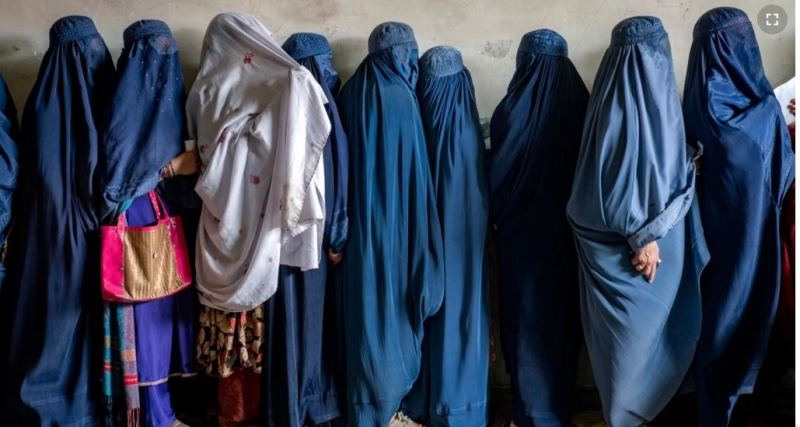
The Taliban have imposed their strict interpretation of Islamic law, banning schools for girls beyond the sixth grade and barring women from most public and private sector workplaces, including the United Nations and other aid groups.
"The DFA (de facto authorities) have tried to justify these restrictions as being part of the Islamic faith and Afghan traditions. However, similar restrictions do not exist in any other member state of the Organization of Islamic Cooperation, and many Afghans reject the DFA's characterization of local traditions," the U.N. report said.
It noted that the restrictive bans are not consistent with the values embodied in the U.N. Charter or international law, nor are they conducive to Afghanistan's political and economic stability.
The report recommended, citing stakeholder consultations, that an Afghan national dialogue needs to be initiated to establish inclusive governance and ensure sustainable peace and economic development in the country after 45 years of armed conflict. It would permit movement toward the full normalization and integration of Afghanistan within the international system.
The international community should quickly identify a solution to unfreeze Afghanistan's frozen assets, which are worth billions of dollars, and revisit the various sanctions regimes if the Taliban can demonstrate their ability to maintain the country's commitments and govern inclusively, the report adds.
While the document hailed the Taliban's counternarcotics efforts and improved security conditions across the country, it questioned de facto authorities' counterterrorism resolve and regional security concerns stemming from it.
The assessment said, without naming any country, that several member countries "attest to the persistent presence of terrorist groups and individuals inside Afghanistan, including members of al-Qaida." It added, citing recent U.N. reports, that some of these groups have relations with elements of the Taliban.
The report said the Taliban have demonstrated "limited responsiveness" to international engagement on the presence and treatment of such groups.
The Taliban have not commented immediately on the reported U.N. assessment, though they have previously rejected criticism of their policies, including counterterrorism efforts. They have persistently defended their male-only administration, called the Islamic Emirate, as an inclusive dispensation representing all ethnicities and tribes in Afghanistan.