‘Immigrants must know our traditions and comply with Russian laws,’ states Russian president

Russian media reports say President Vladimir Putin said yesterday that immigrants who come to work and live in Russia must comply with its laws and respect its customs and traditions, including learning the language. Putin reportedly addressed the issue at a meeting of the Council for the Development of Civil Society and Human Rights, traditionally […]

Asia-Plus

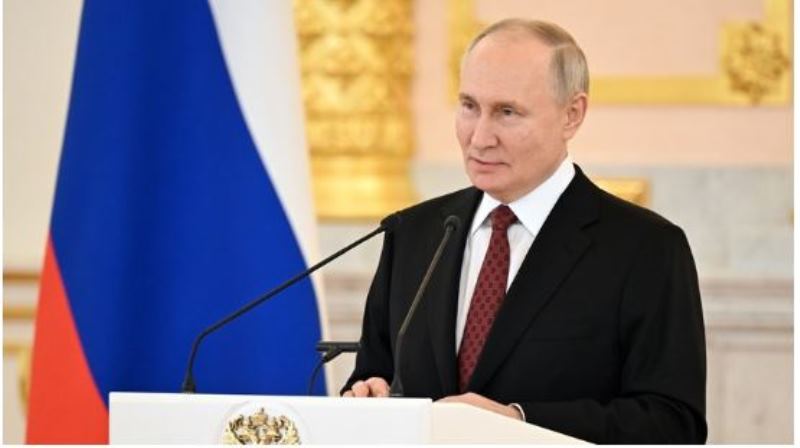
Russian media reports say President Vladimir Putin said yesterday that immigrants who come to work and live in Russia must comply with its laws and respect its customs and traditions, including learning the language.

Putin reportedly addressed the issue at a meeting of the Council for the Development of Civil Society and Human Rights, traditionally held in early December.

“We need to attract such labor resources that meet the interests of the Russian economy,” said the Russian president.  “This means that [these] people must be prepared from a linguistic, ethno-cultural point of view.  They must know our traditions and so on.”

The interest of Russia and its citizens “must be put first,” the president insisted. All immigrants and visitors also “must comply with Russian laws,” Putin clarified.  “And, of course, we, as a civilized country, must also ensure their rights.”

Russia is opening schools in several countries of the former Soviet Union – part of the Commonwealth of Independent States (CIS) to assist with Russian language instruction and cultural events, the president informed the council.

Moscow has withdrawn from several international human rights organizations because they have become “virtually controlled” by the West, demonstrating “political bias, hypocrisy, and open selectivity,” Putin said in his opening remarks.

Moscow is fully committed to the principles of the Universal Declaration of Human Rights and is “ready to cooperate with all interested countries and partners to find solutions to form an effective, fair, equal system for ensuring human rights for all,” Putin concluded.
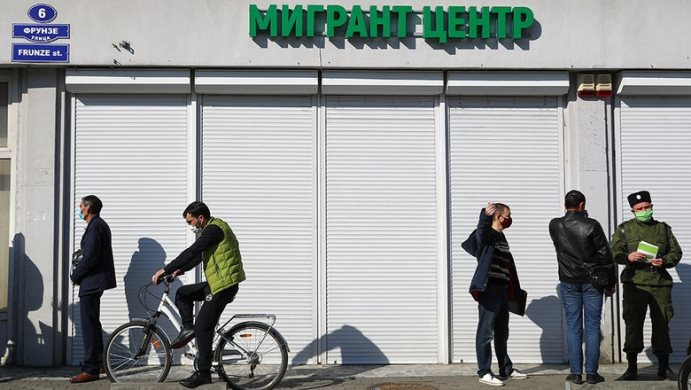
Labor migrants are still a critical component in the economy of Tajikistan, keeping many struggling families at home above the poverty line. 

According to data from the Russian Interior Ministry, driven by a lack of economic opportunities in Tajikistan, more than 1 million Tajiks travel to Russia for work each year. 

Meanwhile, some sources note that the worsening state of the Russian economy and sustained abuse from law enforcement there is pushing ever more expatriate laborers from Tajikistan to seek out alternative countries in which to find work.
Join us on social media!

Article translations:

Related Article

Оби зулол
Оби зулол

Most Read

Recent Articles

Media: the US struck Iranian ports but denies resuming war

Iran's military opened fire on forces that attempted to attack a pier on Qeshm Island.

Uzbekistan implements digital residency registration system

It will be possible to process it online through Face-ID.

The only GPW veteran in Dushanbe allocated more than 80,000 somoni

The mayor's office of Dushanbe allocated him 25,000 somoni.

GITEX AI Kazakhstan 2026: how Almaty became the main AI hub of Central Asia

More than 300 companies and startups, over 200 speakers and 100 investors from 50 countries — the region is entering the global stage.

A trade and economic park to be built at the border junction of Tajikistan, Kyrgyzstan, and Uzbekistan

President of the Kyrgyz Republic Sadyr Japarov familiarized himself with the project.

A project to protect soil from degradation to be developed in Central Asia

The initiative is of great significance for the mountainous countries of the region, including Tajikistan.

Mudslide, death, and destroyed homes: hundreds of families in Tajikistan left homeless

A correspondent from "Asia-Plus" visited Kulob and spoke with the families of those who died and were affected by the disaster.

Spring 2026 bright event: new issue of VIPzone now on sale

This issue is about people and ideas that change everything: from business and investments to fashion, food, and urban environment.

Godfrey Sullivan: “Tajikistan is a promising market for Visa to develop digital payments”

The Vice President of Visa explained why Tajikistan is becoming a promising market for digital payments and how artificial intelligence is influencing the future of finance.