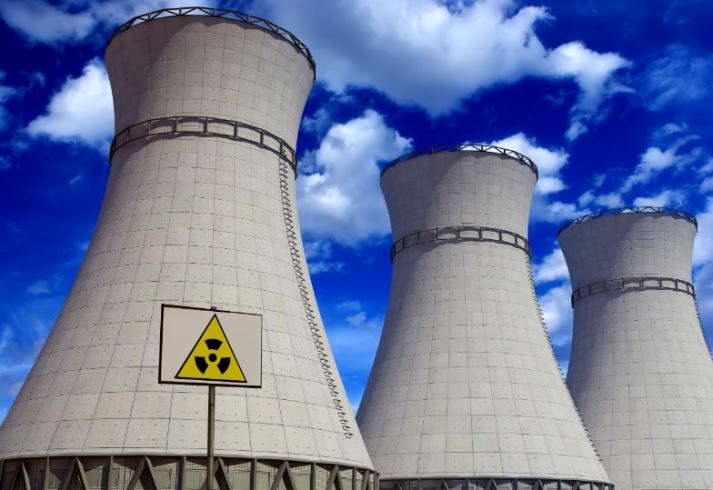
Central Asia’s nations, especially the downstream ones, are showing increased interest in nuclear power as a sustainable and reliable source of energy.
Uzbekistan has started preparations for the construction of its first nuclear power plant.
The International Atomic Energy Agency (IAEA) says Uzbekistan is planning to construct the plant in the southeast of the country. In 2017 the country signed an agreement with the Russian Federation to construct two VVER-1200 pressurized water reactors. In 2019 Uzbekistan initiated the process to select the site and installed a monitoring station for data collection on seismological, hydrological, meteorological and environmental parameters.
In January this year, an IAEA team of experts concluded a five-day mission to Uzbekistan to review the country’s safety processes for evaluating the site of its first nuclear power plant (NPP).
The Site and External Events Design Review Service (SEED) mission, which took place from January 16 to January 20, was carried out at the request of the Government of Uzbekistan and hosted by the state agency for the development of nuclear energy Uzatom in the capital, Tashkent.
According to the IAEA, Kazakhstan’s Ministry of Energy has recently proposed the potential reintroduction of nuclear power to reduce the country’s reliance on fossil fuels.
Kazakhstan has reportedly made progress in implementing the recommendations of the IAEA nuclear infrastructure review mission.
The role that nuclear power can play to improve energy security in the region, as well as reduce greenhouse gas emissions is being increasingly explored. These steps towards the reintroduction or development of nuclear power programs require robust nuclear law frameworks.
Kazakhstan currently operates research reactors as well as several other nuclear installations related to the front end of the nuclear fuel cycle, including uranium mining. The country reportedly has the second largest uranium reserves in the world with 14% of the total. The country’s BN-350 fast breeder power reactor is currently being decommissioned after 25 years of operation having been shut down in 1999.
The Kazakhstan Ministry of Energy has reportedly proposed the potential reintroduction of nuclear power to reduce the country’s reliance on fossil fuels, diversify its energy mix and reduce CO2 emissions. Kazakhstan Nuclear Power Plant (KNPP), which has been designated as the owner/operator of the future plant, began preparing a feasibility study in 2018 to justify the need for nuclear power, the choice of the location for plant construction and to review the plant’s projected power output.
The follow-up Integrated Nuclear Infrastructure Review (INIR) mission team travelled to Astana, the capital of Kazakhstan, from March 28 to March 31 this year, to assess the level of implementation of the recommendations and suggestions of the INIR mission carried out in 2016.
Turkmenistan has also set its sights on a future powered by clean and sustainable energy sources. Blackridge notes that Turkmenistan aims to harness the advantages of nuclear power to meet its growing energy demands.
Turkmenistan reportedly recognizes the pressing need to diversify its energy sources and reduce its dependence on fossil fuels. With its vast reserves of uranium and an ambition to become a regional energy hub, the country's focus on NPP construction projects reflects its commitment to sustainability, energy independence, and technological advancement. The nuclear energy sector promises substantial benefits for Turkmenistan, including reduced greenhouse gas emissions and extended energy security. Currently, Turkmenistan is in the early stages of developing its nuclear power capabilities.
Kyrgyzstan, which is upstream country, however is also showing interest in nuclear power.
An important stride in that direction was taken in November last year at the ATOMEXPO-2022 international forum in Sochi, Russia, where representatives from the Kyrgyz Ministry of Energy agreed for Russia’s Rosatom to conduct a feasibility study on installing a small nuclear reactor in Kyrgyzstan. Citing Rusatom Overseas, Nuclear Engineering International reported on January 25 this year that Rosatom is studying sites in Kyrgyzstan for the possible construction of a 110 MWe two-unit small NPP with a RITM-200N reactor. However, even if the construction of the nuclear power plant begins in Kyrgyzstan, it won’t be until 2028.
As with any energy source, renewable or non-renewable, there are pros and cons to using nuclear energy.
The top pros of nuclear energy: carbon-free electricity; small land footprint; high power output; and reliable energy source.
The top cons of nuclear energy: uranium is technically non-renewable; very high upfront costs; nuclear waste; and malfunctions can be catastrophic.