Russian media reports say the Head of the Government of the Russian Federation, Mikhail Mishustin, has signed a decree on making changes to the resolution on the list of narcotic drugs subject to state control.
Several new substances, including turbina corymbosa and peganum harmala, known in Tajikistan as “hazorespand”, have reportedly been added to the list.
These plants have reportedly been added to the list of narcotic drugs subject to state control based on request from the Interior Ministry of the Russian Federation “in order to prevent their illegal cultivation and trafficking in Russia.”
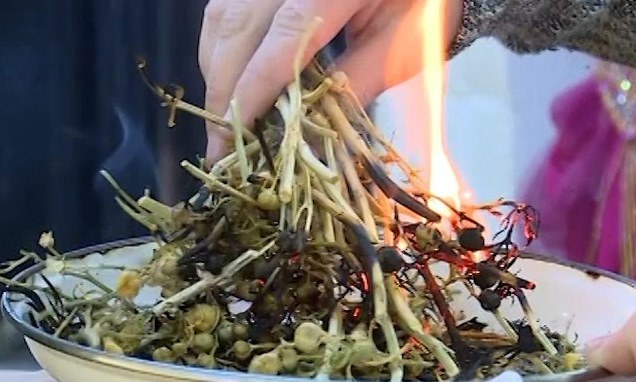
In Central Asia, Peganum harmala has been traditionally used for medical purposes, e.g. for treating skin diseases, joint pain, sore throat and cough. It is also applied as an apotropaic means – fumigation with the smoke of burning dried twigs of Peganum harmala is commonly practiced to ward off evil spirits, “evil eye” and other malevolent forces. According to the other explanations, it has purifying effects and kills microbes.
Peganum harmala, commonly called wild rue, Syrian rue, African rue, esfand or espand, or harmel, is a perennial, herbaceous plant, with a woody underground rootstock, of the family Nitrariaceae, usually growing in saline soils in temperate desert and Mediterranean regions. Its common English-language name came about because of a resemblance to rue (to which it is not related). Because eating it would sicken or kill livestock, it is considered a noxious weed in a number of countries. It has become an invasive species in some regions of the western United States. The plant is popular in Middle Eastern and north African folk medicine. The alkaloids contained in the plant, including the seeds, are monoamine oxidase inhibitors (Harmine, Harmaline).