Relatives of one of terrorism suspects, Faridoun Shamsiddin, have been released after questioning by Tajik law enforcement authorities. Now they don't want to talk to journalists. At the same time, nothing is still known about Faridoun’s sister, who is the wife of another terrorism suspect, and who was deported to Tajikistan.
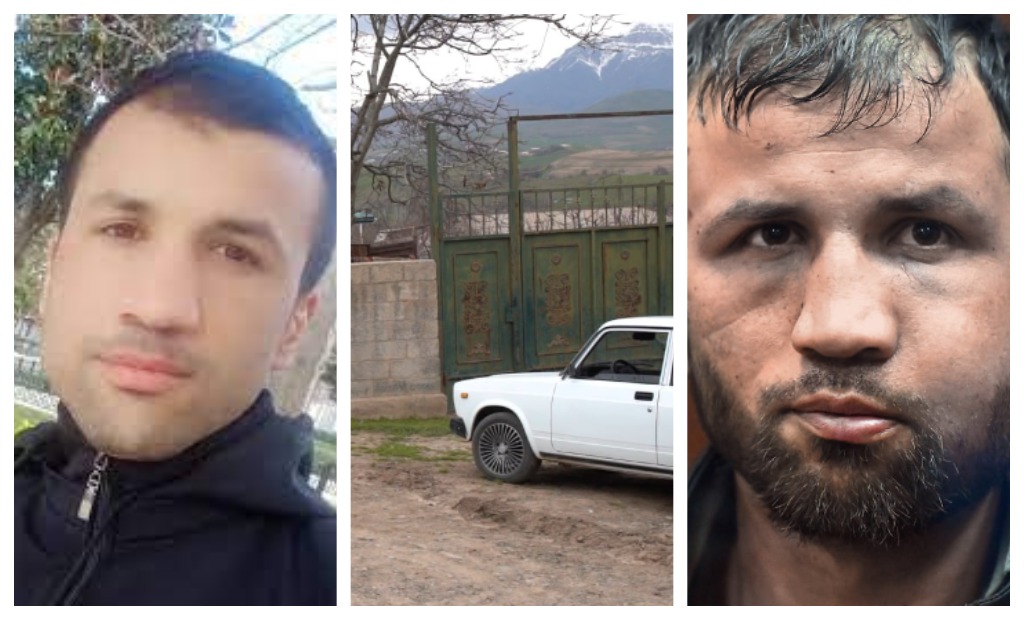
Faridoun Shamsiddin, a native of Loyob village in Hisor district, about 25 kilometers west of Dushanbe, was arrested by Russian security forces on March 23, a day after the massacre at Krasnogorsk’s Crocus City Hall. He said he had been contacted by the "assistant of an [Islamic] preacher" whose lectures he had been listening to on Telegram. The assistant reportedly gave no information about himself: “no name, no surname, nor anything else” he claimed.
The face of the interrogator and other men holding Faridoun Shamsiddin were not shown in the footage, which was widely circulated on Russian websites and social media on March 23 before appearing on state media outlets.
Late on March 24, the Grey Zone Telegram channel, which has been tied to the Wagner group, reportedly published a photograph purporting to show men torturing Faridoun Shamsiddin. The photograph shows a military radio connected by wire to the suspect's genitals, a well-documented form of torture through electric shock used in the Russian military, according to Radio Liberty’s Tajik Service.
On March 24, Moscow's Basmanny district court remanded the four men — Saidakram Rajabalizoda, Dalerjon Mirzoyev, Muhammadsobir Faizov, and Faridoun Shamsiddin — into custody for at least two months pending trial on terrorism charges. The court identified the four as Tajik citizens and said they all admitted guilt after being charged. They are suspected of murdering at least 144 people at the Crocus City Hall concert venue on March 22. Shamsiddin is reportedly also accused of recruiting two other men to help the gunmen.
Recall, first time to talk and get more information from Faridoun’s relatives, Asia-Plus’s reporters visited Loyob village on March 27 but he was unable to talk to either his parents or his brothers.
The reporter managed to talk only to his uncle’s wife who lives next door to Shamsiddin’s family. The woman told Asia-Plus on the basis of anonymity that “people in formal dress came on March 23 and took all the relatives.” She said she didn’t know where they were taken.
“My husband and sons are also gone. They went to find out about their uncle and never returned. I don’t know where they are now and what’s wrong with them,” the woman told Asia-Plus.
Tajik security forces were seen in Loyob on March 23 and reportedly took all relatives of Faridoun Shamsiddin, including his father, mother, his wife with an eight-month-old son, mother-in-law, uncle and cousins, away for interrogation.
According to some sources, Russian investigators have also flown to Tajikistan to speak to relatives.
Radio Liberty’s Tajik Service, known locally as Radio Ozodi, reported on March 25 that Faridoun’s sister, Mahbouba Zagarova and her three children have been deported from Russia. The justification was allegedly the fact that she registered Faridoun in her home.
The second time Asia-Plus’s reporter went to Loyob village on April 2 and met with one of Faridoun’s brothers, Manouchehr. He told Asia-Plus that he had also been taken for interrogation and “he, his parents and other relatives were released four days ago.”
According to him, he talked to Faridoun by phone in the afternoon of March 22, several hours before the terrorist attack and Faridoun told him that he was at work and he had a bad phone signal. He reportedly promised to call later.
Meanwhile, in Loyob, they do not believe anyone from their village was capable of taking part in the jihadist massacre at the Crocus City Hall.
Radio Ozodi says locals in Loyob village described Faridoun Shamsiddin as a “coward” and said they were shocked by news their fellow villager was among the suspects in the deadly terrorist attack at the Crocus City Hall in Krasnogorsk on March 22.
“I never noticed anything suspicious in his actions. He left for Russia six months ago and has been sending money home to his family,” a relative of Shamsiddin told RFE/RL on March 25.
Speaking on condition of anonymity, the man said Shamsiddin, 25, worked at a local bakery before moving to Russia and “could not have killed a sparrow. He was a coward.”
Married with a son, Shamsiddin was a convicted sex offender and sentenced to seven years in prison for sexual harassment, a relative said. Shamsiddin was reportedly granted an early release in 2020.
Asked about Faridoun’s religious beliefs, the Loyob resident said he wasn’t a practicing Muslim: “He never prayed or fasted, and he drank alcohol.”