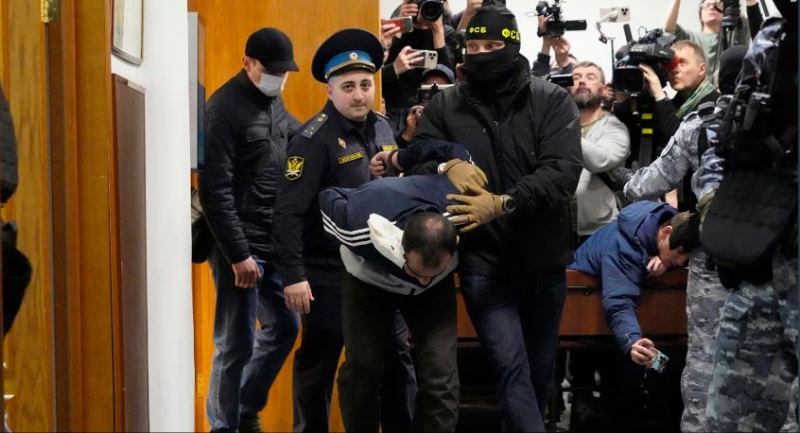
Tajikistanis are losing Russia as a country that has been a place of work for many of them for many years. The situation for migrants has been deteriorating over the past few years, but the terrorist attack on the Crocus City Hall concert venue in Moscow oblast has accelerated these events incredibly.
The life of Tajik migrant workers in Russia has consistently deteriorated in recent years, especially after the launch by Russia of the so-called “special military operation” in Ukraine in February 2-22. However, after the Crocus City Hall terrorist attack, the pressure on labor migrants from Tajikistan has increased even more, says Marat Mamadshoyev, IWPR editor in Tajikistan.
In late March, Russian police officers have conducted mass raids in a number of Russian cities on places where migrants stay. In St. Petersburg alone, the courts ordered the deportation of more than 400 migrants.
Human rights activist Valentina Chupik, who provides free counseling to migrants working in Russia, told Mediazona that within the first two days after the terrorist attack, she received more than 2,500 calls from foreign citizens staying in Russia. More than half of the messages reportedly concerned police raids and illegal detentions.
Migrants reported an increase in cases of aggression against them after the terrorist attack in Crocus City Hall. According to the media, in the city of Blagoveshchensk, Amur oblast, unknown persons set fire to a pavilion belonging to Tajiks. At the same time, the municipality explained that the incident apparently occurred “on ethnic grounds”. In Kaluga, a group of unknown people attacked three migrants from Tajikistan, after which one of them was hospitalized.
In various regions of Russia, local residents are reportedly refusing cab rides when they learn that the driver is a citizen of or from Tajikistan.
In view of these reports, the Tajik Embassy in Moscow has urged Tajik nationals to refrain from participating in public events for some time if possible.
Dushanbe airline ticket offices reportedly told the media on March 28 that the number of those wishing to buy tickets to Russia has noticeably decreased over the past week, while the number of citizens deported from Russia to Tajikistan has increased. The number of those wishing to travel to Russia by land transportation has also decreased.
Mamadshoyev notes that Russian authorities, by collectively punishing migrants for the terrorist attack, want to create a guilt complex, especially among new citizens, and do not hide the fact that they need this for utilitarian purposes. According to him, the secondary mobilization in Russia is almost inevitable. Migrants are supposed to be one of the main sources of replenishment of the Russian army in its bloody assaults in Ukraine. And judging by all appearances, a part of Russian society will not mind if it is not them, but new citizens who go to war.
All influential forces are increasingly saying that migrants are undesirable. Even more so because Russian Prosecutor-General Igor Krasnov said on March 26 that the number of crimes committed in Russia by migrants in 2023 increased by 75%.
However, the denunciatory pathos of the Russian authorities against migrants – terrorists and criminals – is decreasing since in recent years Russia has been releasing murderers, rapists, and pedophiles for war. Already after the terrorist attack, members of the infamous Tsapki gang, known for their massacres, were amnestied.
In any case, for Tajik migrants, primarily Russian citizens, the likelihood of falling into Putin’s war, which is foreign to them, is growing. These are long-term risks, as Putin’s war with Ukraine drags on indefinitely.
After the terrorist attack, the level of xenophobia in Russian society has increased dramatically. It is believed that antagonism towards foreigners is dictated by racism since people with non-white appearance, in general, are being targeted.