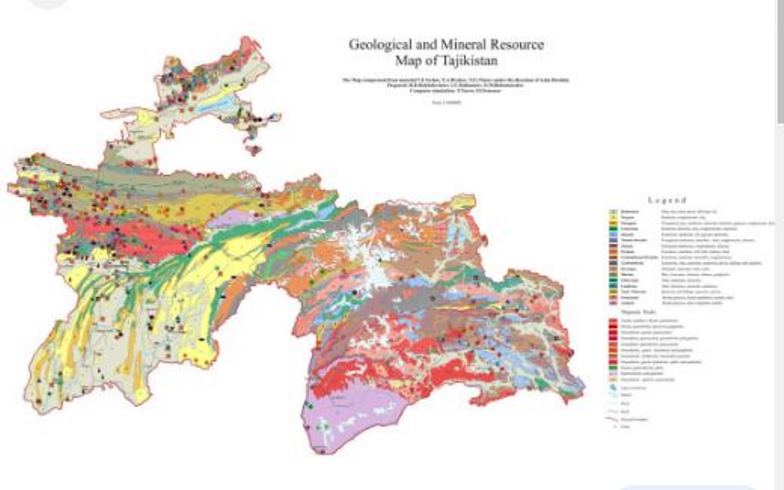
Eldaniz Gusseinov of the Ibn Khaldun University’s Heydar Aliyev Center for Eurasian Studies, alongside Abakhon Sultonazarov, IWPR Central Asia Regional Director, contend that the interplay between Central Asia’s ties with the West and China signals the onset of a resource rivalry. Following the upheaval in Ukraine and the ensuing global realignment, the West’s quest for rare earth metals has intensified, aiming to curtail its reliance on Russia and China. Yet, as Western nations pivot to renewables to lessen their dependency on Russian hydrocarbons, they grapple with the potential of becoming more dependent on China, a dominant force in the renewable sector. Central Asia emerges as a pivotal player amidst this, blessed with vast, yet largely untapped, mineral wealth, thereby positioning the region at the heart of the burgeoning competition for essential resources.
This article explores three critical inquiries: 1) the authors assess the strategic position of Central Asian nations within the rare earth metals’ geopolitical landscape; 2) they identify the risks and prospects these states encounter amid the competitive scramble for these resources; 3) they evaluate the capacity of international players to contest for Central Asia’s mineral riches, highlighting the region’s pivotal role in global resource politics.
Central Asia boasts a significant share of the world’s essential minerals, holding 38.6% of its manganese ore, 30.07% of chromium, 20% of lead, 12.6% of zinc, and 8.7% of titanium, alongside other valuable resources.
Critical resources are essential natural materials vital for economic and technological progress, due to their crucial use in producing a broad array of high-tech products. These resources, including rare earth elements, strategic metals, and other minerals, are characterized by their scarcity, the complex nature of their extraction and processing, and the concentrated geographical locations of their deposits.
The United States and China are reportedly locked in a contest for Central Asia’s vital minerals, marking a shift in American engagement tactics in the region. Moving away from areas traditionally dominated by Russia and China, the U.S. is now zeroing in on critical resources. In September 2022, under the Biden administration, the U.S. rolled out the Economic Resilience Initiative for Central Asia (ERICEN), earmarking US$25 million for the year to foster trade diversity and bolster regional investments.
Meanwhile, at the May 18-19, 2023, China-Central Asia Summit, Chinese President Xi Jinping pledged US$4 billion in financial aid to the region, underscoring the geopolitical stakes. This period also saw a growing realization within the U.S. and EU that their heightened engagement with Central Asia might be too little, too late, facing stiff competition from Russia and China in security and economic spheres.
In September 2023, the U.S. hosted the “US-Central Asia” summit, a significant development. This summit was distinct in its focus and outcomes. A post-summit analysis revealed that securing access to Central Asia’s rare earth metals was a primary objective.
The arena of critical resource exploration, extraction, and processing is emerging as a battleground for the U.S. to counter Russian and Chinese sway. The U.S. has reportedly ramped up its involvement notably, hosting the inaugural C5+1 Critical Minerals Dialogue (CMD) with top officials from all five Central Asian nations on February 8, 2024.
For China, safeguarding its strategic dominance and thwarting U.S. and allied efforts to tap new critical resource reserves are paramount, especially within the context of global power dynamics. This strategy was underscored following French President Emmanuel Macron’s tour of Kazakhstan and Uzbekistan on November 1-2.
Competition among the great powers for access to critical resources in Central Asia presents a mix of risks and opportunities for the countries of the region. Central Asian countries, with their vast reserves of critical minerals and rare earth metals, can play a key role in the global pursuit of technological progress and energy transition. This scenario reportedly unfolds in a broader geopolitical context where these countries are positioned between the interests of major powers such as China, the United States and, to a lesser extent, Russia and the European Union.
The demand for critical resources offers Central Asian countries significant opportunities for economic development and diversification beyond traditional sectors such as agriculture and energy. Investments in mining and processing enterprises can stimulate job creation, infrastructure development and technology transfer, increasing overall economic resilience.
Growing interest from the U.S., China, and the EU could lead to increased foreign direct investment (FDI) in the region. This influx of capital and expertise can be used to develop other sectors of the economy, improve infrastructure, and build human capital through education and training programs sponsored by foreign partners.
By playing a more prominent role in the global supply chain for critical minerals, Central Asian countries can increase their strategic importance on the world stage, giving them greater leverage in international diplomacy and trade negotiations.
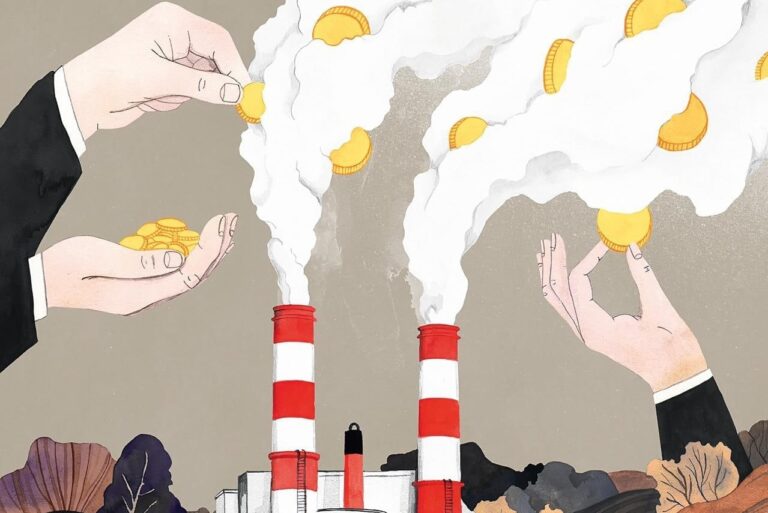
At the same time, it may lead to dependence on external actors. Besides, the mining and processing of rare earth metals and essential minerals can have significant environmental impacts. The influx of foreign investment and the focus on mining can exacerbate socio-economic inequalities in Central Asian countries. Mineral-rich regions may gain significant development while others lag behind, which may lead to internal tensions and social unrest. Moreover, fierce competition between major powers for access to critical resources can cause geopolitical manipulation in Central Asian countries. For example, some of the resources located on the territory of the countries of the region may be used for military industry, which may not be to the liking of the competing parties.