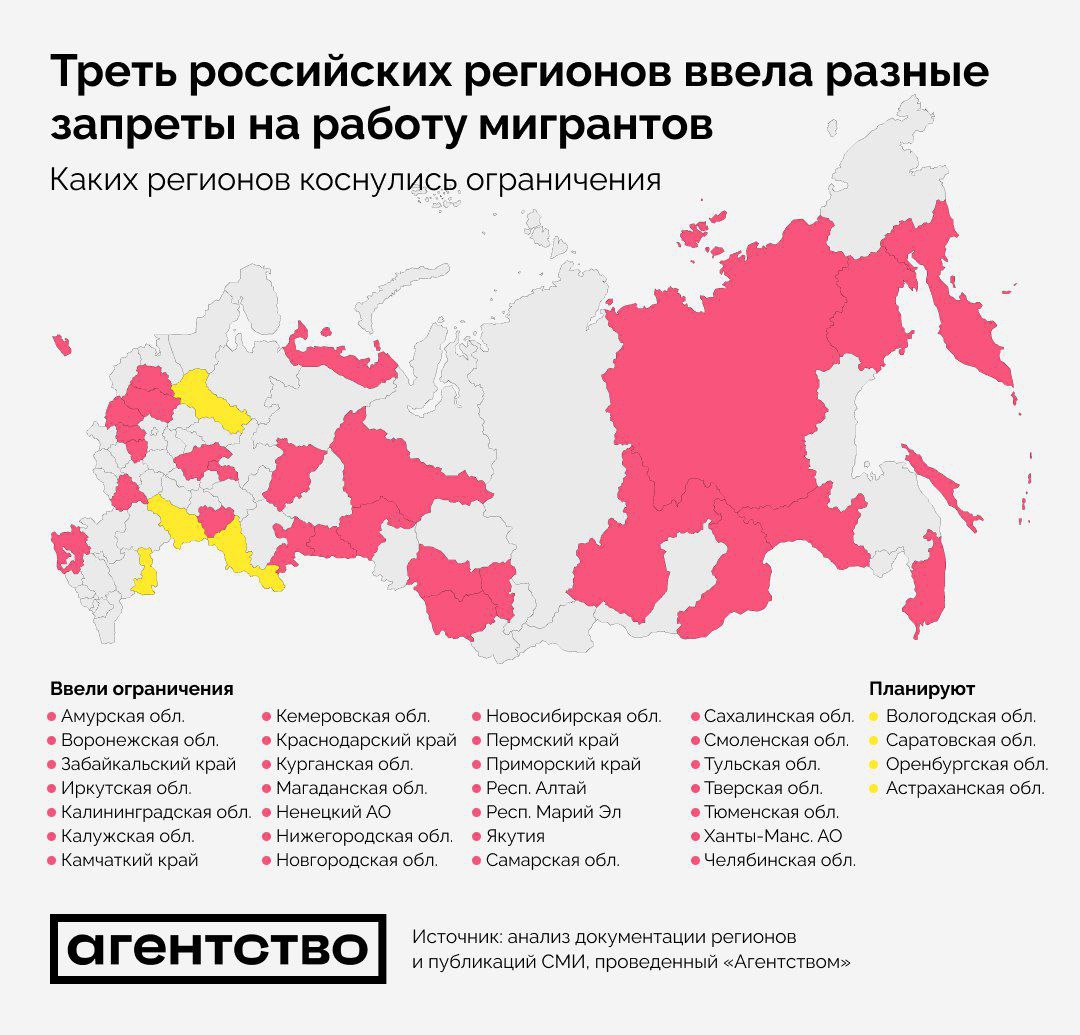
Despite a nationwide labor shortage, authorities in many regions of the Russian Federation have been imposing more and more restrictions on the types of jobs migrant workers can pursue.
While some areas already had prohibitions in place, others began introducing bans following the arrest of four Tajikistani citizens in connection with the deadly March 22 terrorist attack in Krasnogorsk.
A new report by Agentstvo says these restrictions primarily target sectors such as taxi services and trade.
Local authorities in Russia’s Kamchatka Krai have reportedly prohibited foreigners who come to Russia to seek employment from working as taxi drivers. This ban reflects a broader trend across Russian regions, where restrictions on the types of jobs available to economic migrants are becoming more common. Agentstvo notes that twenty-eight Russian regions and annexed Crimea have already imposed limitations on the sectors where foreigners with work permits can seek employment.
According to the report, the most prevalent restriction is on employment in the taxi and rideshare sector, which is enforced in 27 regions.
Approximately 18 regions have placed restrictions on migrant employment in the trade sector, including bans on selling alcohol, tobacco, and certain food items. Additionally, some regions prohibit migrants from working in hospitality, catering, libraries, and financial services.
Agentstvo found that nearly half of the regions implementing these restrictions introduced them in 2024 alone. Four of these places — Crimea, the Nenets Autonomous Okrug, and Novosibirsk and Novgorod oblasts — implemented the restrictions following the deadly March 22 terrorist attack in Krasnogorsk, where the main suspects were Tajikistani citizens.
Since the attack, people with Central Asian ancestry in Russia have been reporting increased discrimination. Law enforcement also cracked down on migrant communities, conducting the largest raids since at least 2013, and the Russian authorities began tightening immigration legislation.
At least four more Russian regions are reportedly preparing to introduce measures limiting job opportunities for migrants. The governor of the Orenburg oblast has already published a draft decree on the matter, while officials in Russia’s Vologda and Saratov oblasts have publicly announced their intentions to implement work restrictions. In the Astrakhan oblast, law enforcement has proposed banning foreigners from driving minibuses and taxis.
These tightening measures on migrant employment come against the backdrop of a historic labor shortage in Russia, which Central Bank head Elvira Nabiullina has called the main problem facing the country’s economy. The unemployment rate in Russia in 2023 was the lowest in recorded history.