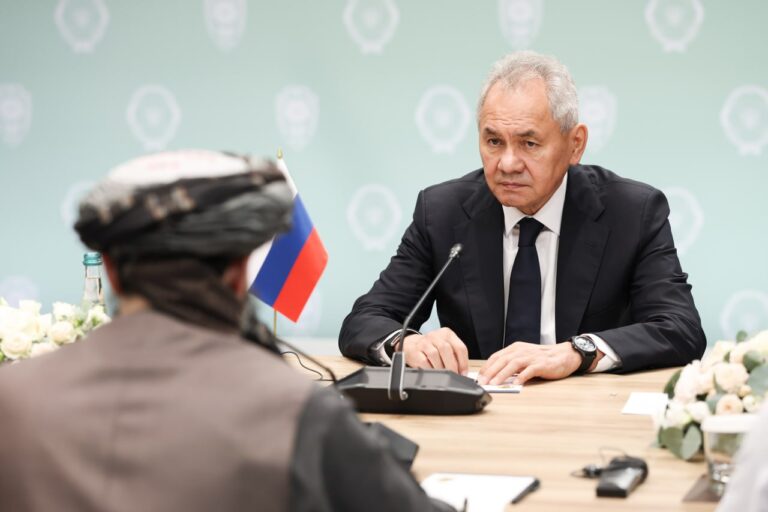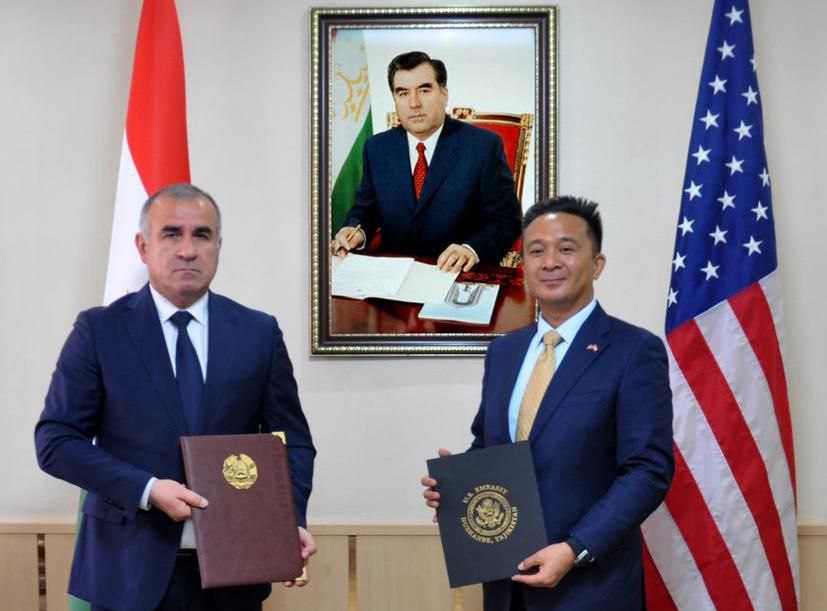
Tajikistan and the United States of America have signed a memorandum of understanding (MoU) on introduction of the Personal Identification Secure Comparison and Evaluation System (PISCES), the official website of the Prosecutor-General’s Office of Tajikistan says.
The document was reportedly signed in Dushanbe on May 8 by Tajik Prosecutor-General Yusuf Rahmon and the U.S. Ambassador to Tajikistan Manuel P. Micaller Jr..
In the course of the talks, the parties discussed issues related to exchange of information on threats to the security of both countries, protection of rights and interests of citizens, prevention of and fight against manifestations of violent extremism and terrorism, cybercrimes, transnational organized crime, etc.
The parties reportedly agreed to continue the bilateral legal cooperation in various areas.
The Personal Identification Secure Comparison and Evaluation System is a border control database system largely based on biometrics developed by Booz Allen Hamilton Inc..
The PISCES-project was initiated by the Department of State, Terrorist Interdiction Program (TIP) in 1997, initially as a system for countries in improving their watchlisting capabilities by providing a mainframe computer system to facilitate immigration processing in half a dozen countries. Foreign authorities used the technology to watchlist and exchange information with the United States Department of State about suspected terrorists appearing at their borders. The information is used to track and apprehend individual terrorists, not for wide-ranging analysis of terrorist travel methods", according to US-government reports. It matches passengers inbound for the United States against facial images, fingerprints and biographical information at airports in high-risk countries. A high-speed data network permits U.S. authorities to be informed of problems with inbound passengers.
PISCES workstations installed throughout a country are linked by wide area network to the participating nation’s immigration, police or intelligence headquarters. The headquarters is provided with the automated capability to monitor activities at immigration points, evaluate traveler information and conduct real time data analysis.