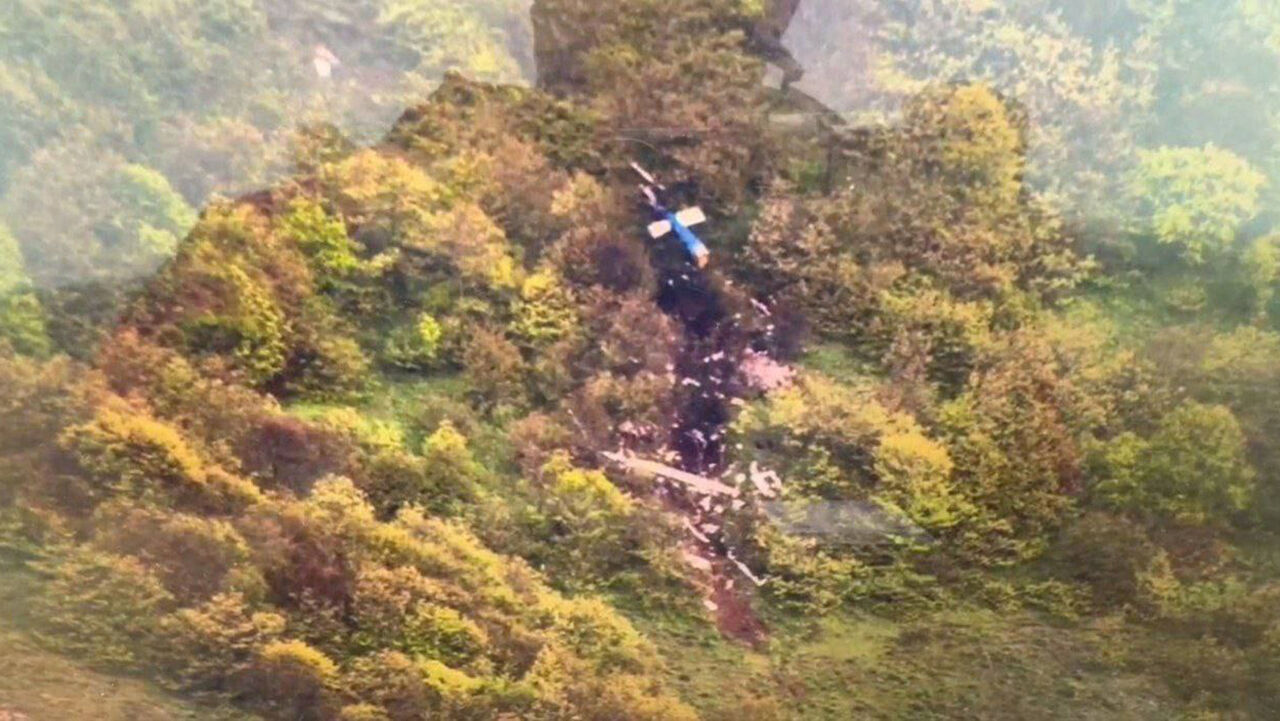
Iranian media reports say that according to a report by the Iranian General Staff, no evidence of electronic warfare intervention or sabotage has been found in the helicopter crash that resulted in the death of late president Ebrahim Raisi and his entourage this month.
IRNA reports that the General Staff of the Iranian Armed Forces on Wednesday released its second report on the May 19 crash, which also killed foreign minister Hossein Amirabdollahian and others.
Based on sampling and tests conducted on the wreckage and parts of the helicopter, as well as the distribution pattern of the debris from the main body, the occurrence of an explosion caused by sabotage during the flight and moments before the impact with the mountainside is ruled out, the report said.
Additionally, investigators carefully examined the vast majority of the documents related to the maintenance of the helicopter and found no issue that could have played a role in the accident, it added,
The report also revealed that the helicopter's capacity in terms of the maximum standard load it could carry at the point of take-off and throughout the flight path and the return route was found to have been within the "permissible limit."
The recorded conversations between the flight crew show that the last contact with the pilots up to the time of the incident and when they stopped responding lasted 69 seconds, and no emergency declaration was recorded during that time, it added.
The military investigators also ruled out any disruption in the communication system or frequency interference with the helicopter. They revealed that during the flight and up to 69 seconds before the crash, contact with the aircraft had been maintained on the specified frequencies.
The report further said that there were no signs of any cyberattack carried out against the presidential helicopter.
The General Staff, which issued its preliminary report on the incident on May 24, said the investigation will continue until the main cause of the crash is determined and the results will be made public.
On May 19, a helicopter carrying Ebrahim Raisi, Amirabdollahian, and other officials crashed in the Iranian province of East Azerbaijan. They were declared dead on May 20, and a presidential election has been scheduled for June 28.