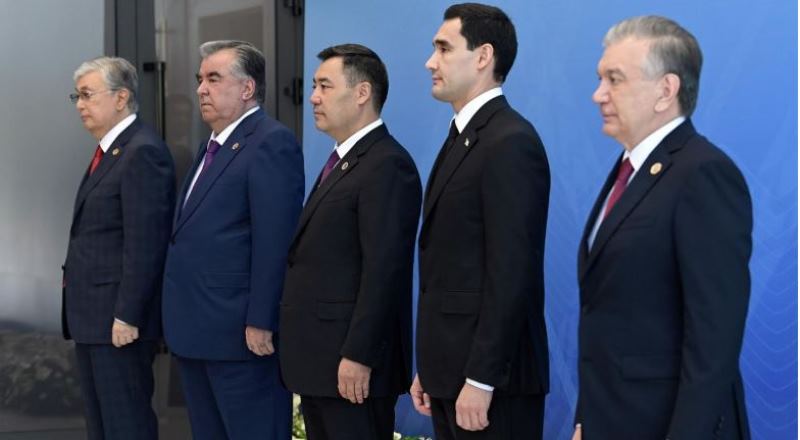
Radio Liberty said on May 30 that Volodymyr Zelenskiy may not have been trying to offend Central Asian leaders last week when he suggested that their international positioning remained pro-Russian “out of fear of the Kremlin.”
But he was perhaps probing for some kind of response — including to his public invitation for them to attend a June summit in Switzerland demanding that Russia end its aggression against Kyiv and conclude a peace agreement in accordance with the UN charter.
However, that request has reportedly been met by silence so far.
Asked whether non-reaction seems to prove Zelenskiy’s point, Temur Umarov, a fellow at the Carnegie Russia Eurasia Center, told Radio Liberty, “It is mostly pragmatism.”
“But of course, that pragmatism includes some fear, because [the Central Asian countries] are aware that there may be backlash for taking actions that anger Russia,” he said.
At the same time, Umarov says, the overall picture is more complicated and contradictory than Zelenskiy suggested.
Since the beginning of the Ukraine war, Central Asian diplomacy has reportedly seen a boom in diversity, while some leaders and other top officials from the region have on occasion said and done things that appear to stray from Moscow's line.
“Yet they also understand that ties with Russia matter and that Russia is important for the security of their regimes,” Umarov said.
As it had been reported earlier, speaking on May 24 to RFE/RL while meeting reporters in Kharkiv, Zelenskiy has suggested some Central Asian countries are frightened of Moscow and urged them to join a Kyiv-backed peace initiative. He challenged Central Asian leaders to put aside concerns of angering Russia, which considers the region part of its sphere of influence, and attend a summit in Switzerland next month aimed at achieving peace in Ukraine.
Speaking to Central Asian journalists during a visit on May 24 to Kharkiv, Zelenskiy reportedly said fear of Moscow's wrath should not deter Central Asian leaders from attending the June 15-16 summit. He also told the Central Asian reporters that not even countries that are rich in mineral resources and energy supplies need to avoid being dependent on other countries.