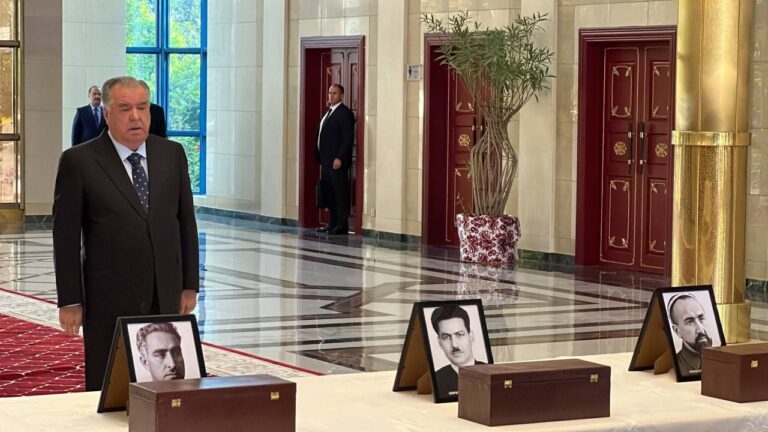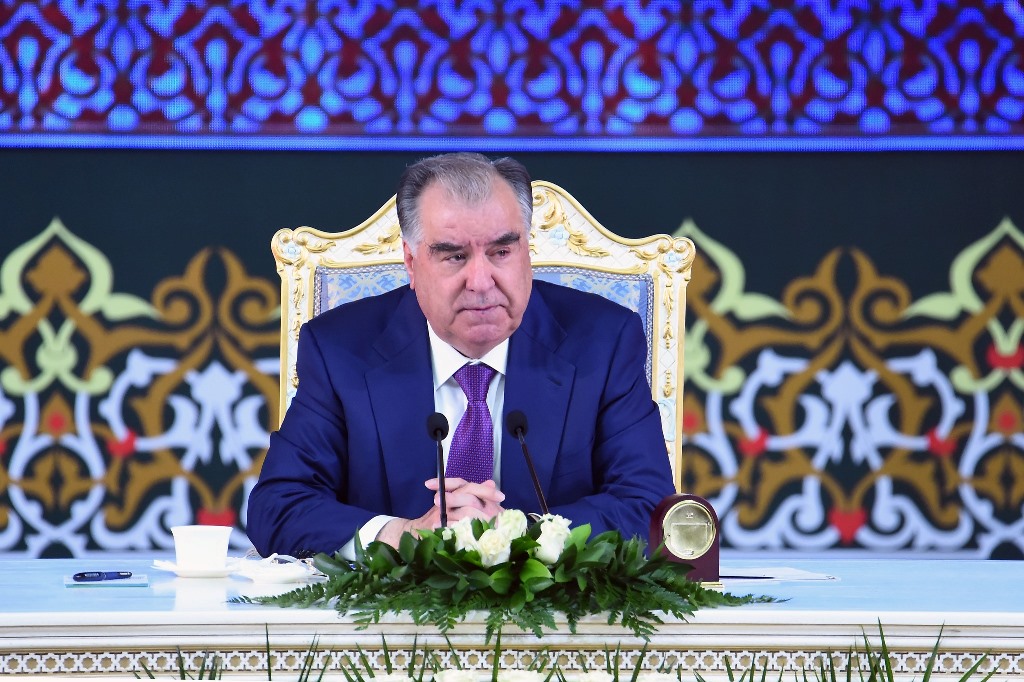
A meeting of the National Council of Tajikistan, presided over by its head, President Emomali Rahmon, took place on June 10.
The Tajik president’s official website says members of the National Development Council, leaders and representatives of international organizations and other development partners, heads of relevant ministries and agencies of the country participated in the meeting, which reviewed the interim implementation of Tajikistan’s National Development Strategy for the period up to 2030, identified further development priorities and drew attention of development partners to the increase in funds for the implementation of the country's strategic goals and priorities.
Speaking at the meeting, Emomali Rahmon, in particular, noted that despite the current global situation and the direct impact of negative external factors on the national economy, the average growth rate of the country’s economy over the last eight years has been 7.4 percent, and international financial organizations rated Tajikistan according to the average annual economic growth rate as a country with a rapidly developing economy.
The head of state stated that during this period, the gross domestic product (GDP) increased 2.6 times and GDP per capita – 2.3 times, the monetary income of the population increased 4.4 times, the average monthly salary increased more than 2 times, the size of the final pension increased 1.9 times, and the number of entrepreneurs increased 1.6 times, contributing to the improvement of people's living standards.
As a result of timely measures taken by the Government of the country, the poverty level reportedly decreased from 31.3% in 2015 to 21.2% in 2023, and according to the assessment of the World Bank, Tajikistan entered the ranks of the 10 leading countries in the world in terms of the poverty rate reduction.
In the continuation of his speech, Emomali Rahmon stated that Tajikistan has made significant achievements in the implementation of the Sustainable Development Goals (SDGs), and according to the evaluations, it has fulfilled 70% of these goals and more than 90% of some of their indicators.
Then, the Minister of Economic Development and Trade Zavqi Zavqizoda, who is the Executive Secretary of the National Development Council, reported on the interim implementation of the country’s National Development Strategy for the period up to 2030.
The President of the Islamic Development Bank Dr. Muhammad al-Jasser, the Deputy Secretary General of the United Nations and the Executive Secretary of the Economic and Social Commission for Asia and the Pacific Armida Salsia Alishahbana, Director of Global Water Issues at the World Bank Saroj Kumar, Director-General of the Asian Development Bank for Central and Western Asia Evgeny Zhukov spoke at the meeting and expressed the readiness of the development partners to support the goals, priorities and constructive initiatives of the Government of Tajikistan.
The Chairman of the Coordination Council of Development Partners, World Bank Country Manager in Tajikistan Ozan Sevimli reported on the contribution of development partners to national goals and priorities.
President Emomali Rahmon, who is Chairman of the National Development Council of Tajikistan, called on the development partners to contribute more to the implementation of the World Agenda for Sustainable Development in the very sensitive and rapidly changing conditions of the global economy in order to realize the further development priorities of Tajikistan.
At the end of the meeting, Emomali Rahmon reportedly gave instructions and assignments to the ministries and agencies on the drafting of the relevant documents for the revision of the National Development Strategy for the period up to 2030, taking into account the SDGs, the Regulations of the National Development Council, and the preparation of an interim review of the implementation of Tajikistan’s Medium-Term Development Program for 2021-2025, laying the groundwork for the drafting of the country’s Medium-Term Development Program for 2026-2030. The president also gave relevant recommendations to the development partners on the expansion of cooperation for the implementation of Tajikistan’s strategic goals and priorities.