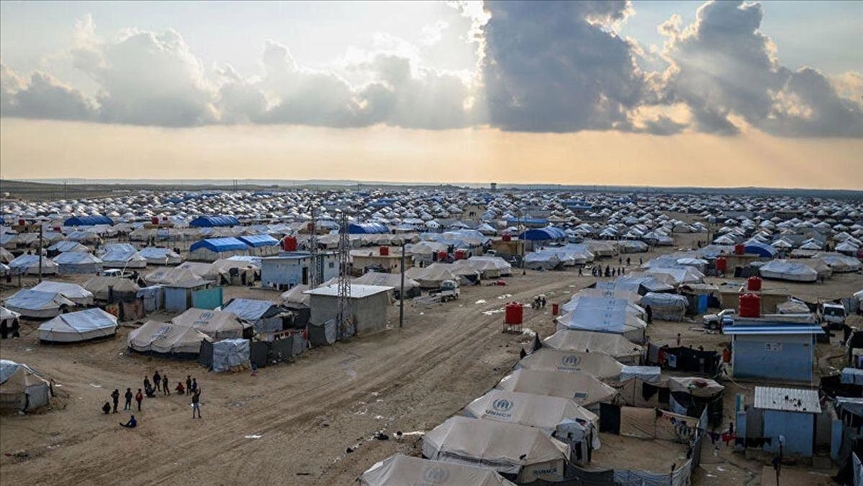
The authorities in Tajikistan are facing challenges with the return of Tajik women and children who remain in the Al-Hol refugee camp in Syria.
Radio Ozodi (Radio Liberty’s Tajik Service) says that according to official information, around 200 Tajik women and children are currently housed in this camp, which has been repurposed for individuals displaced from the so-called Islamic State of Iraq and the Levant (ISIL) terror group. .
On April 25 of this year, the Tajik authorities organized another special flight, bringing 47 people from Syria to Dushanbe – 15 women, 17 girls, and 15 boys.
Zubaidullo Zubaidzoda, Tajikistan's Ambassador to Kuwait, who is responsible for the campaign to return Tajik women and children from Syria, reported that the return of more refugees had been planned. However, at the last moment, some women refused to go back to their homeland because their children had been kidnapped.
The women stated that their children were kidnapped by the Hasba group and that they would not leave without their children.
What is Hasba?
Hasba is a radical group acting as the religious police of ISIL, ensuring that all those living in refugee camps adhere to the laws established by this police force. Previously, Hasba controlled the enforcement of ISIL rules in all territories under the control of this extremist group.
This group, hiding from the SDF military, harshly punishes women in the Al-Hol camp and other camps who do not comply with their “strict rules”.
There have been numerous media reports about their brutal attacks on humanitarian workers and camp residents.
Initially, the camp in northeastern Syria was created for Iraqi refugees in early 1991 during the Gulf War, and it was reopened after the 2003 invasion of Iraq as one of three camps on the Iraq-Syria border.
The camp later became a refuge for those fleeing the fighting between the SDF and ISIL. After the fall of ISIL, as of September 2019, around 20,000 women and 50,000 children were held in the camp.
Currently, more than 60,000 women and children of ISIL fighters are housed in tents in this camp, guarded by 400 Kurdish soldiers.
What is the problem?
In this camp, with a refugee population comparable to the population of Tajikistan’s Zafarobod district, about 10,000 are foreign citizens, and the rest are citizens of Iraq and Syria.
According to officials from the Kurdish opposition forces controlling the region, they have limited resources to combat the Hasba group operating in the refugee camps.
Tajikistan is one of the few countries that have attempted to repatriate their citizens from Syria and Iraq from the beginning.
A source, speaking anonymously, told Radio Ozodi that it seems everyone who wanted to return has already been brought home.
According to him, either the Hasba group has become very active, preventing the remaining women and children from returning home, or the remaining group of Tajik women themselves do not want to return.