Now, you can pay for utilities in Tajikistan by wire transfer Deputy Director-General of the State Unitary Enterprise (SUE) Khojagii Manziliyu Kommunali (KMK – the state holding company for public utilities), Rajabali Rasoulzoda told reporters in Dushanbe on July 22.
However, it soon became clear that the cashless payment system is only partially functional.
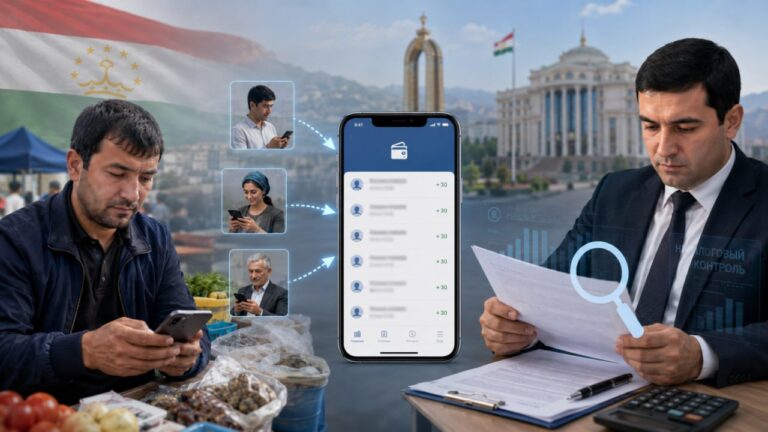
In response to a question from Asia-Plus reporter about cashless payments in the KMK system, Mr. Rasoulzoda noted that agreements between KMK and Amonatbonk (Tajikistan’s savings bank) have been signed, and this payment option is available in the "Amonat-mobile" app – the electronic wallet of Amonatbonk.
When the Asia-Plus reporter tested the app, it turned out that the "windows" mentioned by the KMK leadership were empty – there was no information in them. If you press the "Payment" button and then "Utility Services" in the Amonatbonk mobile app, a list of services appears on your screen: electricity, heating (for Dushanbe), Vodokanal (water supply), and irrigation water (presumably referring to water for irrigation – ed.), which can be paid for online. Interestingly, irrigation water is also listed as a utility service, although it is managed by the Agency for Land Reclamation and Irrigation.
There may be some confusion in the app.
Currently, across the country, only Danghara's utility services can be paid online. As KMK management explained to Asia-Plus after the news conference, the organization has indeed launched a cashless payment system in 56 districts and cities under its jurisdiction, but it is currently not fully operational. According to president’s decree on measures to expand cashless payments, from August 1, 2023, all state services must be conducted by bank transfer. This includes tax payments, state duties, licenses, mandatory insurance, utility services, banking transactions, etc.
The Nizomi Muosir Company, a technical service provider, is helping the KMK transition to an automated system. According to the company, residents currently need to visit the KMK office in their district or city to pay for utilities by wire transfer through Amonatbonk POS terminals.
"It is expected that by the end of this week, utility payments will also be available through the Amonat-mobile app. Negotiations are ongoing with Amonatbonk management on this issue," Orif Tolibov, a representative of Nizomi Muosir, told Asia-Plus in an interview on Wednesday.
Additionally, Tolibov mentioned that KMK plans to approach the National Bank of Tajikistan (NBT) to implement online payment for its services in other banks in the country.
Asked about how the funds collected by the KMK are spent, the KMK officials stated that all money goes into the KMK’s bank account and is used for tax payments, employee salaries, and equipment repairs.
The main question that concerns all Tajikistan citizens is, what are we paying KMK for? According to the KMK leadership, utility services include providing drinking water, garbage removal and disinfection, and territory cleaning. Correspondingly, we pay for these services. The KMK did not comment on the Asia-Plus reporter’s objection that Tajik citizens pay separately for garbage and water.
Meanwhile, according to the KMK, over the first six months of this year, the enterprise has provided services to residents of cities, districts, and villages of the country worth 118,639,700 somonis, which is 14,457,800 somonis more than the same period last year.
It is to be noted that KMK now provides water supply services to 13 percent of the country’s population. Companies for public utilities in Dushanbe, Khujand, Faizobod, Nurek, Kulob, Yovon, Vahdat, Varzob, Shahrinav and Tursunzoda are subordinate to local authorities.
In Dushanbe, for example, SUE Dushanbevodokanal (DVK — municipal water works) provides the water supply services.