Women's clothes are high on the government's agenda once again in Tajikistan, where authorities and Islamic leaders are working on new guidelines on what women should wear to work and during their leisure time.
Radio Liberty’s Tajik Service says the new dress code — the second of its kind in six years — is expected to be made public in the coming days, and a special event is reportedly being planned for the capital, Dushanbe, in August to showcase compliant clothes.
Sulaimon Davlatzoda, the head of the Committee for Religious Affairs and the Regulation of Traditions under the Government of Tajikistan, told a press briefing in the capital lasts week that "a joint task force of the Culture Ministry, the Women's Committee, and the Religious Affairs Committee is working together to determine what clothes are most compatible with our national values and traditions."
The new dress code comes after Tajikistan officially issued a ban in June on "clothes alien to Tajik culture," a term widely used by officials to describe Islamic dress, which they treat as an outward sign of potential religious extremism.
Earlier last week, Tajikistan’s Shuroi Ulamo (Islamic Council of Ulema — Tajikistan's highest Islamic institution) issued a fatwa — a religious edict — against "black clothes" as well as "tight-fitting and see-through" garments for women. In Tajikistan, the term "black clothes" tends to be a euphemism for the Islamic hijab.
The July 26 fatwa proclaimed that the color of black is not compatible with "our national and geographical characteristics."
Instead, the statement urged Tajik women to stick to the local tradition of wearing blue to mourn their dead.
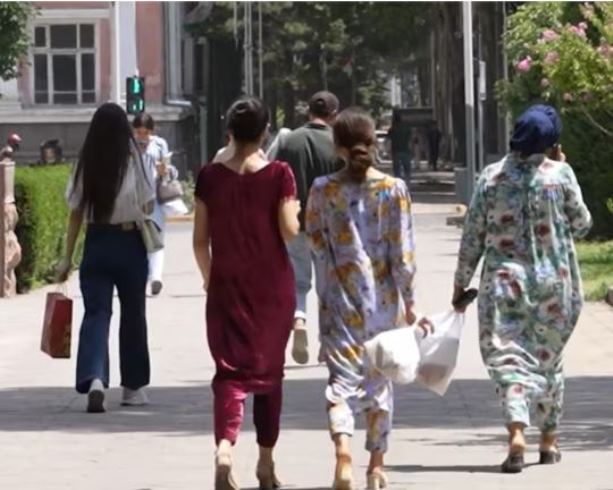
Echoing the government's long-standing position on female clothing, the fatwa also promoted a national costume for Tajik women, which consists of a dress, trousers, and a kerchief.
The fatwa explained that the three-piece was fully in line with the Islamic practice mandating a woman cover her entire body, with the exception of her face, hands, and feet.
Religious beliefs and practices that deviate from the state-mandated norm are often seen by the authorities as a threat to Tajikistan's stability and security.
Tajiks, especially those who wear the hijab, say they believe that the June hijab ban, the latest fatwa, and the upcoming guidelines on women's clothing are a "needless, excessive step."
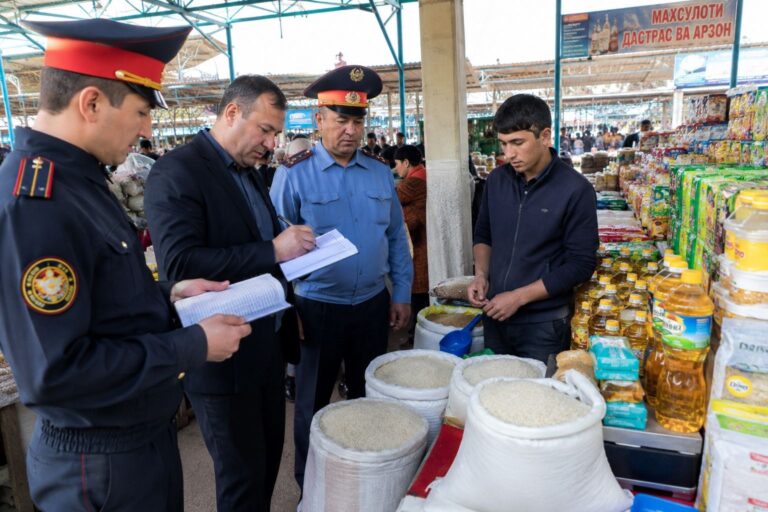
The ban eventually expanded to workplaces, and officials and police reportedly conducted raids to ensure its compliance.
RFE/RL notes that many hijab-wearing women faced a tough choice between their religious and cultural beliefs and their careers. Some quit their jobs or studies, while others swapped their Islamic head scarf for the traditional kerchief.
Tajik men have also fallen afoul of government edicts in the past, with the authorities seeing them as suspect because of their long or bushy beards.