It came after an earthquake rattled Japan.
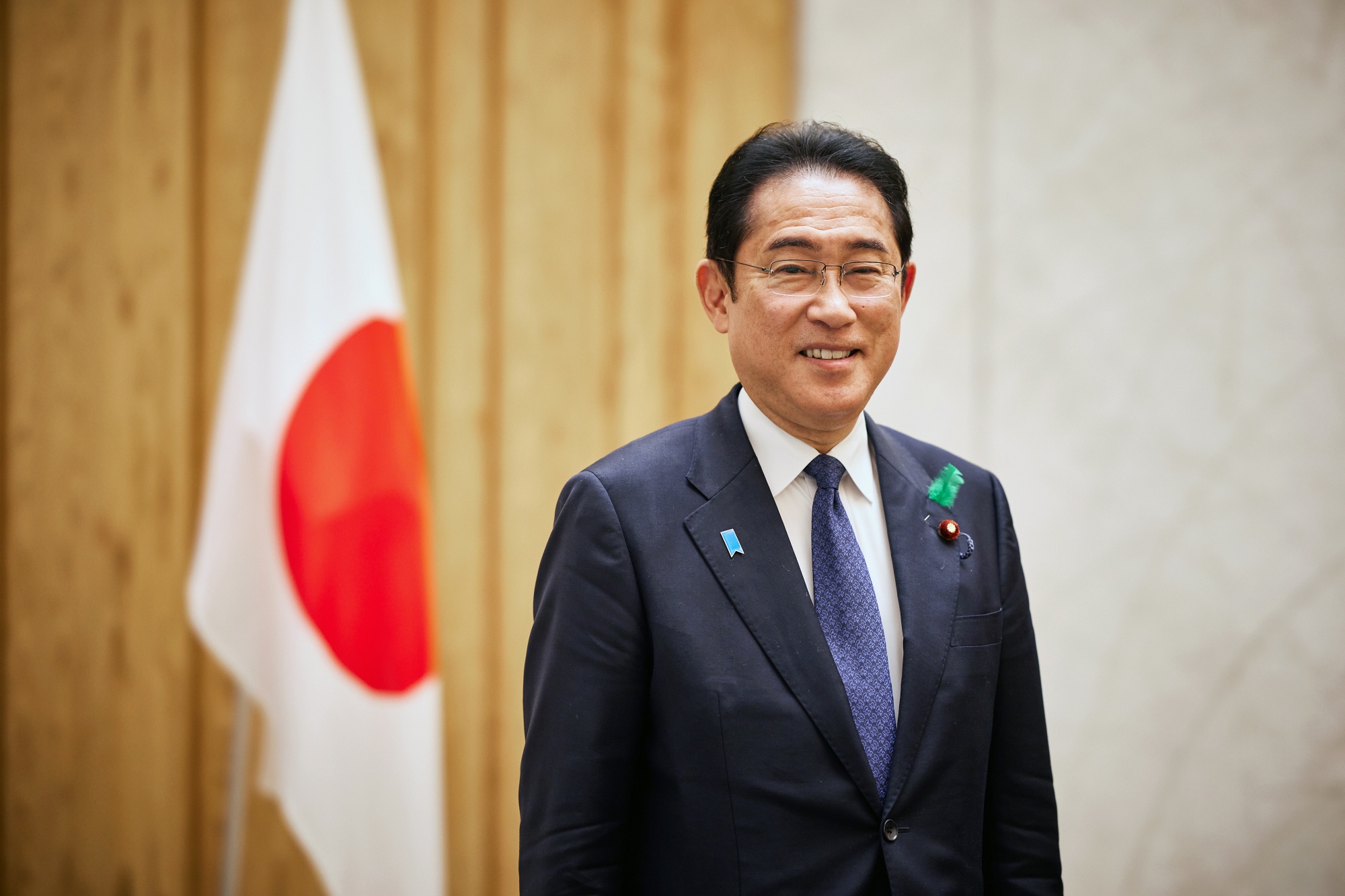
Turkiye’s Anadolu Agency reports that on August 9, commencing at 7:45 p.m. for approximately 10 minutes, Mr. Kishida Fumio, Prime Minister of Japan, reportedly held a summit telephone talk with Shavkat Mirziyoyev, President of Uzbekistan. The overview of the talk is as follows.
The Office of Japan’s Prime Minister notes that at the outset, Prime Minister Kishida explained that, following the earthquake that occurred off the coast of Miyazaki Prefecture on August 8, and the major earthquake warning issued by the Japan Meteorological Agency on the same day, he has decided to postpone his attendance at the "Central Asia plus Japan" Dialogue Summit in order to deal with crisis management and disaster response. Prime Minister Kishida reportedly emphasized that there is no change in Japan’s determination that Japan will continue to strongly promote its relations with Central Asia as well as bilateral relations between Japan and Uzbekistan on the occasion of the 20th anniversary of the "Central Asia plus Japan" Dialogue.
According to the Office of Japan’s Prime Minister, Prime Minister Kishida expressed his appreciation for the preparations for his visit and stated that it is regrettable that he could not visit Central Asia this time, but stated that he would like to appropriately coordinate his future visits by considering various circumstances.
For his part, Uzbek President Mirziyoyev reportedly stated that he understands Prime Minister Kishida’s decision and that he would like to continue to work with Japan to further strengthen the bilateral relations.
Launched in 2004, the “Central Asia plus Japan” Dialogue is a political initiative between Japan and the Central Asian nations of Kazakhstan, Kyrgyzstan, Tajikistan, and Uzbekistan, with the goal to create “a new framework for cooperation, thereby elevating relations between Japan and Central Asia to a new level”. The dialogue, according to the Japanese Foreign Ministry, is also meant to serve as a forum to promote inter-regional cooperation. Turkmenistan, maintaining its policy of neutrality, participates only as an observer.
Subsequently, South Korea, the EU, the United States, China, India, and Russia all adopted similar “5+1” frameworks.
Some experts note that Japan can play an important role in the energy transition process in Central Asia.
Central Asian countries are rich in natural resources but heavily reliant on oil and gas, which produce significant greenhouse gas emissions. Japan has reprotedly committed to supporting Central Asia’s efforts toward sustainable economic development.