As the colder months approach, many residents of Tajikistan are concerned that the growing number of electric vehicles (EVs) in the country might exacerbate the seasonal electricity shortages. The autumn-winter energy deficit has long been a familiar challenge for the population, particularly for those living in rural areas, where over 70% of the country’s population resides. In rural areas, electricity is typically available for just 8-9 hours per day during the autumn-winter period, while larger cities generally experience more stable electricity supply.
Power rationing in Tajikistan is usually launched at the end of September or early October and lasts until April of the next year. The removal of these restrictions depends on favorable weather conditions and an increase in water flow in the Vakhsh River, a key energy source. Both the Ministry of Energy and the national electricity companies have warned that power shortages are likely in the coming season.
Last year, the reservoir powering the Nurek hydroelectric power plant was filled to its maximum level by early August 2023. However, if the winter is harsh, the water consumption will rise, potentially leading to power restrictions.
Additionally, the demand for electricity in Tajikistan is increasing by around 9% annually due to population growth and the expansion of industries and organizations.
EVs are new electricity consumers in Tajikistan
As of July 1, 2023, Tajikistan had imported 9,104 EVs, with 3,500 of these operating as taxis. Taxi drivers report that they consume 40-50 kilowatt-hours of electricity daily, operating for 10-12 hours.
The remaining EVs are used for personal or official purposes and generally consume far less electricity.
Even if all 10,000 EVs in the country used an average of 50 kilowatt-hours daily, their total consumption would amount to 500,000 kilowatt-hours per day, which is just 0.8% of the country's daily electricity production.
Tajikistan’s power generation capacity, with a total of around 6,000 megawatts, produces over 60 million kilowatt-hours of electricity daily. Therefore, the current EV infrastructure does not place a significant burden on the national power grid.
In conclusion, while the growth of EVs in Tajikistan introduces additional electricity consumers, their impact on the overall energy system remains minimal, and they are unlikely to worsen the seasonal energy deficit significantly.
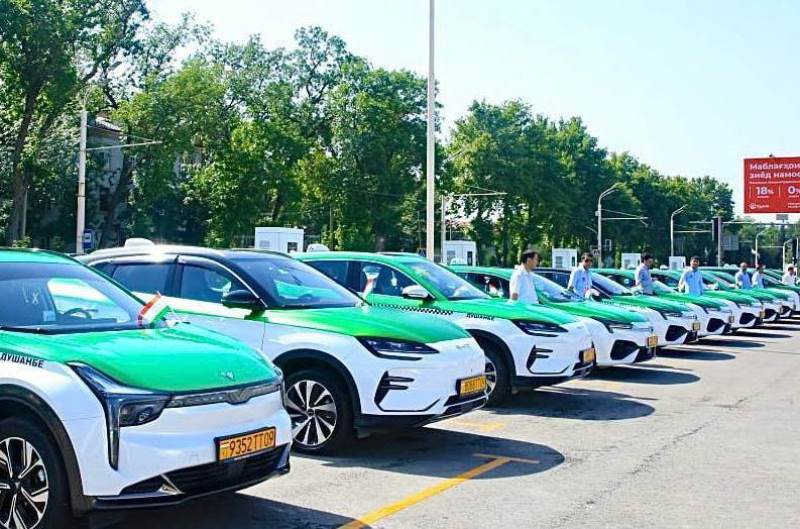
As it had been reported earlier, by Dushanbe mayor’s decree all taxi companies operating in the city are required to shift completely to electric vehicles by September 1, 2025.
A decision by the Majlisi Namoyandgon (Tajikistan’s lower chamber of parliament) in 2022 exempts the import of electric vehicles from taxes and customs duties for a period of 10 years.
There are 12 companies operating in the Dushanbe taxi market.
An official source within the Dushanbe Administration told Asia-Plus in late June that more than 4350 taxi cabs, with 2,450 of them being electric cars, have plied on Dushanbe streets as of June 1, 2024.
136 charging stations for electric vehicles have reportedly been established in Dushanbe as of June 6 this year.
Earlier it had been reported that about 230 million somonis (US$21 million) will be allocated within the next five years for development of electric transport in the country. Of this amount, 1.4 million somonis will be allocated from the national budget, 6.2 million somonis will be provided by development partners, and more than 221 million somonis will be provided by the private sector
In Tajikistan, mostly old foreign cars are in operation and their emissions are one of the main sources of air pollution. According to experts, gradually filling the country with electric vehicles could reduce air pollution.
The gradual increase in electricity generation in Tajikistan reportedly allows increasing the number of electricity-powered vehicles in Tajikistan. Tajik officials say this will reduce the country's dependence on oil-exporting countries.