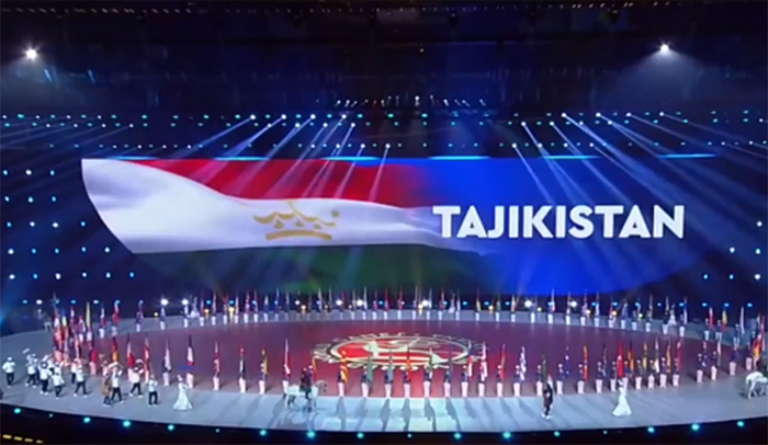
The fifth day of the games brought two bronze medals to Tajikistan’s national team's treasury. Tajikistan’s national team finished third in ordo and Tajik wrestler Saifiddin Saifiddinov took third place in Turkish national wrestling competitions in the 80 kg weight category.
Thus, Tajikistan has six bronze medals and it ranks 25th in the overall team standings among 89 countries of the world.
Kazakhstan’s national sports leads the medal count at the World Nomad Games with 112 medals, Kyrgyzstan holds second place in the overall standings with 65 medals, followed by Russia in third (49 medals).
Besides, Uzbekistan (34 medals), Turkiye (6 medals: 2 gold; two silver; and 2 bronze medals), Iran (13 medals), Hungary (8 medals), Turkmenistan (4 medals: 1 gold; 1 silver; and two bronze medals), Romania (3 medals: 1 gold, 1 silver; and 1 bronze medal) and Poland (2 medals: 1 gold; and 1 silver) entered the top ten in the medal rankings.
Kazakhstan’s media reports say the event brought together 89 countries, with athletes and cultural ambassadors. The World Nomad Games have reportedly grown into the largest event dedicated to traditional sports, attracting the participation of over 2,500 athletes. The games feature 97 medal sets across 21 sports, with 581 medals up for grabs. The total prize fund of the 5th World Nomad Games is 250 million tenge (US$518,000).
The closing ceremony of the fifth World Nomad Games took place on September 13.
The fifth World Nomad Games kicked off in Kazakhstan's capital of Astana on September 8 and is concluding today. Dubbed the "Great Gathering on the Steppe", the Olympics of the nomadic world is a spectacular celebration of traditional sports, identity and culture from across inner Asia.
Indeed, many of the sports have their roots in the skills required to survive on the steppe and in the unrivalled equestrian abilities that fueled a millennium-long wave of successive steppe empires, from the Huns to the Mongols. There are traditional events such as archery and long-distance horse races, but the Games also promote Kazakh food, traditional dress and even the art of epic storytelling. The goal is to preserve and protect nomadic and steppe culture, which is under increasing threat from globalization, modernization and even climate change.
The World Nomad Games (WNG) take place every two years and shifts locations as frequently as the nomads it celebrates. The next sixth event in 2026 will head back to Kyrgyzstan, where the inaugural event began in 2014.