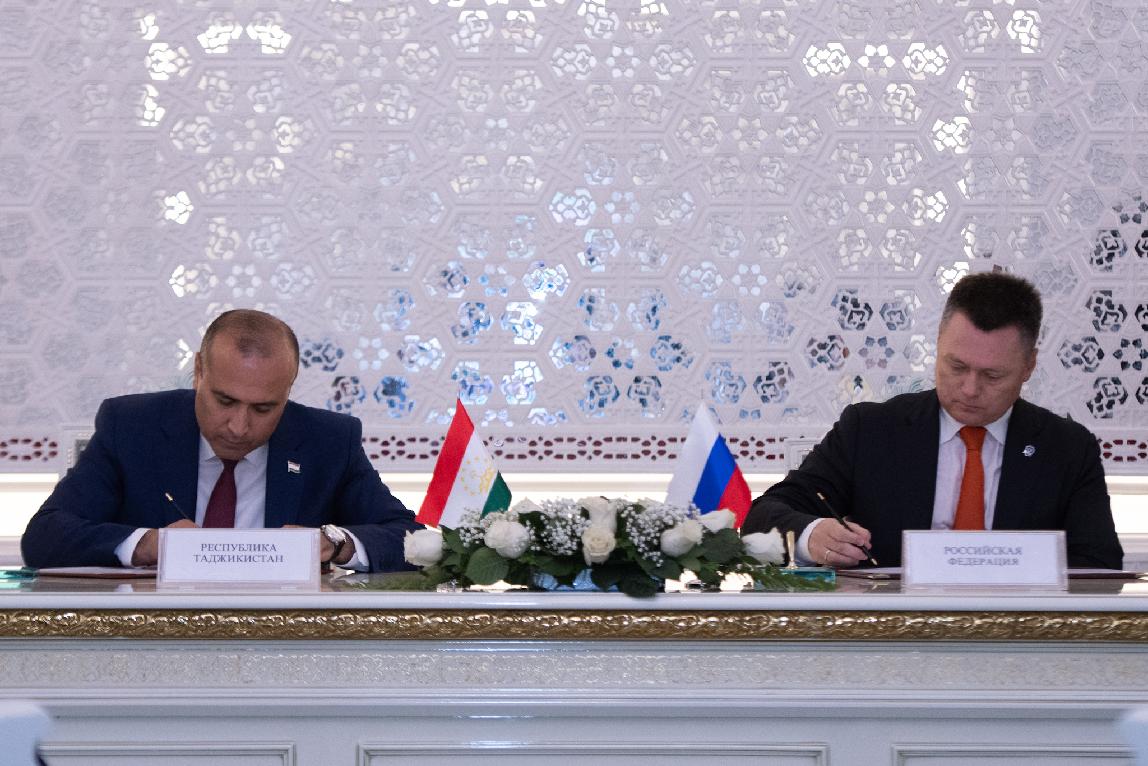
Tajikistan and Russia have signed an agreement on cooperation in combating corruption.
The document was inked by Sulaimon Sultonzoda, Director of the Agency for State Financil Control and Combating Corruption of Tajikistan, and Igor Krasnov, Prosecutor-General of Russia, here on September 19 on the margins of the 9th session of the CIS Interstate Council for Countering Corruption (ICCC).
The press center of the Prosecutor-General’s Office of the Russian Federation says the signed document is expected to give new impetus to “the joint work in combating corruption.”
The agreement will also become the legal basis for participation of Tajik anticorruption officers in training events at the University of the Prosecutor-General’s Office of the Russian Federation free of charge.
On September 19, Russian Prosecutor-General Igor Krasnov and his Tajik counterpart Yusuf Rahmon signed a program of cooperation between the supervisory authorities of the two countries.
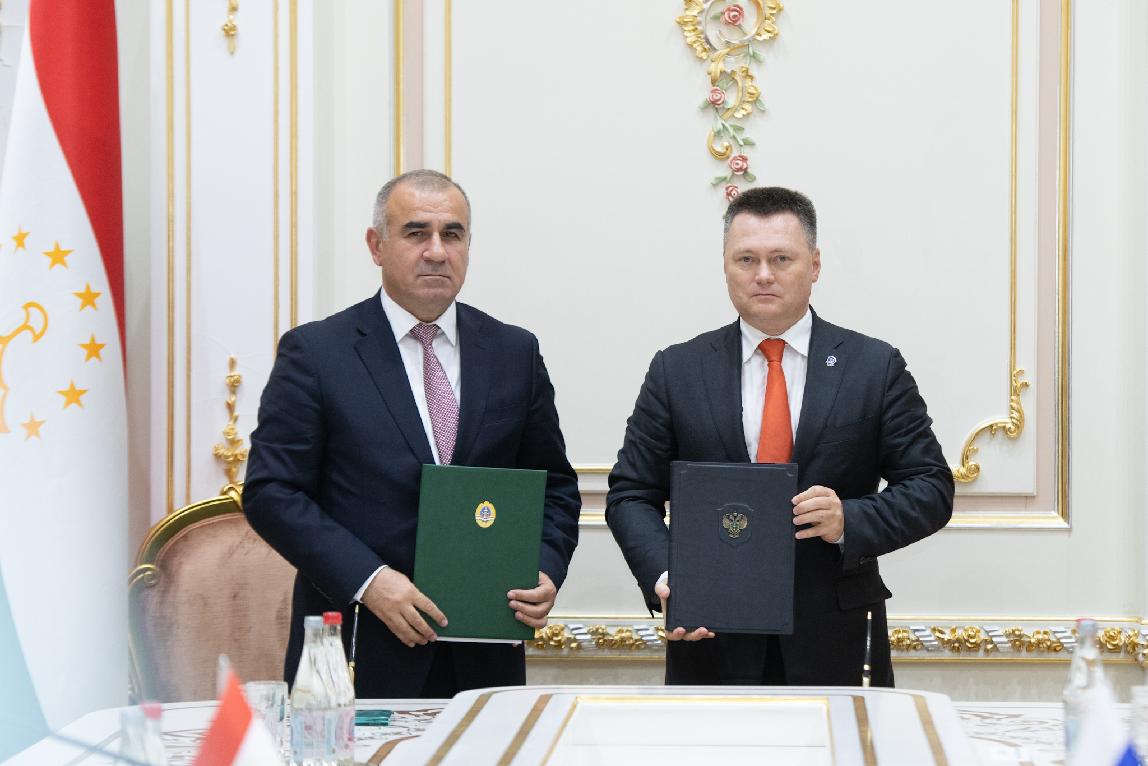
The program, in particular, provides for carrying out consultations on protection of rights of socially vulnerable citizens and roundtable on the theme “Countering Terrorism and Extremism” next year,
In 2026, Russian and Tajik prosecutors will exchange best practices for monitoring the implementation of laws in transport and customs areas and carry out the roundtable to discuss issues related to preventing crime in the tax, financial and banking spheres.
As far as the 9th session of the CIS Interstate Council for Countering Corruption (ICCC) is concerned, the Tajik anticorruption agency says the meeting brought together representatives of Tajikistan, Kazakhstan, Kyrgyzstan, Russia, Armenia and Belarus to discuss the key issues of combating corruption in the named countries.
The previous 8th session of the Interstate Council for Countering Corruption took place in Yekaterinburg, Russia on July 4, 2023. During that meeting, Tajikistan was elected co-chairperson of the Council.
Established in accordance with an agreement of October 25, 2013, the ICCC is the body of sectoral cooperation of the CIS and is intended to organize and coordinate, within its competence, the fight against corruption, as well as to review the implementation of the obligations of the participants of the Agreement in the field of fight against corruption, to ensure constructive cooperation with international organizations and their structures.
The main activities of the ICCC are: promotion of convergence and harmonization of national anti-corruption legislation; working out proposals for the development of the legal framework for cooperation; and coordinating interaction of the competent authorities of the States-participants of the Agreement, as well as interested bodies of the CIS in the fight against corruption.