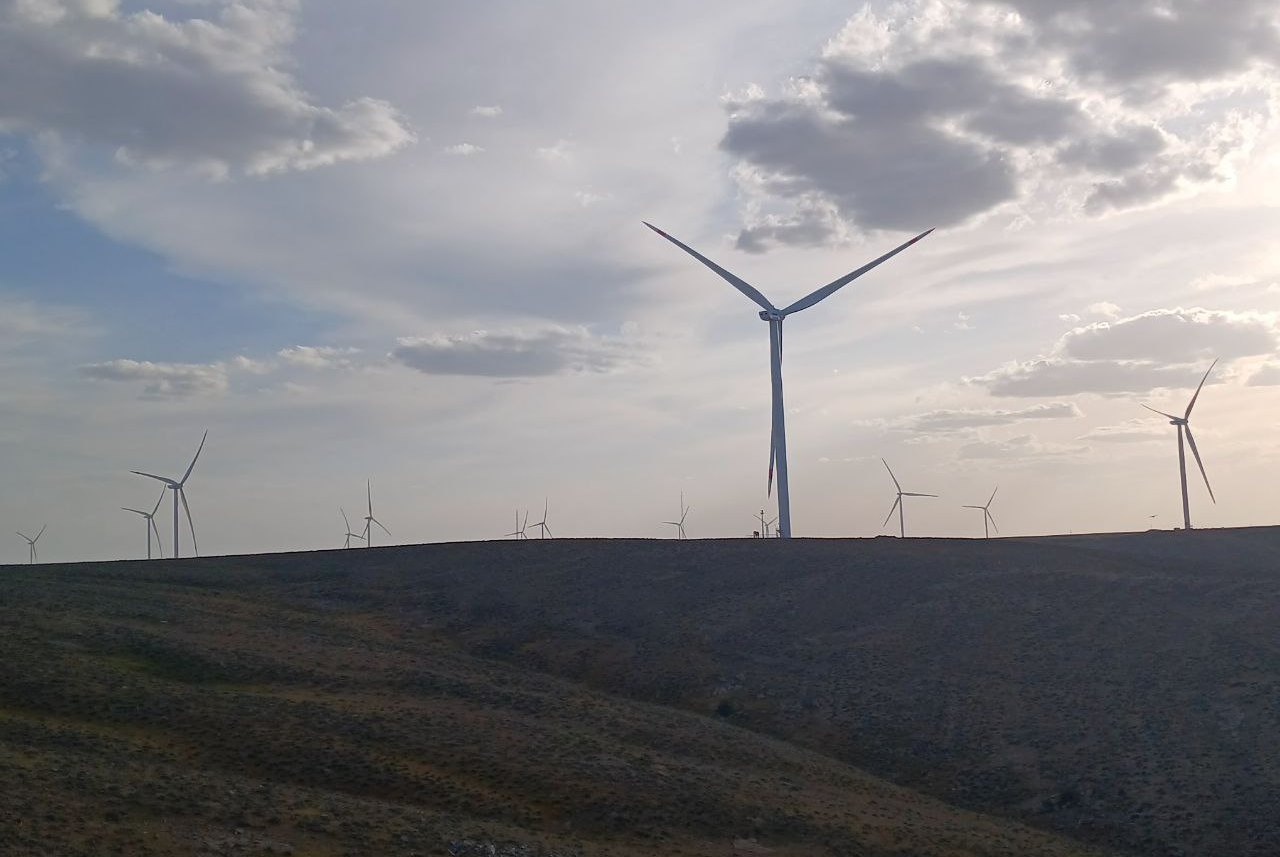
Uzbekistan's solar and wind power plants have generated 4 billion kilowatt-hours (kWh) of electricity since the beginning of this year, Kun.uz news agency reports, citing a report released by Uzbekistan’s Ministry of Energy on October 20.
As of midday on October 20, the country’s solar and wind energy facilities had reportedly produced 3.5 billion kWh of electricity from solar power and 506.4 million kWh from wind farms.
According to Kun.uz, this shift toward renewable energy has saved approximately 1.2 billion cubic meters of natural gas and prevented 1.6 million tons of harmful emissions from being released into the atmosphere.
The Ministry of Energy reportedly further noted that this amount of green energy is sufficient to cover the 10-month social electricity consumption for 2 million households or provide green energy for the annual needs of 1.6 million households.
Uzbekistan is working towards increasing the share of green energy to 40% of its total energy production by 2030.
As of early 2024, wind and solar power contributed to only 10% of the country’s energy balance.
President Shavkat Mirziyoyev highlighted earlier this year that Uzbekistan’s wind energy potential alone exceeds the nation’s electricity needs 10 to 12 times. The government projects that by the end of 2024, green energy production will reach 13 billion kWh, with renewable sources making up 15% of the country’s energy mix.
In a related report, Kun.uz noted that the government purchased 500 million sums’ worth of electricity from the population over the first two months of this year, signaling growing efforts to integrate renewable energy sources at all levels of the energy sector.
It is to be noted that the potential of solar energy in Tajikistan is reportedly quite high. The country is located between 36°40′ and 41°05′ north latitude. Meteorologists call this zone a “golden belt” of sunshine. According to the Agency of Hydrometeorology of Tajikistan (Hydromet), the duration of sunshine in the country is 2100-3166 hours per year, and the number of sunny days per year ranges from 260 to 300. This provides great opportunities for the use of solar power as an alternative. The estimated potential of solar energy in Tajikistan is about 25 billion kWh / year. This potential is not used, if not to take into account some of its use for water heating. In Tajikistan, the share of solar energy is less than one percent
Meanwhile, the potential for wind is relatively unknown, but some sources’ estimates of its energy production are promising, with the forecasted figure standing at 30 billion-100 billion kWh per year, effectively rivaling the production of some hydropower plants.