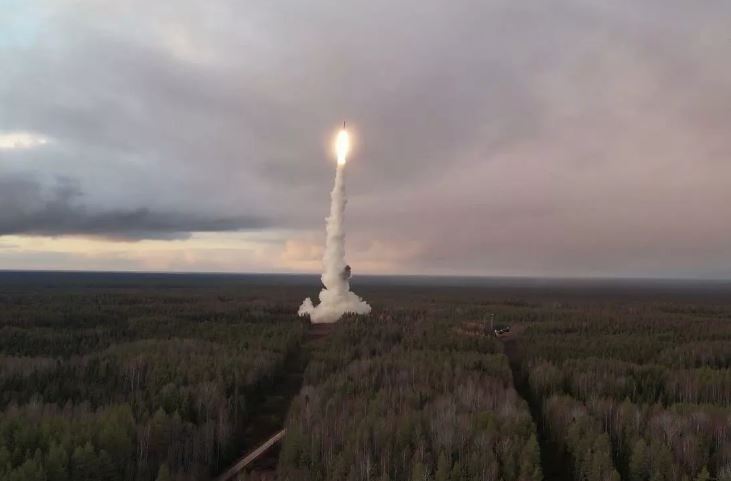
On October 29, as Supreme Commander-in-Chief of Russia, Vladimir Putin conducted a strategic nuclear deterrence exercise via videoconference. RIA Novosti says the drills included training officials in the command and use of nuclear weapons with practical launches of ballistic and cruise missiles.
"Today, we are holding another strategic deterrence forces drill. Given the rise in geopolitical tension, the emergence of new external threats and risks, it is essential to have modern strategic forces constantly ready for combat," Putin said, reiterating Moscow's position that the use of nuclear weapons remains "a last-resort security measure."
“At the same time, we clearly understand that the ‘nuclear triad’ remains a reliable guarantor of our sovereignty and security, enabling us to address deterrence tasks and maintain nuclear parity and balance as objective factors of global stability,” he added.
According to TASS, Putin noted that while Russia does not intend to engage in an arms race, it will maintain its nuclear forces at a level of "necessary sufficiency."
The strategic deterrence forces include both offensive and defensive strategic capabilities designed to deter aggression or defeat an aggressor, including through the use of nuclear weapons. The Russian Ministry of Defense reported that all elements of the nuclear triad were involved in the exercises — land-based complexes, submarine-launched missiles, and air-based missiles, as noted by RBC.
From the Plesetsk Cosmodrome, an intercontinental ballistic missile, Yars, was launched, hitting its target at the Kura range on the Kamchatka Peninsula. In addition, ballistic missile launches of the Sineva and Bulava were conducted from submarines in the Barents Sea and Sea of Okhotsk, launched from the submarines Novomoskovsk and Prince Oleg. Also, Tu-95MS long-range aviation aircraft launched air-based cruise missiles.
The nuclear triad consists of three components of strategic armed forces equipped with nuclear weapons: land-based — mobile and stationary (silo) launch systems for intercontinental ballistic missiles; sea-based — ballistic missile submarines; and air-based — bombers capable of carrying nuclear bombs or cruise missiles with nuclear warheads.
Only Russia, the United States, and China possess all components of the triad among countries worldwide.