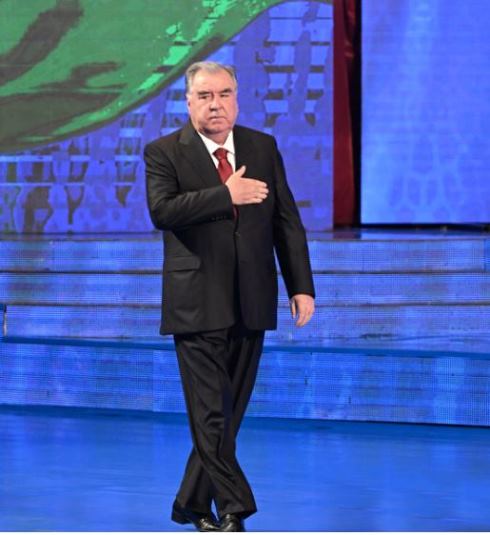
On November 6, Tajikistan celebrated the 30th anniversary of the adoption of the Constitution of the Republic of Tajikistan.
Speaking at the ceremonial session marking the 30th anniversary of the adoption of the Constitution of the Republic of Tajikistan, President Emomali Rahmon emphasized yesterday that the Constitution of sovereign Tajikistan, as a document reflecting our nation’s independence and freedom, plays a decisive role in building a new Tajik statehood, ensuring its resilience and longevity.
“This historic and fateful document established a strong and reliable legal foundation for the establishment of a new Tajik state, the achievement of peace and stability, national unity, major political, economic, and socio-cultural accomplishments, the development of civil society, and the free formation of the individual,” Tajik leader said.
He noted that during the process of drafting the Constitution, a delegation from the constitutional commission was sent to several leading countries to study and apply their experiences. International legal acts were also analyzed, and their norms were included in our Basic Law.
Throughout the nearly two-year drafting and discussion of the Constitution, the people of Tajikistan actively participated, submitting over 8,500 proposals and requests to the commission, Rahmon said, noting that all proposed amendments were analyzed and reviewed by the Constitutional Commission and taken into account during the finalization of the Constitution’s text.
According to him, a nationwide referendum that took place on November 6, 1994,saw 94.4% of citizens participating, with 87.6% voting in favor of adopting the Constitution. The Constitution is the highest legal document, and no other legal acts can alter it or contradict its norms.
“We have declared 2024 the “Year of Legal Education” in honor of the 30th anniversary of the adoption of the Constitution of the Republic of Tajikistan, as the essence of legal education lies in adherence to the norms of the Constitution, our foundational law. Legal education of citizens, in turn, plays a key role in building a progressive and just society, Emomali Rahmon said.
He further noted that refining the Constitution also contributes to the further expansion of democratization processes within society, the formation and strengthening of constitutional foundations of state power and its main pillars, as well as the improvement and efficiency of the public administration system. Such measures reportedly also create a necessary legal basis for ensuring and protecting human rights and freedoms.
The Constitution of Tajikistan was adopted on 6 November 1994. The Constitution declares ideological and political pluralism, ensuring human rights and social-legal guarantees.
The Constitution has the highest legal power, direct application and supremacy on the whole territory of Tajikistan. The Constitution proclaims the establishment of a democratic, legal, secular and unitary State, where the State power is based on the principle of separation of powers. As the fundamental law of the State, the Constitution defines the structure of the government, basic rights, liberties and responsibilities of its citizens, as well as the powers of the legislative, executive and judicial branches.
Tajikistan’s Constitution was amended by referendums on September 26, 1999, June 22, 2003 and May 22, 2016.
Amendments made to the Constitution of the Republic of Tajikistan in 1999 established a new bicameral parliament (Article 48) and extended the President’s term of office from five to seven years (Article 65).
Changes proposed to the Constitution of Tajikistan at the referendum on May 22, 2003 included removing Article 65, which limited the President to a single term of office.
A total of 41 constitutional amendments were proposed to the Constitution of Tajikistan at the referendum of May 22, 2016. The changes included: amending Article 65 to remove term limits on the President of Tajikistan; reducing the minimum age to run for president from 35 to 30; and banning political parties based on religious platforms.