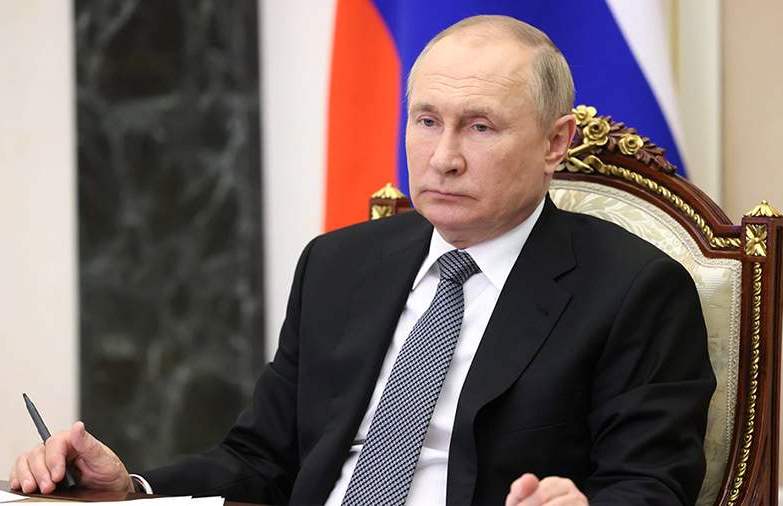
Russian President Vladimir Putin has signed a decree formalizing the updated principles of Russia's state policy on nuclear deterrence. Kommersant notes that the revised doctrine broadens the list of military threats that may warrant the use of nuclear weapons.
The document, published on the legal information portal on November 19, has already come into force.
The doctrine underscores that nuclear weapons are a last resort for defending the sovereignty of the nation. However, due to emerging military threats and risks, Russia has refined the parameters that justify their use.
The decree expands the category of states and military alliances targeted by nuclear deterrence. Aggression by any non-nuclear state involving or supported by a nuclear state will now be treated as a joint attack against Russia.
A nuclear response is also possible in cases of critical threats to Russia's sovereignty posed by conventional weapons or an attack on Belarus, a member of the Union State. The previous version of the nuclear doctrine mentioned a nuclear response in the event of ballistic missile launches targeting Russia or its allies, but did not explicitly name any allies.
Additional conditions for the use of nuclear weapons include:
- The use of nuclear or other weapons of mass destruction by an adversary against Russia or its allies.
- Reliable information about a large-scale launch of air and space attack assets, including strategic or tactical aircraft, cruise missiles, drones, hypersonic vehicles, or other airborne devices crossing Russian airspace.
For the first time, the updated doctrine defines the term "potential adversary." It refers to "specific states or military coalitions (blocs, alliances) that consider the Russian Federation a potential opponent and possess nuclear and/or other types of weapons of mass destruction or significant general-purpose combat capabilities."
Putin approved the updated doctrine two days after U.S. President Joe Biden, on November 17, authorized the Ukrainian Armed Forces to strike Russian territory using American ATACMS long-range missiles.