In just three days, opposition fighters captured Syria’s second-largest city, Aleppo, after the stunning collapse of government forces loyal to President Bashar al-Assad.
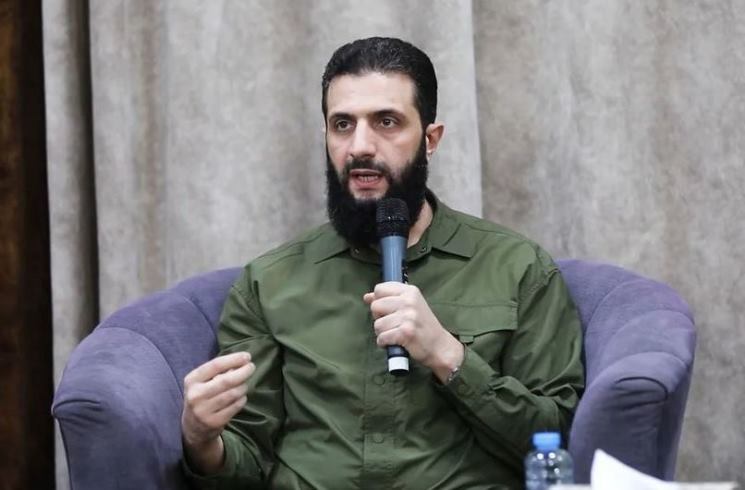
Leading the offensive was Abu Mohammed al-Jawlani, who stands at the head of Hayat Tahrir al-Sham (HTS), a group that has become the most powerful armed opposition force in Syria.
As the founder of HTS, al-Jawlani has nearly a decade sought to dissociate himself from other armed forces and their focus on transnational operations, switching instead to focusing on creating an “Islamic republic” in Syria.
Al Jazeera notes that since 2016, he has been positioning himself and his group as credible caretakers of a Syria liberated from al-Assad.
HTS reportedly ran the governorate of Idlib via the Syrian Salvation Government, which it established in 2017 to provide civil services, education, healthcare, a judiciary and infrastructure as well as manage finances and aid distribution
HTS, however, also rules with a heavy hand and does not tolerate dissent, according to activists, news reports and local monitors, according to Al Jazeera.
Independent journalism organization Syria Direct reports that HTS is behind the disappearances of activists and has shot live ammunition at protesters who accuse the group of denying services to communities that oppose it.
According to Al Jazeera, al-Jawlani was born Ahmed Hussein al-Sharaa in 1982 in Riyadh, Saudi Arabia, where his father worked as a petroleum engineer
The family returned to Syria in 1989, settling near Damascus.
Little is known of his time in Damascus before his move in 2003 to Iraq, where he joined al-Qaeda in Iraq as part of the resistance to the United States invasion that same year.
Arrested by US forces in Iraq in 2006 and held for five years, al-Jawlani was later tasked with establishing al-Qaeda’s branch in Syria, al-Nusra Front, which grew its influence in opposition-held areas, especially Idlib.
Al Jazeera says al-Jawlani coordinated in those early years with Abu Bakr al-Baghdadi, head of al-Qaeda’s “Islamic State in Iraq”, which later became ISIL (ISIS).
In April 2013, al-Baghdadi suddenly announced that his group was cutting ties with al-Qaeda and would expand into Syria, effectively swallowing al-Nusra Front into a new group called ISIL.
Al-Jawlani reportedly rejected this change, maintaining his allegiance to al-Qaeda.
During his first televised interview in 2014, he told Al Jazeera that Syria should be ruled under his group’s interpretation of “Islamic law” and the country’s minorities, such as Christians and Alawis would not be accommodated.
In the following years, al-Jawlani appeared to distance himself from al-Qaeda’s project of establishing a “global caliphate” in all Muslim-majority countries, seeming to focus instead on building up his group within Syria’s borders.
The split appeared to be a bid, according to analysts, to stress his group’s national, as opposed to transnational, ambitions to groups in Idlib.
Then in July 2016, Aleppo fell to the government forces and the armed groups there started to head to Idlib, which was still opposition-held. Around the same time, al-Jawlani announced that his group had changed to Jabhat Fateh al-Sham.
By early 2017, thousands of fighters poured into Idlib fleeing Aleppo and al-Jawlani announced the merging of a number of those groups with his own to form HTS.
According to the Center for Strategic and International Studies think-tank in Washington, the stated aim of HTS is to liberate Syria from Assad’s autocratic government, “expelling Iranian militias” from the country and establishing a state according to their own interpretation of “Islamic law”.
Since capturing Aleppo, the group has reportedly offered assurances that religious and ethnic minorities will be protected.
Al Jazeera cited a Syrian expert on armed groups in the Levant, Hassan Hassan, as saying that al-Jawlani wants to brand HTS as a credible governing entity in Syria and a possible partner in global counterterrorism efforts.
HTS is currently labelled a “terrorist” organization by the United Nations, Turkiye, the United States, the European Union and Russia.
Al-Jawlani has reportedly said this designation is unfair since his group has renounced its past allegiances in favor of a national one.