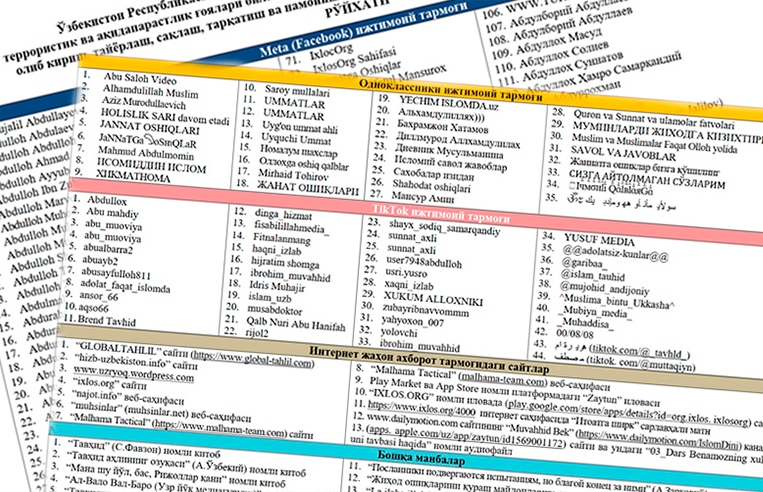
The Supreme Court of Uzbekistan has updated the list of social media accounts, websites, and books identified as promoting extremist, terrorist, and fanatical ideas, Fergana reports, noting that the materials included in the list are banned from importation, production, distribution, and display within the country.
The updated list contains 1,389 items in audio, video, and text formats. The previous version of the list, published in January last year, included over 800 prohibited internet resources and texts, Gazeta.uz notes.
The distribution of banned accounts across social networks reflects the popularity of different platforms. The largest number of accounts with extremist content was found on Telegram—713 accounts (up from nearly 400 in the previous list). The fewest were on the network Odnoklassniki, with 35 pages banned.
The breakdown of other platforms is as follows:
- Facebook: 203 pages (previously around 150),
- Instagram: 226 pages (previously more than 100),
- YouTube: 135 channels,
- TikTok: 44 accounts.
The list reportedly also includes 13 websites and 20 books and texts.
In Uzbekistan, the identification of extremist content is conducted by the Committee on Religious Affairs, in cooperation with the State Security Service (SSS), the Ministry of Internal Affairs (MIA), and the Agency for Information and Mass Communications (AIMC).
According to the law on combating extremism, the demonstration, distribution, and storage of these materials are prohibited, and access to them must be restricted. The production or distribution of materials deemed to threaten public safety is subject to criminal liability.
In 2018, the Uzbek government passed a resolution allowing the blocking of media outlets that "promote extremist, propaganda, or hateful content on the internet." In May 2019, the Ministry of Justice released a list of 42 information resources recognized as extremist. This list has since been periodically updated with new entries.