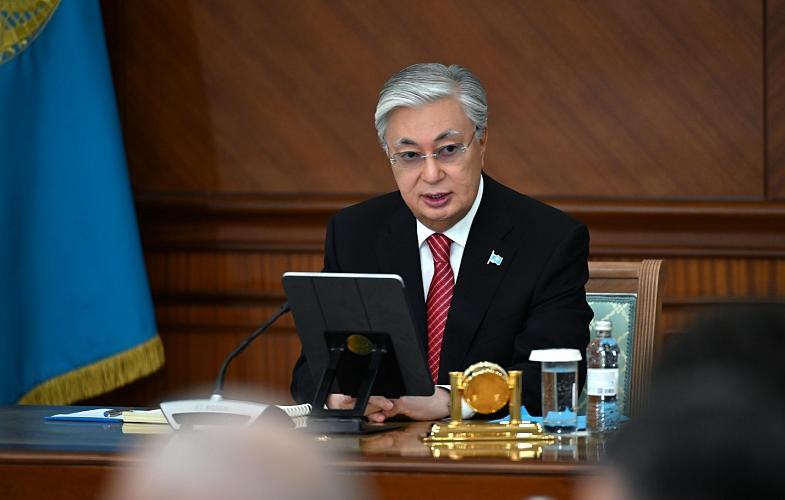
Kazakhstan needs to embark on creating a nuclear cluster and build not one but three nuclear power plants (NPPs). This proposal was made by President Kassym-Jomart Tokayev during an expanded government meeting, RBC reports, citing Kazakh media.
According to Tokayev, this initiative is essential “amid growing energy shortages.” He emphasized that creating such a cluster is “a critical task for ensuring the progress of our country.”
Plans for the nuclear cluster
To achieve this, the construction of Kazakhstan’s first nuclear power plant must be accelerated. Additionally, the government plans to build two more NPPs. Once completed, Kazakhstan aims to achieve full energy self-sufficiency and establish reserves at a level of 15–20%, Tokayev highlighted.
Public support through referendum
In October 2024, Kazakhstan held a referendum on building a nuclear power plant, with 71.12% of voters supporting the initiative. According to the Central Election Commission, voter turnout was 62.87%. Before the referendum, the government noted that Kazakhstan had previously managed without nuclear energy due to its abundant coal reserves.
However, increasing energy consumption, aging power plants, environmental issues, health concerns in nearby areas, international restrictions on coal and gas, and the instability of renewable energy sources now necessitate new solutions, the authorities stated.
Historical context: Shevchenko NPP
Kazakhstan previously operated a nuclear power plant from 1973 to 1999 in Shevchenko (renamed Aktau in 1991), a city on the Caspian Sea in Mangystau Province. The Shevchenko NPP, part of the Mangystau Atomic Energy Combine, featured a fast neutron reactor (BN-350) capable of recycling spent nuclear fuel into fuel for other reactors.
The plant experienced no radiation incidents, but the BN-350 reactor had the potential to produce weapons-grade plutonium-239. This capability, combined with Kazakhstan’s anti-nuclear stance in the 1990s, led to the reactor’s decommissioning in 1999.
Potential contractors for new NPPs
Kazakhstan may choose Russia’s Rosatom as the contractor for its new nuclear power plants. Other candidates include China National Nuclear Corporation (CNNC), South Korea’s Korea Hydro & Nuclear Power (KHNP), and France’s Électricité de France (EDF).
According to government officials, the contractor will be selected based on “economic feasibility, technological reliability, and environmental safety."