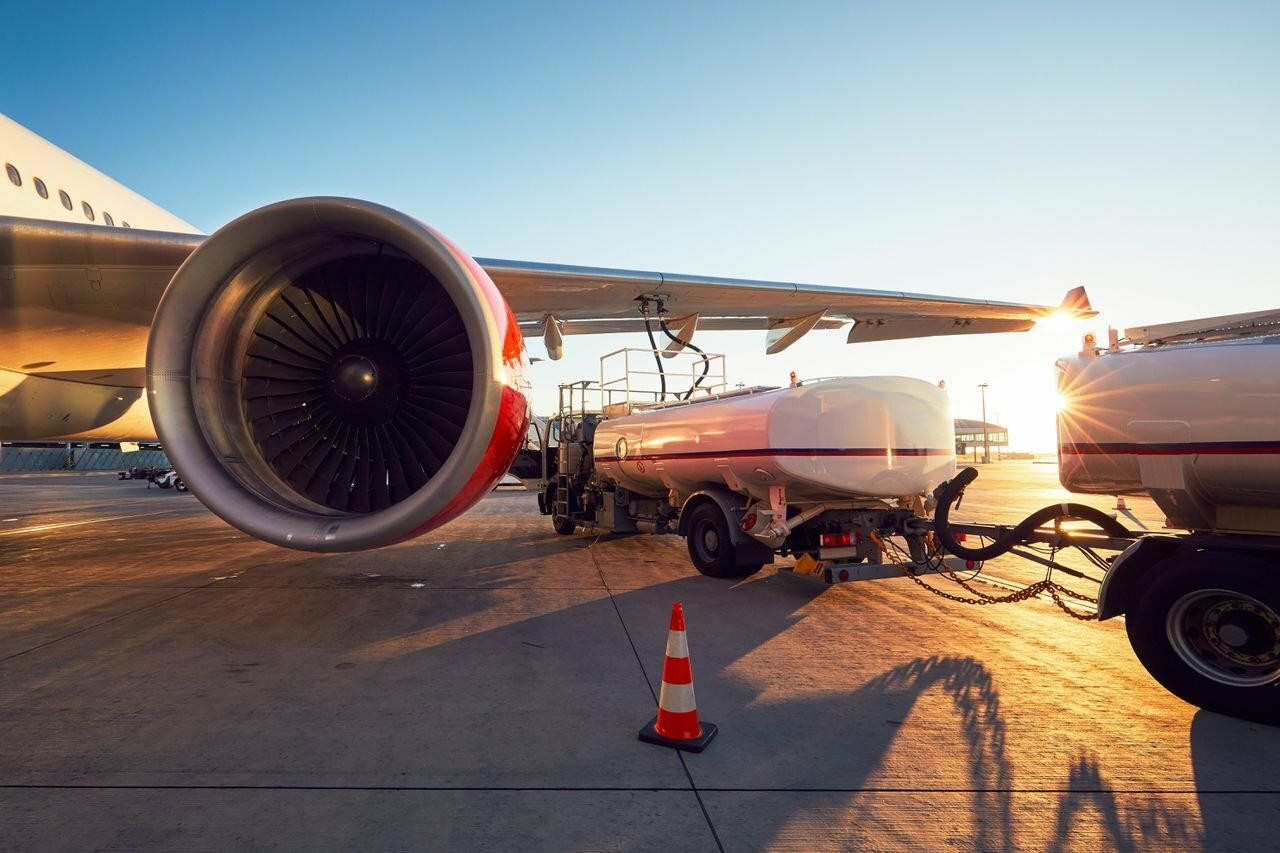
Aviation fuel in Astana and Almaty turned out to be more expensive than in Moscow and Singapore, according to KazTAG.
"The cost of [aviation fuel] worldwide: Sharjah – US$816, Singapore – US$817, Moscow – US$925, Astana – US$951, Novosibirsk – US$1000, Almaty – US$1028, Baku – US$1250, Ashgabat – US$1314, Tashkent – US$1400," states the report by the Civil Aviation Committee (CAC) of the Ministry of Transport, presented at a government meeting on February 19.
Earlier, on January 24, members of Kazakhstan's Senate (the country’s upper chamber of parliament) stated that airports in Kazakhstan were overcharging the retail price of aviation fuel by one and a half to two times, and fuel costs accounted for the largest share in the cost structure of airline tickets—36.5%.
“Currently, the wholesale price of aviation kerosene in the domestic market is between US$650-US$850 per ton. Meanwhile, airports' retail prices for aviation fuel are set between US$1100-US$1200. Over the past five years, the number of international flights operated by foreign airlines has decreased by 58%. The volume of cargo air transportation has dropped by 36%,” the Senate said, citing data from the Ministry of Transport of Kazakhstan.
Thus, the difference between the wholesale price of aviation kerosene in the domestic market and the retail price set by airports is one and a half to two times.
According to the information, "There is a practice of airports restricting access to their fuel storage infrastructure for independent suppliers, which is a reason for the high cost of fuel for airlines."
The largest share in the structure of the cost of airline tickets for Kazakh airlines—36.5%—is accounted for by fuel costs, followed by 14.9% for maintenance, 10.7% for airport services, and 8.6% for aircraft rental. The smaller factors include distance, seasonal demand, and the date of purchase.
In total consumption, which amounted to 883,000 tons in 2023, 72% of aviation fuel was produced in Kazakhstan, and 28% was imported. Kazakh airlines burned 60% of the aviation fuel, while foreign airlines burned 40%.
As far as Tajikistan is concerned, the cost of aviation fuel here was US$1440 per ton as of 2021.
In 2022, Tajikistan’s aviation authorities reported a decrease in the jet fuel price to US$1400.
At the most recent news conference in February of this year, the Civil Aviation Agency of Tajikistan avoided answering the question about the current price for aviation fuel in the country.