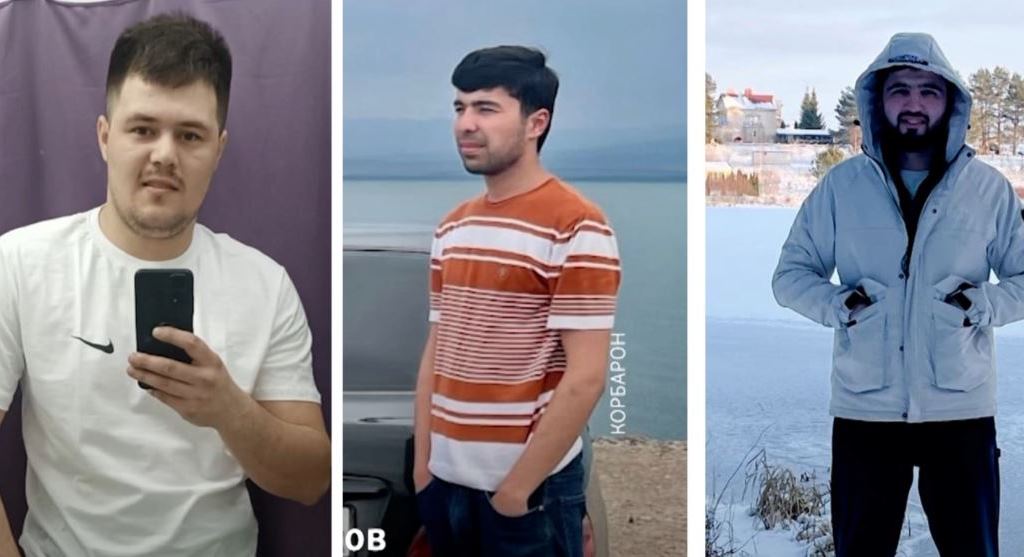
The Federal Security Service of Russia (FSB) reported on February 13 that activities of an unnamed “international terrorist organization” had been thwarted in Pskov, with “members, citizens of one of the Central Asian countries, planning an attack on a transport infrastructure facility.” The specific country was not mentioned in the statement.
“Under the instructions of an emissary based abroad, they planned to blow up the Pskov railway station building and then planned to escape to one of the Middle Eastern countries. Upon their arrest, the terrorists resisted with weapons and were neutralized," the FSB reported.
Footage released by the FSB shows heavily armed law enforcement agents raiding a house where the suspects had allegedly been making explosive devices. The video also depicts knives, nails, several bottles of a flammable chemical, acetone, and other items that the suspects had purportedly gathered to use as components for homemade bombs.
The recording also shows the body of a man on the floor, with what appears to be a gunshot wound to his stomach and a rifle beside his right hand.
Radio Liberty’s Tajik Service, known locally as Radio Ozodi, says the statement did not name the suspects, but several days later relatives and acquaintances of the men identified them as Tajik migrant workers Azizjon Azamqulzoda and Jovid Jumayev from the Tajik northern city of Panjakent and Parviz Rustamov from the city ofTursunzoda.
Murod Shukurzoda, the deputy head of the Panjakent administration, told Radio Ozodi on February 17 that they had been instructed to gather information about those young individuals, all natives of the city (the source of the instruction was not disclosed).
"We need to find out when they left for work, who they lived and interacted with, what conditions they were in, what education they had, and what their views were," he said.
Radio Ozodi also notes that other migrants who worked with the deceased, as well as their relatives, disputed Russian authorities’ claim that the migrants were members of a foreign terrorist group.
“I knew these young men very well, they had so many plans and dreams for the future,” said a Pskov-based Tajik migrant worker, who gave only his first name, Behzod, in interview with Radio Ozodi.
“No one [among those who knew them] believes that they would be engaged in [terrorist] activity. Also, they were not the kind of people who would do something like this for money,” Behzod said, adding that he believes the Tajik workers “were made scapegoats” by Russian authorities.
Bozorboy Azamqulzoda, the father of one of the suspects, told RFE/RL's Central Asian Migrants Unit on February 17 that his son, Azizjon Azamqulzoda, wasn’t religious and “did not pray.”
Radio Ozodi says the three men used to work together as waiters at the Chaikhona restaurant in Pskov, but Rustamov quit to become a taxi driver, while Azamqulzoda found a job at a shopping center.
Behzod and several other Tajik workers in Pskov told RFE/RL that the migrant community is concerned about a potential backlash following the FSB announcement.
Behzod said many Tajiks are too afraid to leave their homes.