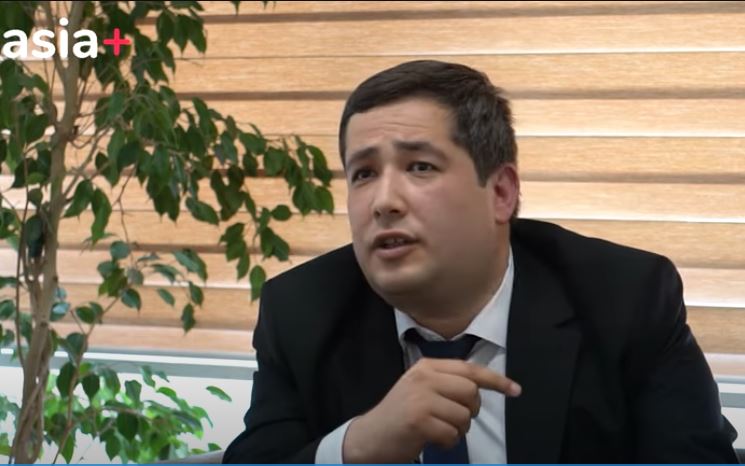
The Democratic Party of Tajikistan (DPT) is one of the country's first political parties, founded during the Soviet era, and played a significant role in the early years of independence. It had many prominent figures among its members, some of whom participated in peace negotiations as part of the United Tajik Opposition (UTO).
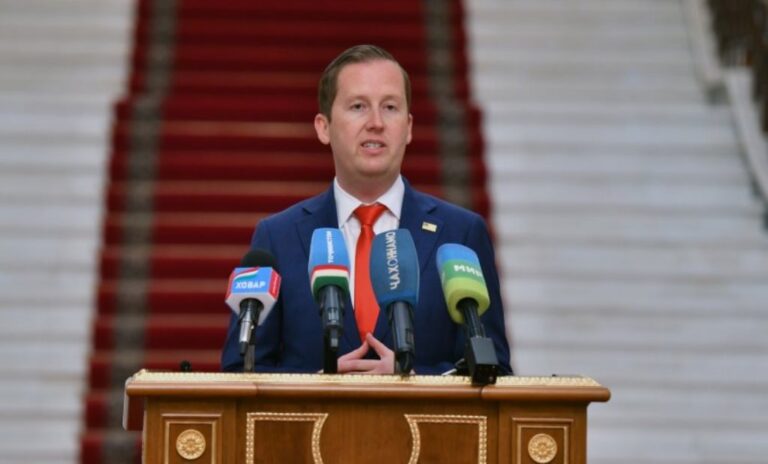
Asia-Plus, ahead of the parliamentary elections, decided to speak with the leaders of the country's political parties about their election programs and goals for participating in this campaign. This time, our conversation is with the leader of the DPT, Shahboz Abror.
During the civil war, the activities of the DPT were suspended, but after the peace agreement was signed, the party resumed its work. Although in the early years of independence, it was seen as a powerful political force, the party later faced internal crises—a split occurred, its founder emigrated, and two chairmen and one member of the leadership were convicted and sentenced to long prison terms.
One of those convicted was Saidjafar Usmonzoda, who in early February this year was sentenced to 27 years in prison on several charges, including "violent seizure of power" and "treason." Along with him, Ahmadshoh Komilzoda, the deputy chairman of the party, was sentenced to 19 years in prison.
In these circumstances, Shahboz Abror, a member of the party's Political Council and previously a relatively unknown figure to the public, took over the leadership of the DPT.
“The actions of the previous leadership shocked people. The party found itself in a difficult position, and many began to distance themselves from it. This set us back several steps and negatively affected our members,” says Abror. “Now, our primary goal is to restore the party's good name. To achieve this, we are attracting prominent individuals and youth who have influence in society.”
"When a party participates in elections, its goal is to strengthen its political positions. We have also, based on our current opportunities after the recent events, put forward our candidates. Specifically, I am represented on the party list, which shows my commitment to the party and my faith in it. We will aim to strengthen the DPT's position."
"We will meet with voters and explain our goals. That means presenting the party's program and principles along with other political forces. We don’t force anyone to vote for us."
“We have one seat in the incumbent parliament and we will strive to increase the number of seats," DPT leader said.
Asked about the number of DPT members, Abror said: "The previous chairman reported to the Ministry of Justice that there were 87,000 members of the party. However, the party's documents were in disarray, and we don’t know the exact number of members. We are currently working to clarify this information."
The DPT has reportedly nominated five candidates for election by proportional representation in a single nationwide constituency, but two candidates were not registered. The following candidates were registered with the Central Commission for Elections and Referenda (CCER) to run for parliament by party list: Shahboz Abror, DPT leader; Ms. Zuhro Mirzoyeva, the first deputy chairperson of the DPT also a lawyer at the Bar Association; and Ilyos Saidjafarov, a teacher at the Rasht-based Teachers’ Training University.
Fathiddin Salehzoda withdrew his candidacy because he was appointed head of the Nourobad district, and Jabbor Yuldoshev refused to participate in the elections through party-list system and decided to run for parliament in a single-mandate constituency.
Three DPT candidates have been nominated to run for parliament in single-mandate constituencies: Alisher Idizoda, a teacher at the International University of Languages of Tajikistan — single mandate constituency No. 4 in Dushanbe’s Sino district); Murrasa Navruzkulov, director of 'Pomir 777' Company, –single mandate constituency No. 40 – Vanj district in the Gorno Badakhshan Autonomous Region (GBAO); and district No. 40 Vanj (GBAO); and Jabbor Yuldoshev, head of DPT’s organization in the Sughd province – single-mandate constituency No. 14, Boboijon-Ghafourov district in Sughd province.
The Democratic Party of Tajikistan can trace its origins back to the last days of the Soviet Union. Registered on June 21, 1991 and banned by the Supreme Court on June 21, 1993, the Democratic Party of Tajikistan was reregistered on December 3, 1999.
At the end of 1990s, two factions laid claim to the Democratic Party of Tajikistan: the Almaty platform led by Mahmadruzi Iskandarov and the Tehran platform run by Azam Afzali. The Tehran platform later transformed itself into the Taraqqiyot (Progress) Party.
On October 5, 2005, the Supreme Court sentenced DPT leader Mahmadruzi Iskandarov to 23 years in prison. The sentence followed his conviction on charges of terrorism, the embezzlement of state funds, and the illegal storage of weapons, though his supporters say he was jailed for political motives.
The party split into two factions again and the Ministry of Justice recognized Masoud Sobirov as the legitimate leader of the Democratic Party of Tajikistan in October 2006.
Democrats in the Sughd province and GBAO as well as some primary organizations of the party in other regions of the country did not recognize Masoud Sobirov as the party leader and they demanded convocation of the extraordinary congress of the party.
An extraordinary congress of the party took place in Dushanbe on December 23, 2012 and Saidjafar Usmonzoda was elected as chairman of the party.
DPT leaders claim that the party now has more than 80,000 members
Meanwhile, according to information posted on DPT’s official website, the party has had 52,000 members as of January 1, 2022.
Some sources noted in 2019 that the Democratic Party of Tajikistan has not more than 20,000 members.