Fewer foreigners are becoming Russian citizens or obtaining residence permits in Russia, Kommersant reports, citing statistics from the Russian Interior Ministry.
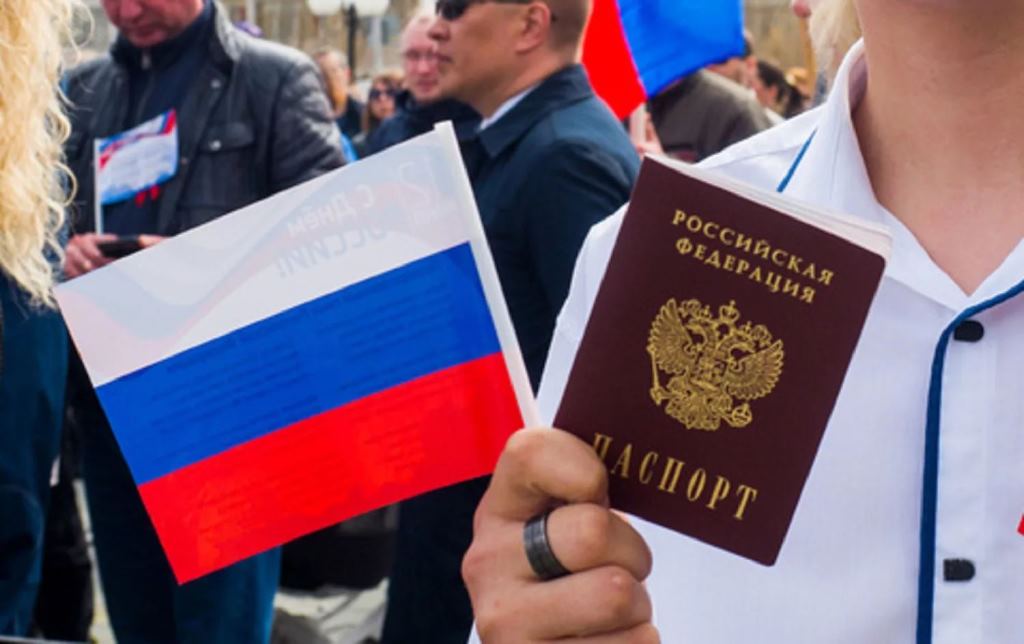
In 2024, 209,000 “new Russians” received passports, which is the lowest figure over the last five years. However, the number of foreigners expelled from Russia last year reached a record high.
The Interior Ministry attributes this trend to stricter migration controls. Experts surveyed by the publication believe that factors such as the ongoing Special Military Operation (SMO), the terrorist attack at the Crocus City Hall concert venue, and the lack of “targeted efforts” for repatriating compatriots also influenced the statistics.
The Interior Ministry published its annual migration statistics for January-December 2024. During this period, 209,000 people received Russian citizenship, a 44.8% decrease compared to 2023, marking the lowest number over the past five years.
Additionally, the ministry issued significantly fewer documents to foreigners legalizing their stay in Russia. In 2024, 44,500 people were granted temporary residence permits (a 50.4% decrease compared to 2023), and 214,900 received permanent residence permits (a decrease of 21.3%).
The sharp drop in the number of "new Russians" is linked to the fact that most residents of new regions received passports through simplified procedures in 2022-2023. The trend is also attributed to the "tightening of control" in the migration sphere.
In 2024, a record 190,200 individuals were expelled or deported from the country (a 31.1% increase compared to 2023). Of these, 157,000 foreigners were forced to leave due to violations of Russian law (+44.6%). A total of 1,757 people lost their citizenship (data for previous years were not provided by the Ministry).
"Additionally, the Interior Ministry has intensified efforts to restrict the entry of foreign citizens who do not comply with Russian legislation," the ministry added. The police issued 267,200 decisions on banning entry into Russia, 93,800 more than in 2023.
Konstantin Zatulin, first deputy chairman of the State Duma (Russia’s lower chamber of parliament) Committee on CIS Affairs (United Russia), sees other reasons for the decline in the number of people seeking Russian citizenship.
"When you are waging a war that is not yet over, when you are under sanctions, when, at least in the West, the word 'Russian' and 'Russia' become insults, it is unlikely you can expect a mass influx at this time," he said.
The MP also believes that the “targeted work” on resettling and repatriating compatriots “has not been carried out for a long time.”
Earlier, Kommersant reported that in 2024, 31,700 compatriots took advantage of the voluntary resettlement program – the smallest number in the last 14 years. The majority of “new citizens” relocated from Kazakhstan and Tajikistan.
"People are outraged that Tajiks and Uzbeks are becoming compatriots, and in some regions, this has led to the suspension of the resettlement program for compatriots," the parliamentarian concluded.
The head of the Center for Analytical and Practical Research of Migration Processes, Vyacheslav Postavnin, also commented: “The 'Crocus' incident had an impact. Russia no longer wants to distribute citizenship. Initially, it was handed out left and right, but after this incident, they decided to do the opposite."
The perpetrators of the terrorist attack at the Crocus City Hall concert venue on March 22, 2024, were reportedly citizens of Tajikistan. After the tragedy, control over the entry and stay of foreign nationals in Russia was significantly tightened.