Trump raises tariffs on China to 125%, implements 90-day pause for other countries and reduces import duties to 10%

The U.S. has raised import tariffs on goods from China from 104% to 125%, announced President Donald Trump. As for other countries, a 90-day pause for negotiations has been introduced, during which a 10% tariff will apply to all imports into the U.S., BBC’s Russian Service reported on April 9. "Due to the disrespect China […]

BBC's Russian Service

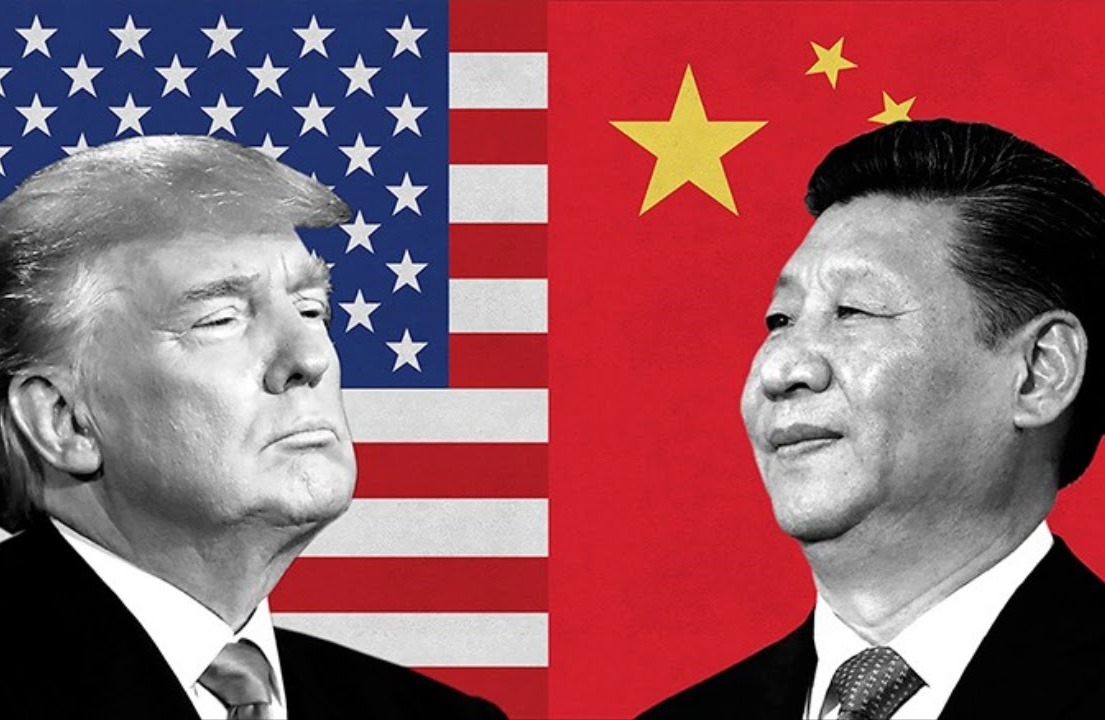
The U.S. has raised import tariffs on goods from China from 104% to 125%, announced President Donald Trump. As for other countries, a 90-day pause for negotiations has been introduced, during which a 10% tariff will apply to all imports into the U.S., BBC’s Russian Service reported on April 9.

"Due to the disrespect China has shown toward global markets, I am raising tariffs on imports from China to 125%, effective immediately. At some point, I hope, in the near future, China will realize that it is no longer acceptable to exploit the U.S. and other countries," he wrote on his social media platform, Truth Social.

He also stated that over 75 countries had approached the U.S. requesting tariff negotiations, and for these countries, a deferral has been introduced; this measure also takes effect immediately and will last for 90 days.

White House Press Secretary Caroline Livitt clarified that the 10% tariffs would apply to all countries except China.  According to her, over 75 countries had approached Trump with negotiation proposals, and the number of requests had shocked Washington.

U.S. Secretary of Commerce Howard Lutnik wrote on social media that he was in the room when President Trump wrote "one of the most unusual posts on Truth Social during his presidency."

"The world is ready to work with President Trump to fix global trade, while China has chosen the opposite path," Lutnik stated.

Following Trump's announcement, major U.S. stock indices began to rise.  Just before the market closed on Wall Street, the Dow Jones was up by 7.9%, the S&P 500 by 9.5%, and the Nasdaq by 12.2%.

According to U.S. Treasury Secretary Scott Bessent, Trump's decision on new tariffs was not influenced by recent market dynamics.

However, Trump himself, commenting on his decision late Wednesday, essentially admitted that the situation on the markets influenced the reversal of introducing strict global tariffs, saying that flexibility was necessary.

"I thought people overreacted a bit. They start to get nervous, you know, they start to get nervous, a little scared," he told reporters. "We need to be flexible."

In the American president’s view, trade deals will eventually be made with all countries, including China.
 

Join us on social media!

Article translations:

Related Article

Оби зулол
Оби зулол

Most Read

Recent Articles

The only GPW veteran in Dushanbe allocated more than 80,000 somoni

The mayor's office of Dushanbe allocated him 25,000 somoni.

GITEX AI Kazakhstan 2026: how Almaty became the main AI hub of Central Asia

More than 300 companies and startups, over 200 speakers and 100 investors from 50 countries — the region is entering the global stage.

A trade and economic park to be built at the border junction of Tajikistan, Kyrgyzstan, and Uzbekistan

President of the Kyrgyz Republic Sadyr Japarov familiarized himself with the project.

A project to protect soil from degradation to be developed in Central Asia

The initiative is of great significance for the mountainous countries of the region, including Tajikistan.

Mudslide, death, and destroyed homes: hundreds of families in Tajikistan left homeless

A correspondent from "Asia-Plus" visited Kulob and spoke with the families of those who died and were affected by the disaster.

Spring 2026 bright event: new issue of VIPzone now on sale

This issue is about people and ideas that change everything: from business and investments to fashion, food, and urban environment.

Godfrey Sullivan: “Tajikistan is a promising market for Visa to develop digital payments”

The Vice President of Visa explained why Tajikistan is becoming a promising market for digital payments and how artificial intelligence is influencing the future of finance.

Seven students in Dushanbe were threatened with expulsion for arriving at universities in personal cars

The materials for each case have been sent to the Ministry of Education and Science for appropriate actions.

India’s blockchain push and lessons for the global south

The Indian Government has started pushing aggressively its agenda...

India’s blockchain push and lessons for the global south

The Indian Government has started pushing aggressively its agenda...