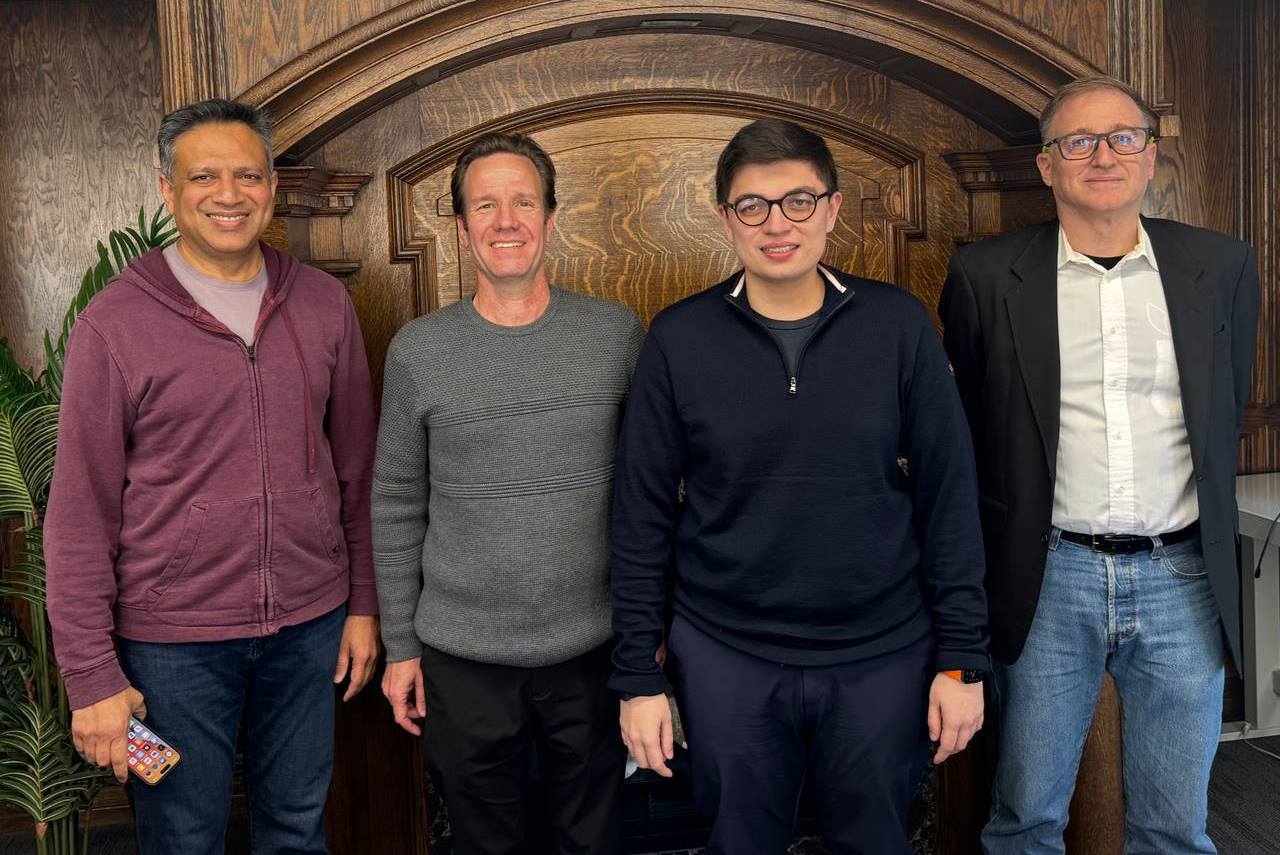
In an interview with Asia-Plus, Azizjon Azimi, founder of zypl.ai, shared how the company secured a $6 million investment after a rapid negotiation with a leading Silicon Valley venture fund.
The Pre-Series A round marked a major milestone for zypl.ai, paving the way toward the critical Series A round needed for global scaling. The first major investor to step in was Prosus Ventures, a part of Prosus and Naspers, one of the world’s largest tech investors with $146 billion in assets. The firm famously earned a 3,700% return from its investment in Tencent.
“After the deal with Prosus, dozens of funds started reaching out. The VC world works like that — once a big name invests, others take notice,” explains Azimi.
One of the interested firms was Carbide Ventures, a top-tier Silicon Valley fund. A key investor and partner at Carbide is Bill Tai, one of the first employees at TSMC and a prominent venture capitalist. The fund also includes major Japanese banks among its backers.
Carbide initially contacted zypl.ai back in the fall, drawn by the expertise of David Halpert, the startup’s Chairman of the Board — a legendary VC with five unicorns and one decacorn (a company valued over $10B) in his portfolio, all of which he joined during early seed stages.
“We didn’t want to settle for the old valuation”
When Carbide returned after the Prosus deal, the zypl.ai team made it clear: terms had to be renegotiated.
“At our first meeting, the valuation was $35 million. But by the time they came back, we had already raised capital and expanded in key U.S. markets. We didn’t want to over-dilute, so we made it clear that $35M was no longer on the table,” says Azimi.
Negotiations lasted just 30 minutes. All Carbide partners were present on the call. David Halpert had informed the fund in advance that the decision needed to be made immediately, with the deal and funds transfer finalized by March 15. Both sides met this deadline.
“They saw our rapid growth and had validation from Prosus. So, in the end, we agreed in 30 minutes and they invested $3 million at a $40 million valuation — a win for both sides.”
“Fast, but thorough”
Despite the speed, due diligence was rigorous. Azimi says that the process with Prosus Ventures had already laid the groundwork.
Due diligence by Prosus took 10 weeks and included interviews with eight top banking executives already working with zypl.ai. The investment committee also evaluated zypl.ai’s AI team expertise and the potential of its proprietary zGAN synthetic data technology.
“Top investors don’t waste time on weak startups. They spoke to our clients, assessed our tech, and benchmarked us against competitors. The fact that the deal happened so quickly shows we convinced them,” Azimi notes.
Why investors believe in zypl.ai
The speed of the deal wasn’t just due to the Prosus endorsement — three key factors made zypl.ai highly attractive:
- Proprietary AI Technology zGAN — Unlike most AI startups relying on open-source models, zypl.ai has its own synthetic data generation technology, offering a strong competitive edge.
- Rapid Global Growth — The startup is already working with major financial institutions including Qatar National Bank (QNB), FINCA International, and banks in over 20 markets worldwide.
- Massive Scalability Potential — zypl.ai is currently piloting with one of the largest banks in the U.S. the biggest bank in Indonesia the second-largest bank in Saudi Arabia. Combined, these institutions hold over $1 trillion in assets.
What’s the secret behind zypl.ai’s success?
zypl.ai has become the first Tajik startup in Central Asia to attract investments from global venture capital heavyweights — a breakthrough that founder Azizjon Azimi attributes to a combination of cutting-edge technology, a world-class team, and regional vision.
Azimi highlights the startup’s main differentiator — Lucid, a no-code AI platform that enables banks to independently develop AI models without relying on external developers.
“We wanted banks to be able to build AI models on their own,” says Azimi.
Lucid is used in credit scoring, fraud detection, and delinquency prediction, placing zypl.ai in the same league as AI giants like DataRobot and DataIku, but with a unique value proposition based on its proprietary zGAN synthetic data technology.
Another key to success is zypl.ai’s highly qualified team of over 50 specialists, many with PhDs and deep expertise in AI and data science. This enables the company to advance its multimodal capabilities — not just working with tabular data, but also integrating computer vision and natural language processing (NLP).