The government’s legislative commission has supported a bill that requires authorities in the education sector to provide data on migrant children to the Interior Ministry. RBC says the bill has been developed by the Interior Ministry.
The agency proposes amending several federal laws. In the law "On the Legal Status of Foreign Citizens in the Russian Federation," it is suggested that regional and local education authorities be required to provide data about migrant children to the MIA's territorial offices. This data will include:
- Results of the child's Russian language proficiency test when enrolling in school;
- Data about the child’s admission to school or college;
- Data about the child’s expulsion from school;
- Data about the parent's application for the child’s admission to school, if the parents are included in the registry of controlled persons.
Regional ministries of education and departments will report to the Interior Ministry the child’s full name, as well as that of the parents, date of birth, identification document details, address of residence, and insurance numbers of the child and parents.
The Interior Ministry, in turn, will send data to the regions about the registration and de-registration of migrant children. These changes are proposed to be included in the law “On Migration Registration of Foreign Citizens and Stateless Persons.”
The explanatory note states that the mechanism for transferring migrant children’s data to the Interior Ministry is aimed at identifying such children “for their subsequent adaptation and integration into Russian society.” The Interior Ministry will also provide data on children’s migration registration to identify those not enrolled in schools and to ensure their right to general education, according to the note.
The Interior Ministry’s proposals will require improvements to the department’s information system, which will cost 125 million rubles, as stated in the financial-economic justification of the bill.
The amendments will allow for more effective cooperation in achieving the migration policy goals set for the Interior Ministry, says Vladimir Gruzdev, chairman of the Russian Lawyers Association.
“Additionally, the goal is to ensure the upbringing of minor migrants within the Russian educational system to adapt them to the realities of the host country. This is especially important in cases where children are not attending educational institutions (or are expelled) due to the fault of their parents," says the lawyer.
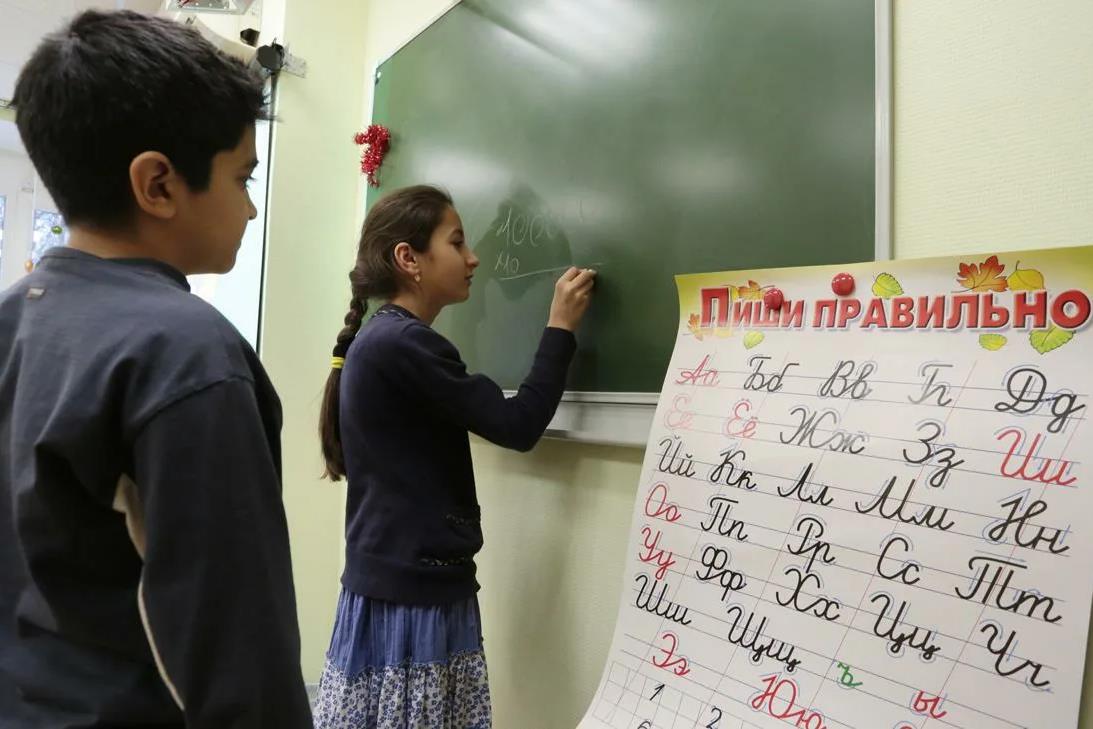
Since April 1, children of migrants in Russia have been tested for Russian language proficiency. Children entering the first grade will be required to demonstrate listening and speaking skills, as well as vocabulary knowledge, such as naming objects from pictures. Those entering the second grade will need to show basic reading and writing skills in Russian. The difficulty of the test will increase with each grade. The passing grade is three (“satisfactory”). If a child fails, they will be offered to retake the exam in three months and to undergo additional Russian language lessons.